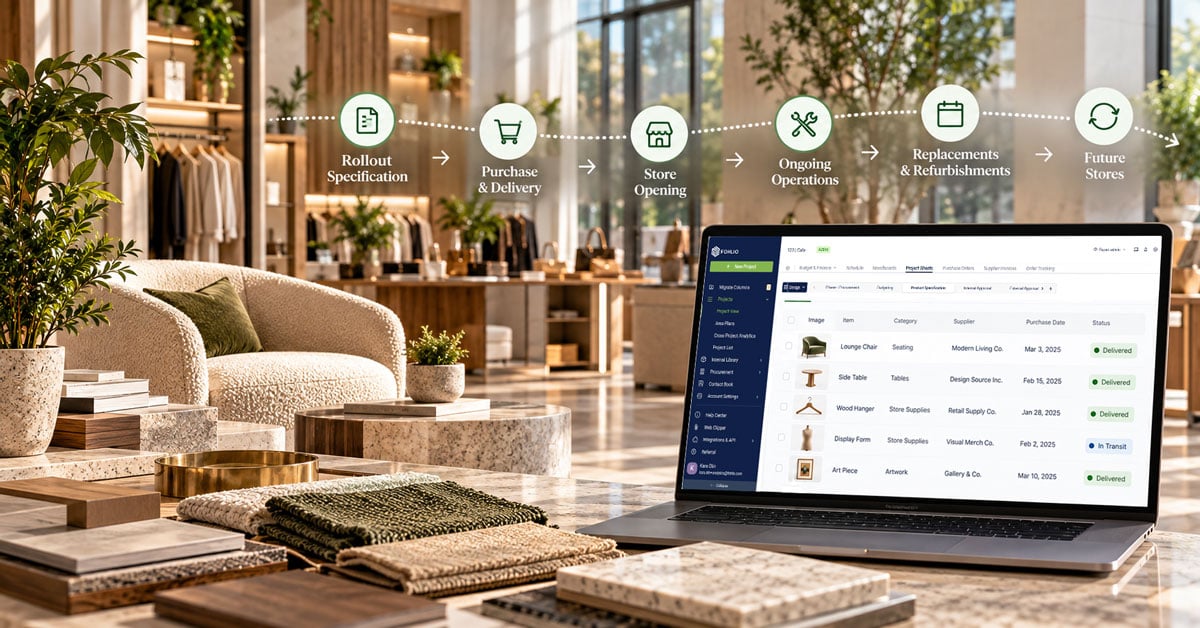
The project closes when the store opens. The store itself runs for years.
Everything that happens to its furniture, millwork, and fixtures after opening day depends on records created during the rollout: warranty claims, replacements, refurbishments, transfers between stores. Organizations that treat the FF&E record as a project deliverable usually discover its value later, when they need a fact no one kept.
Warranty clocks start at purchase
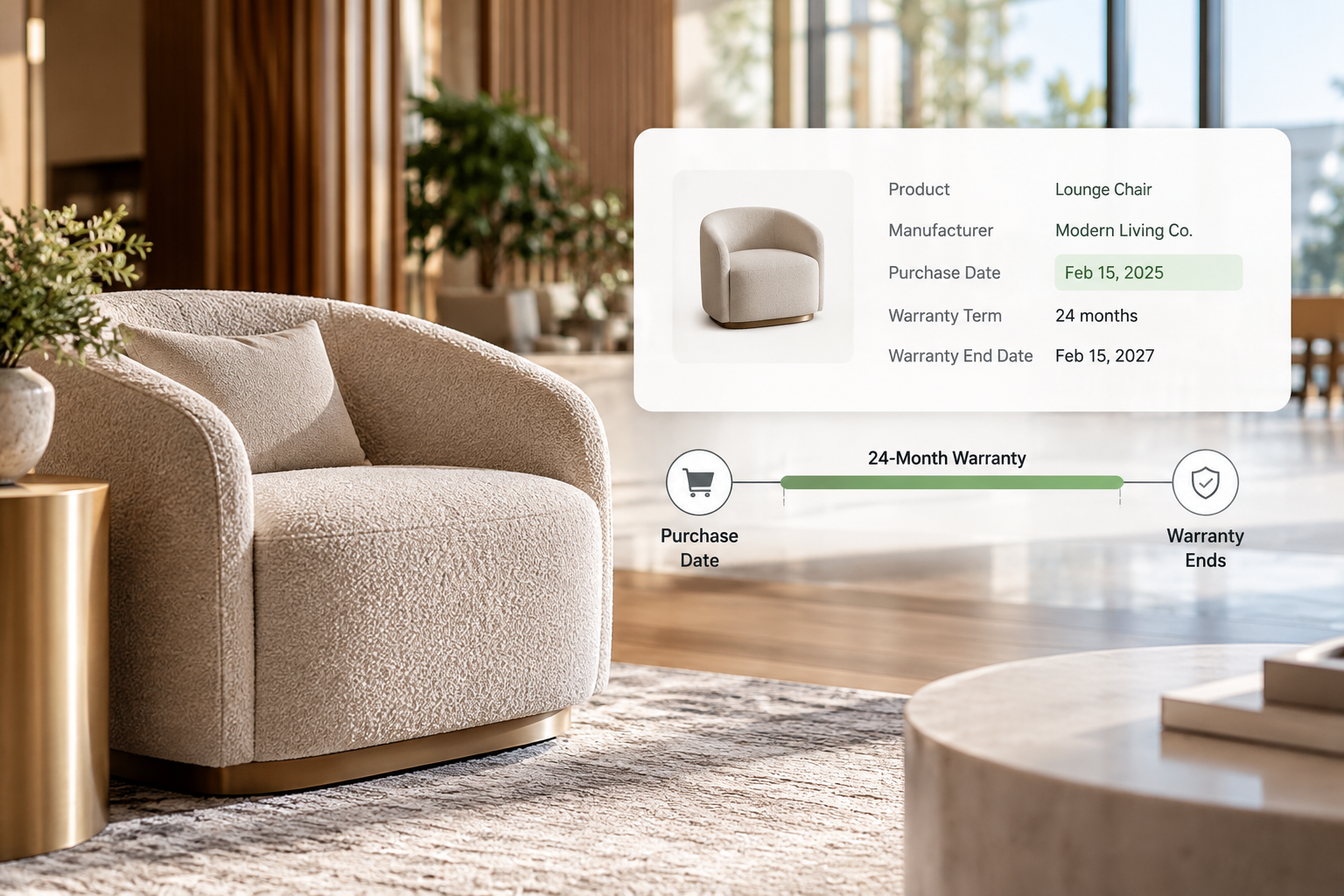
Commercial furniture and upholstery typically carry warranties of 12 to 24 months. The warranty clock usually starts at the purchase date, not the opening date.
For facilities teams, the most useful fact isn't the exact warranty term for each piece. It's when each piece was bought. With purchase dates on record, a facilities manager can walk the store before the window closes, flag worn or damaged items, and file claims while replacement is still free.
Without that record, the organization pays for replacements it was entitled to receive.
Replacements that actually match
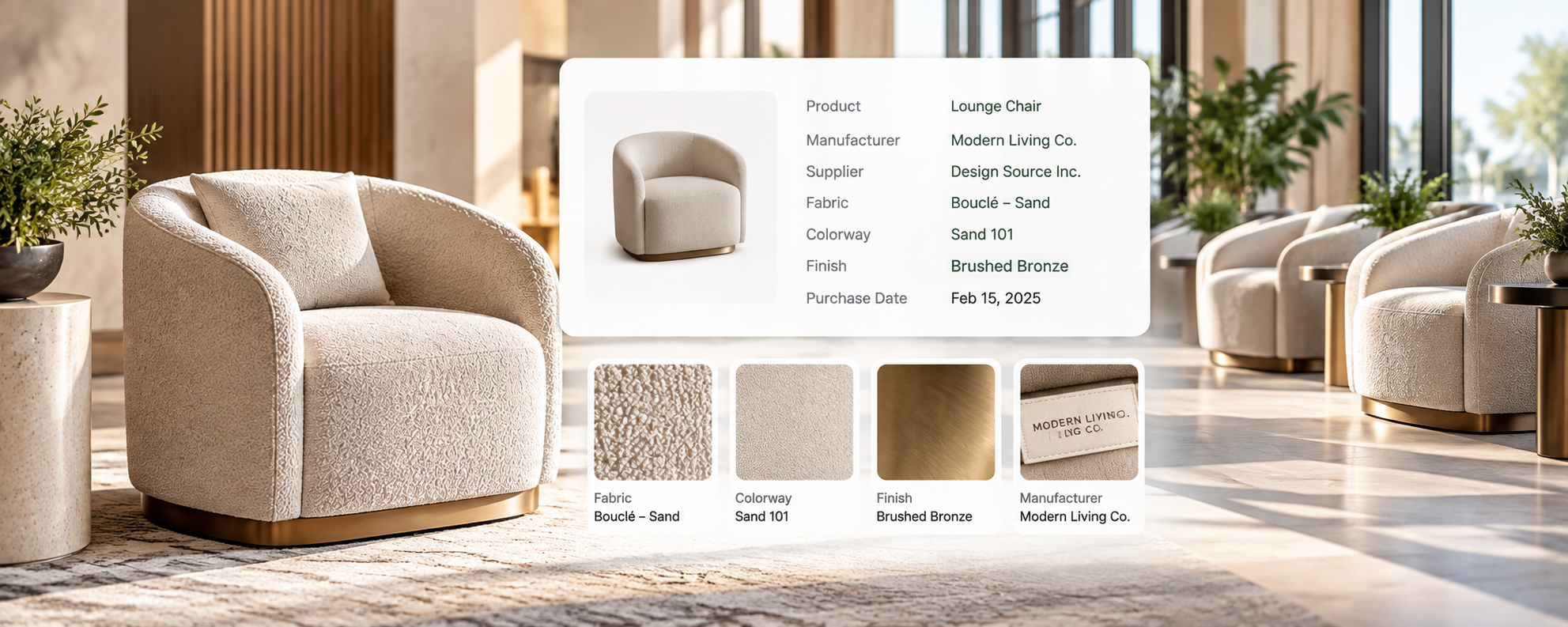
In a store where the environment sells the product, a mismatched replacement is visible. A reupholstered chair in a fabric one shade darker than its neighbors looks out of place, and customers notice.
Matching requires the original record: the fabric and colorway, the finish, the fabricator, and the supplier. One high-end resort learned this the hard way. The owner, walking the property, asked where a damaged piece had come from. Neither procurement nor facilities could say.
The same applies across a retail portfolio. When a piece in one store needs replacing years later, the record of what was specified, and who made it, is what keeps the brand consistent.
The same record protects the organization when designers and consultants move on mid-rollout, as covered in Approval Trails for Multi-Team Store Rollouts.
Vintage pieces and art are assets
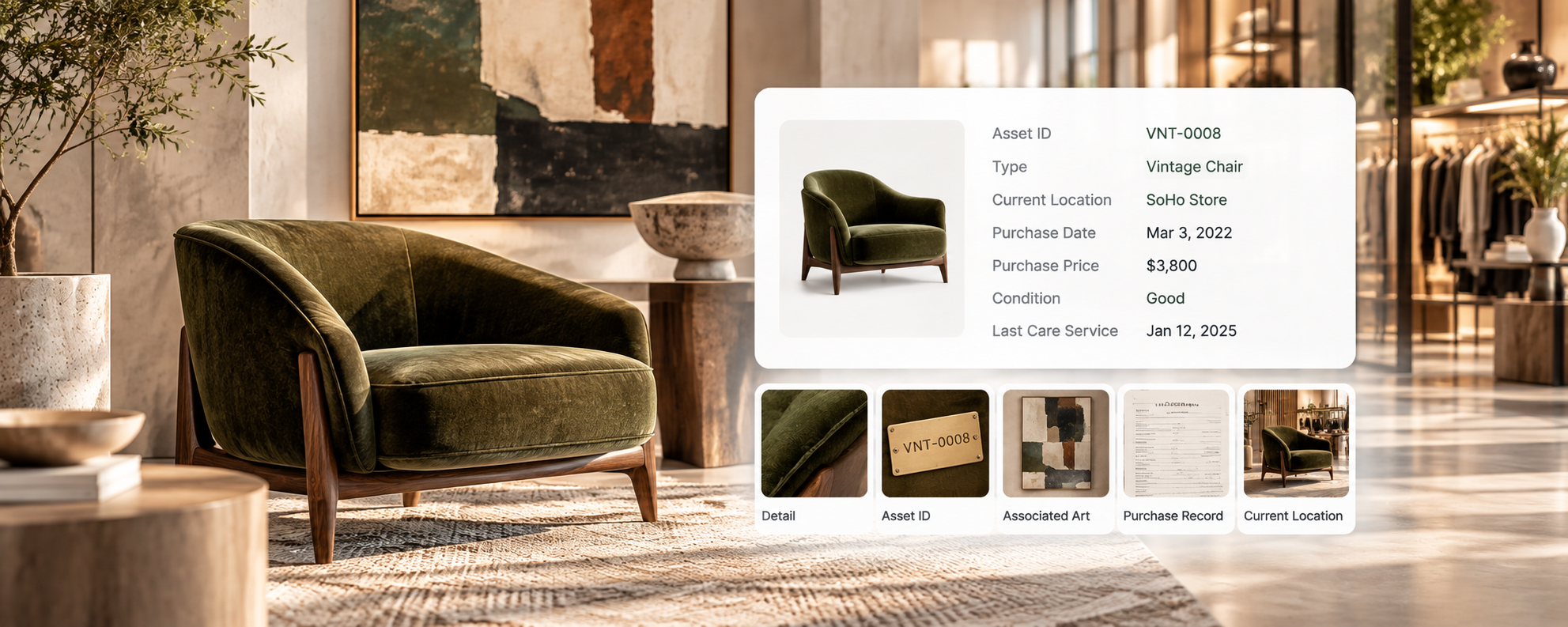
Some retail brands furnish their stores with vintage furniture and commissioned or acquired art. These pieces are part of the design, and they often appreciate in value. That makes them assets, not just fixtures.
Assets need inventory management:
- A unique identifier for each piece, since no two are interchangeable
- Current location, including transfers between stores and storage
- Condition and care history
- Purchase price and date for insurance and valuation
A spreadsheet can list these pieces. It struggles to keep up as they move across a portfolio of stores.
The CAPEX-to-OPEX switch
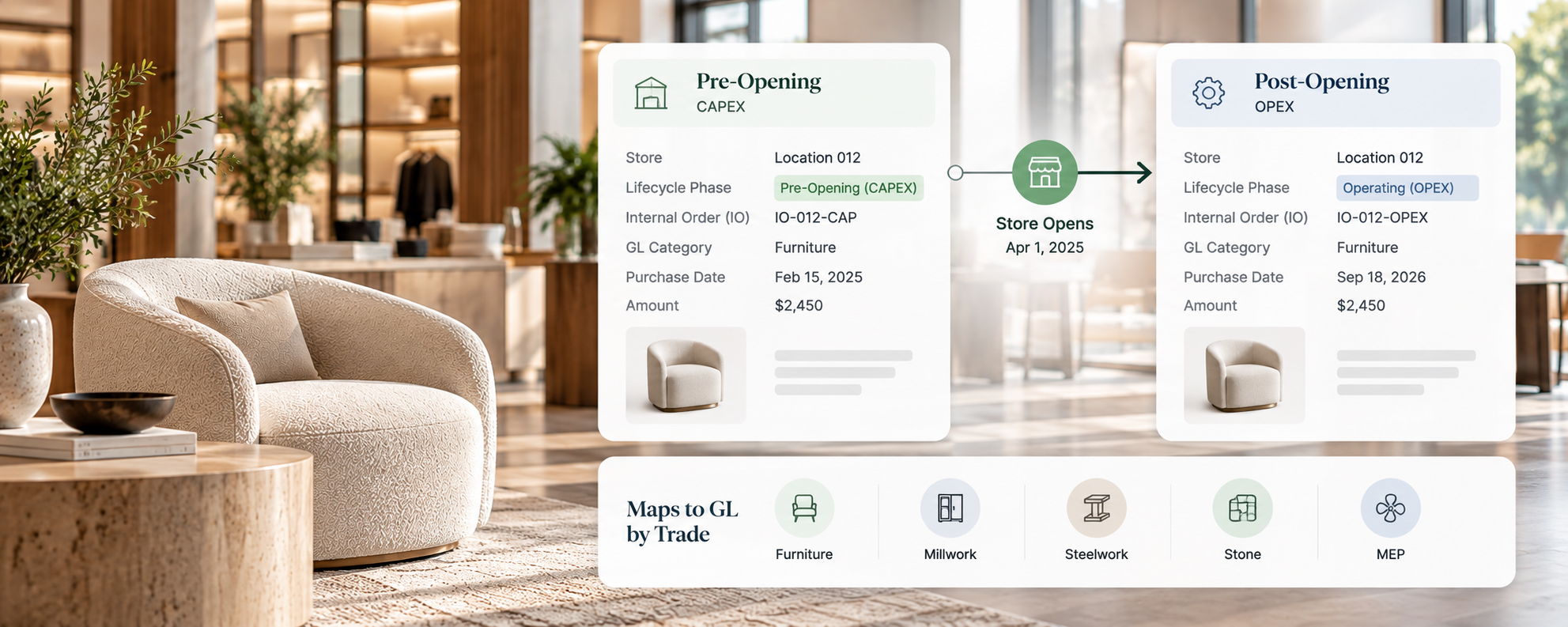
Finance teams see a store's lifecycle in two phases. Spend before opening is typically capital expenditure (CAPEX). Spend after opening, such as replacements and facilities repairs, is typically operating expenditure (OPEX).
Many organizations handle this with two Internal Order (IO) codes per store: one for the capital phase and one for the operating phase. Items also map to General Ledger (GL) categories by trade, such as furniture, millwork, steelwork, stone, and MEP.
The same chair can land in different accounts depending on when it was bought. So the FF&E record needs to know each store's lifecycle phase and apply the right code automatically. When a store opens, new spend against it should switch from the capital code to the operating code without anyone re-keying it.
Operating quantities start in the opening spec
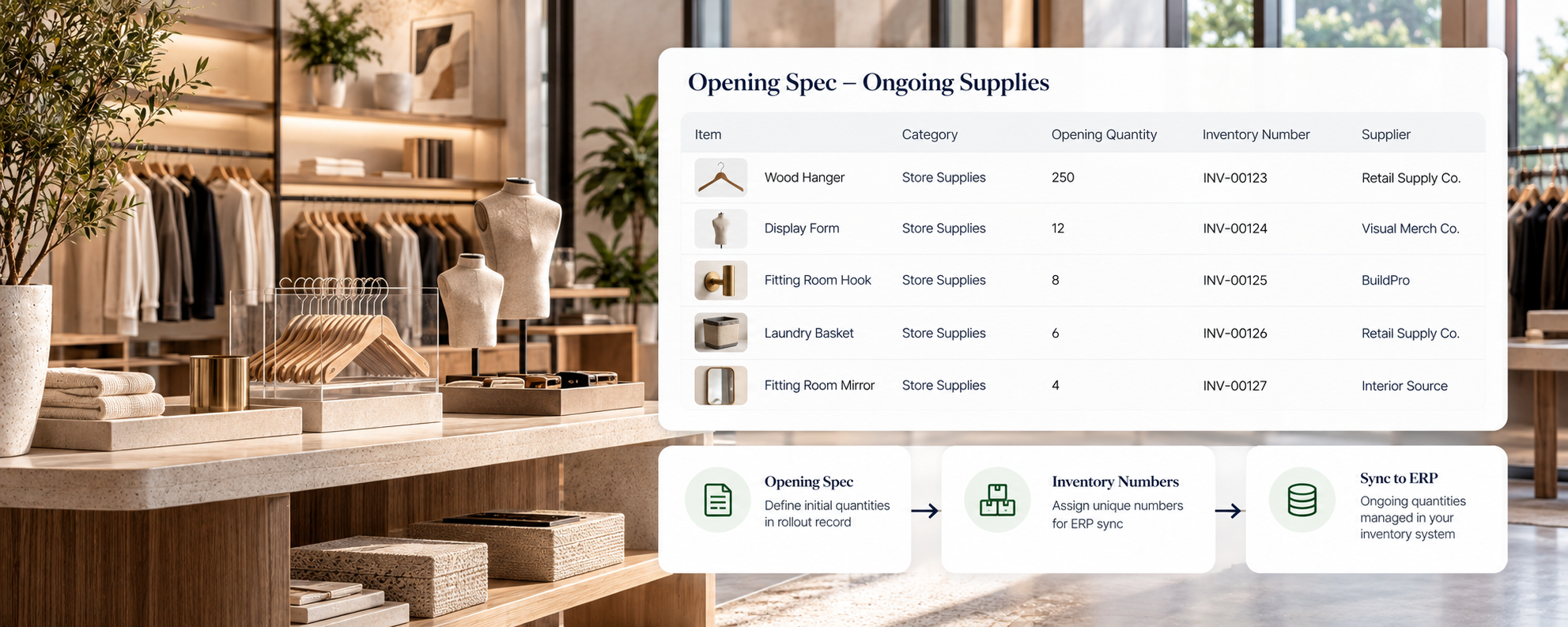
Pre-opening specs also set the baseline for ongoing supplies. If a store opens with a set number of hangers, display forms, or fitting-room accessories, that's the quantity operations needs to maintain.
Those starting quantities often need their own inventory numbers so they can sync with the organization's ERP or inventory system. The rollout record is where they're first defined.
The next store starts here
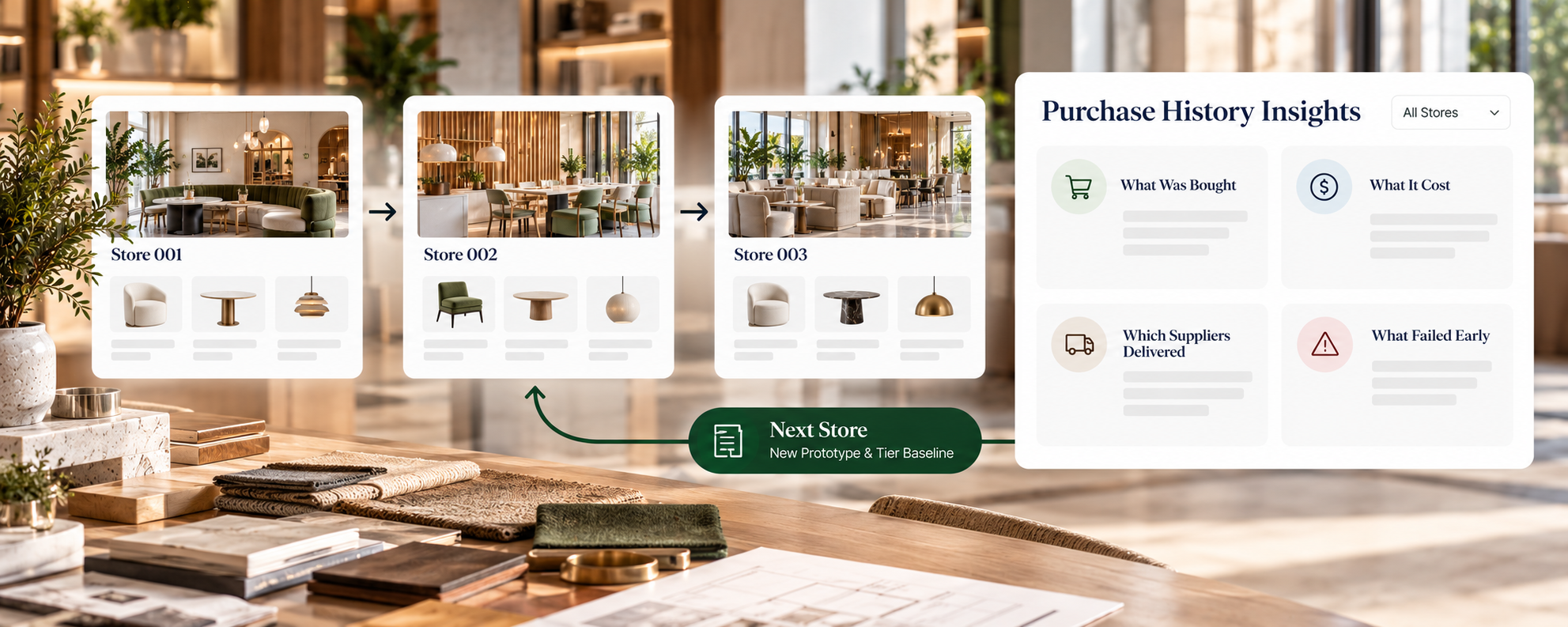
Purchase history doesn't just serve the store it came from. It's the best input for the next prototype, the next tier baseline, and the next refresh: what was bought, what it cost, which suppliers delivered, and what failed early.
Store Rollout Budgets Beyond 'Last Year × 25' covers how that history feeds the next prototype and tier baseline.
What to look for
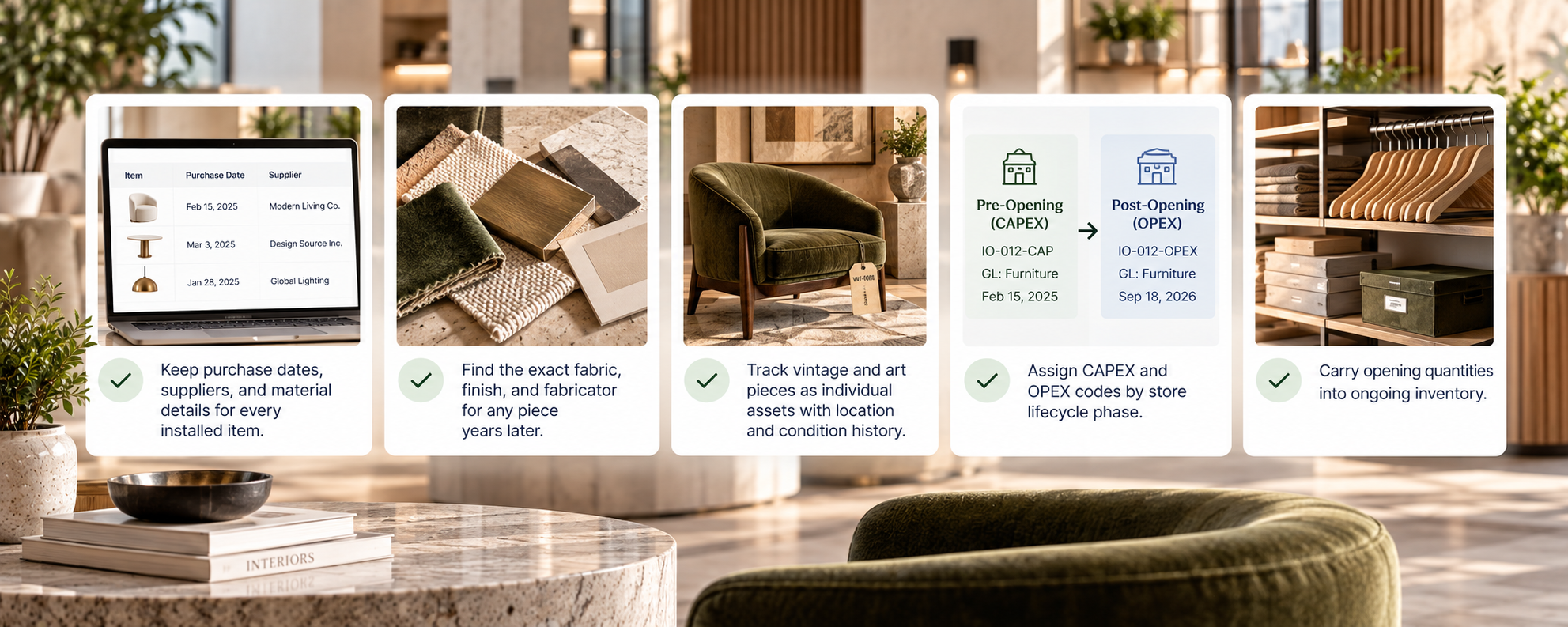
An organization planning for life after opening should be able to:
- Keep purchase dates, suppliers, and material details for every installed item.
- Find the exact fabric, finish, and fabricator for any piece years later.
- Track vintage and art pieces as individual assets with location and condition history.
- Assign CAPEX and OPEX codes by store lifecycle phase.
- Carry opening quantities into ongoing inventory.
Where Fohlio fits
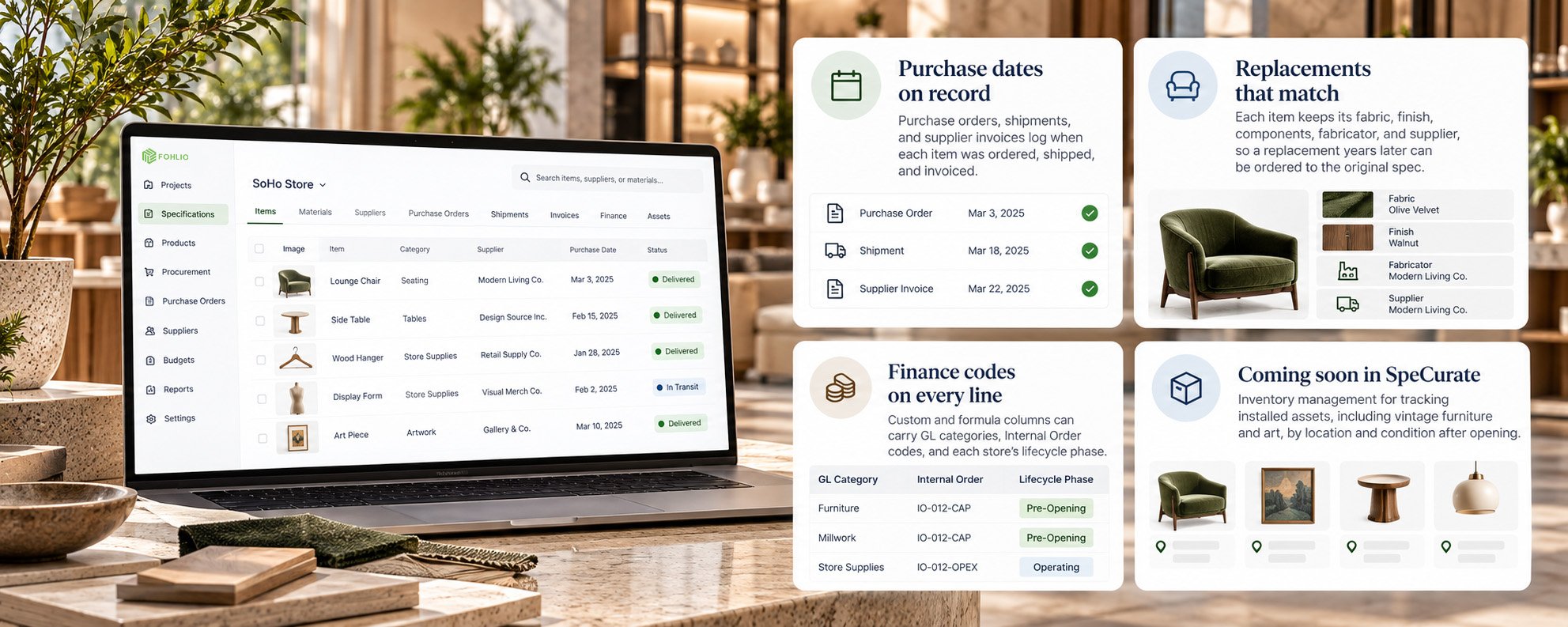
Fohlio creates the specification record this history depends on: every piece, its materials, and its approved suppliers, organized by location. After opening, that record keeps working:
- Purchase dates on record. Purchase orders, shipments, and supplier invoices log when each item was ordered, shipped, and invoiced, which is the date trail warranty claims depend on.
- Replacements that match. Each item keeps its fabric, finish, components, fabricator, and supplier, so a replacement years later can be ordered to the original spec.
- Finance codes on every line. Custom and formula columns can carry GL categories, Internal Order codes, and each store's lifecycle phase. Financial exports, accounting integrations, and webhooks pass that data to finance systems.
- Coming soon in SpeCurate: inventory management for tracking installed assets, including vintage furniture and art, by location and condition after opening. SpeCurate is Fohlio's next-generation specification and procurement platform built from the ground up.
To see how retail organizations build that record from the first spec, book a demo.