Importing a schedule into a project sheet has always carried a hidden cost: someone has to go back through the results afterward and fix whatever the import got wrong — items grouped incorrectly, the same product scattered across areas as duplicate line items, placements that don't match the actual floor plan.
A firm should be able to trust that an import reflects the real structure of a project before that structure is locked into the project sheet, not after.
What's new
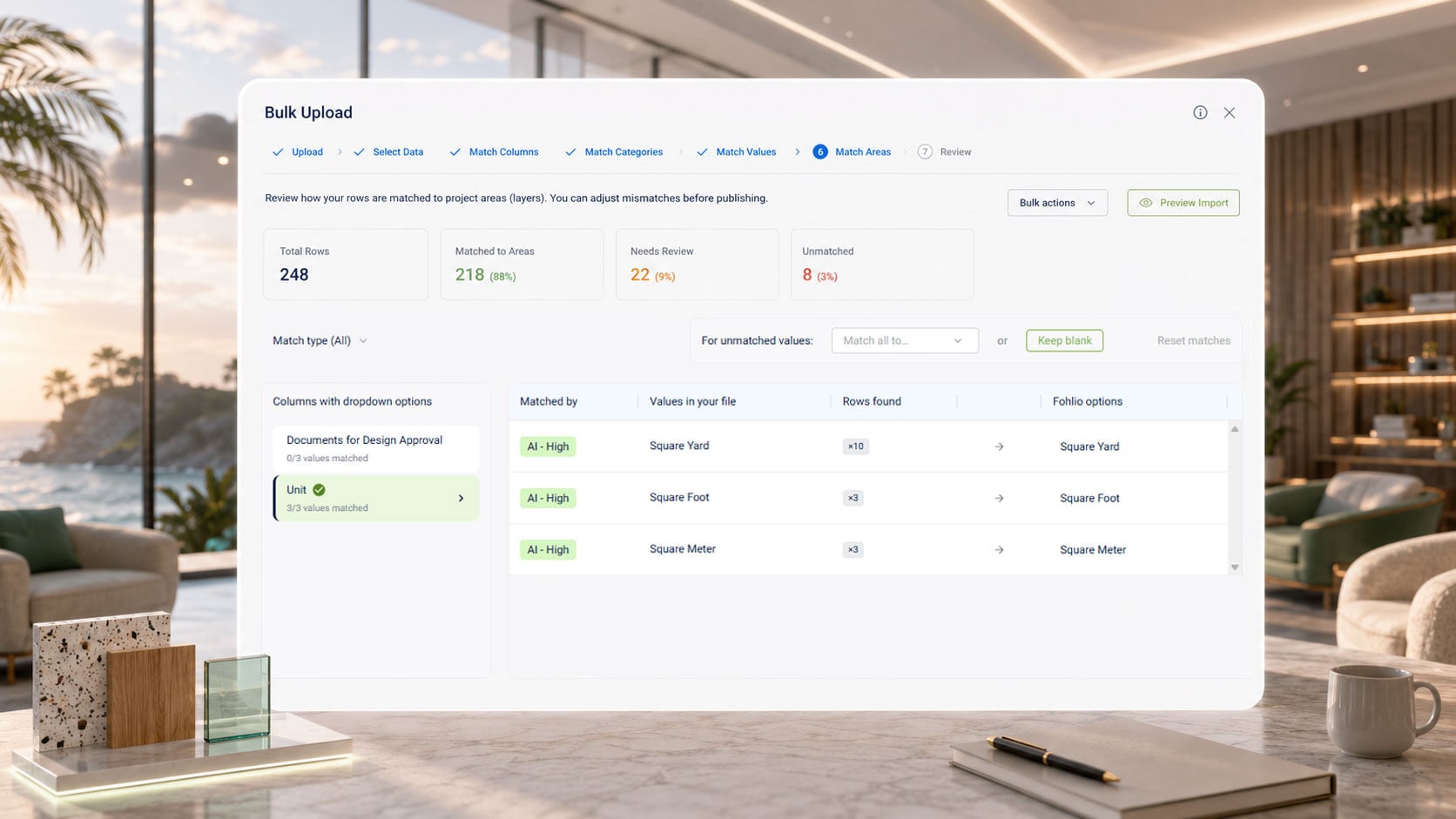
Schedule imports now surface product-and-component relationships and area matches for review before anything publishes. Rows are matched to the project's layers and areas, with suggestions and bulk actions available to correct anything grouped incorrectly. When the same product appears across multiple areas, it's consolidated into a single item with each placement and quantity preserved — instead of showing up as separate, disconnected rows.
The import flow also lets a team distinguish between same-named areas using area codes, create missing layers or areas as needed during import, leave a placement unassigned when appropriate, and review a final summary before publishing to the project sheet.
See the full release updates
Why it matters
- Less post-import cleanup. Catching grouping and placement issues before publishing means less time spent fixing a project sheet after the fact.
- Accurate area data from the start. Consolidating the same product across areas keeps quantities and placements correct without manual reconciliation.
- Fewer surprises. A final review summary means a team knows exactly what's about to land on the project sheet before it does.
Use cases
- Large hospitality imports: When a schedule lists the same chair across dozens of guest rooms, it lands as one item with every room's placement and quantity intact — not dozens of duplicate rows to merge manually.
- Multi-building projects: Same-named areas across different buildings or floors can be told apart using area codes instead of guessing based on order.
- Incomplete floor plans: When a project's area structure isn't fully built out yet, missing layers or areas can be created directly during import rather than stopping the process.
The goal isn't a faster import — it's an import a team can trust the first time.