Senior living renovations are not failing because of poor design. They’re failing because of operational friction.
Behind every delayed renovation is not a bad floor plan or wrong finish—it’s fragmented communication, disconnected systems, and manual workflows that simply don’t scale.
And the impact isn’t just operational.
It’s personal.
Every delay means a resident waiting longer for a better living environment. Every mistake affects comfort, safety, and quality of life.
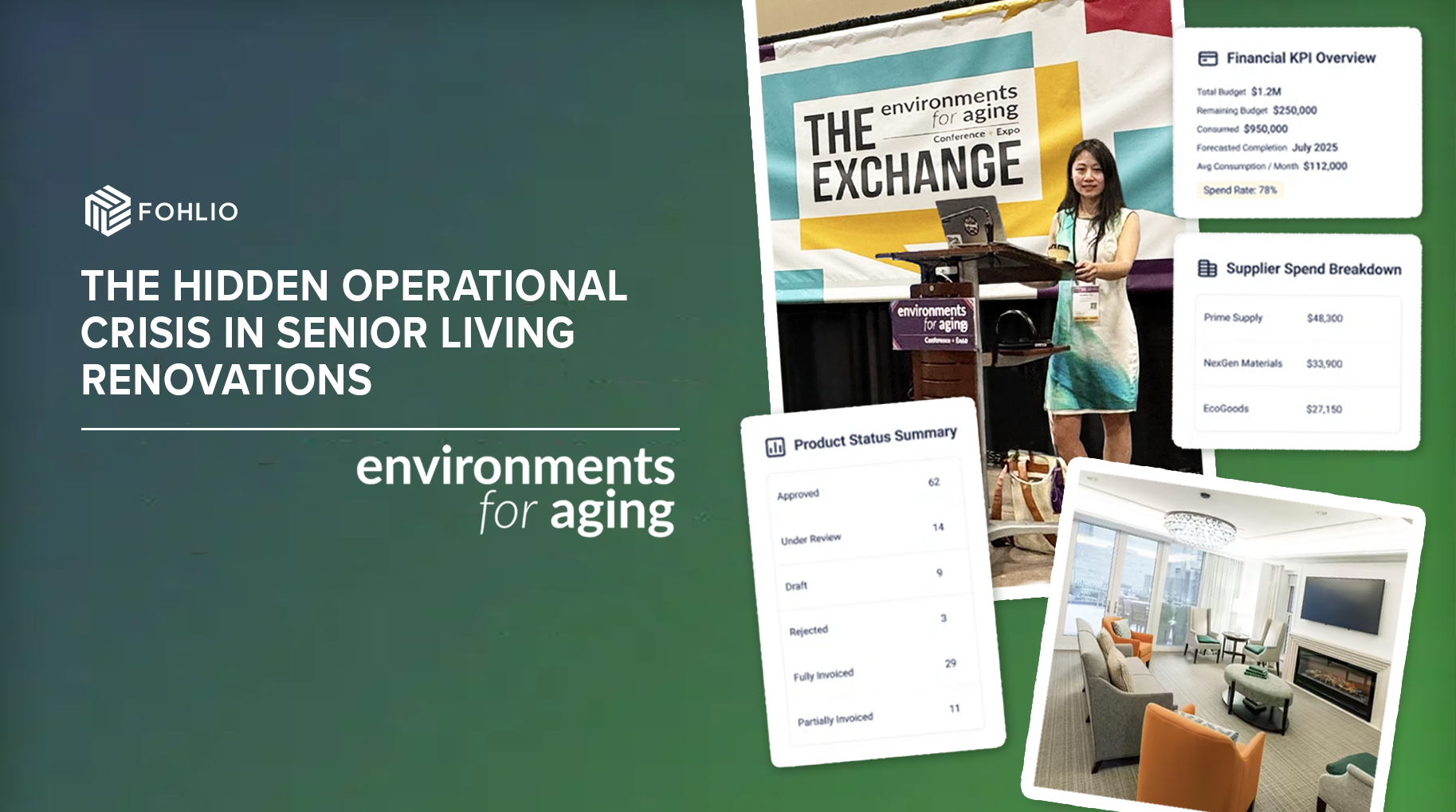
Fohlio's CEO Huibin Yu recently presented at the Environments for Aging 2026 Conference, on how the real issue isn’t visible on-site—it’s happening behind the scenes.
Renovation Is Coordination at Human Scale
A single resident room renovation involves multiple teams:
- Design (FF&E specifications and selections)
- Architecture (drawings and compliance)
- Procurement (vendors and ordering)
- Finance (budgets and approvals)
Each team plays a critical role.
But here’s the problem:
They’re not working in the same system.
Without a centralized platform, every handoff becomes a risk:
- Miscommunication
- Outdated information
- Missed approvals
- Cost overruns
What should be a coordinated process becomes a fragile chain of dependencies.
The Technology Gap Holding Senior Living Back
Compared to adjacent industries, senior living is dramatically underinvesting in operational technology.
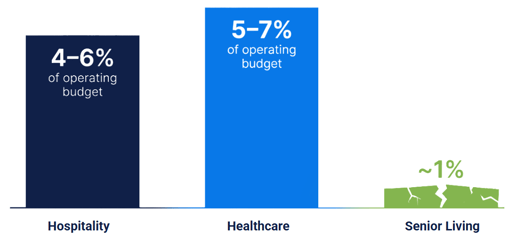
This gap is not just a minor inefficiency—it’s a structural weakness.
As renovation pipelines grow and expectations rise, this lack of infrastructure becomes increasingly costly.
Building Retirement Homes, Part 1: Why You Should Invest in a Senior Home
 The Spreadsheet Reality (And Why It’s Breaking Teams)
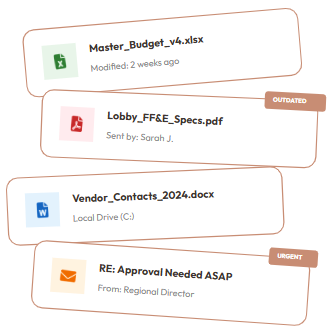
Today, most senior living operators manage renovations through:
- Spreadsheets for budgets
- PDFs for specifications
- Email threads for approvals
- Personal inboxes for vendor communication
This creates a dangerous dynamic.
Teams spend more time searching for information than acting on it.
Instead of designing better communities, highly skilled professionals become data archaeologists, digging through files to find the latest version.
The Domino Effect of One Small Error
Operational friction doesn’t stay contained—it compounds.
Here’s how a single outdated spec turns into a major disruption:
|
Outdated Spec
Stale FF&E sheet shared with vendor
|
Wrong Order
Incorrect product ships to site
|
Delayed Install
Rework and reorder required
|
Resident Disruption
Longer wait. Higher cost.
|
What starts as a small administrative oversight turns into:
- Higher costs
- Longer timelines
- Worse resident experience
This is the hidden cost of disconnected systems.
Why Growth Breaks Manual Systems
Manual workflows can work—at small scale.
But as organizations grow, complexity multiplies:
1 Property
- One spreadsheet
- Direct communication
- Easy to fix errors
|
10+ Communities
- Hundreds of products
- Dozens of vendors
- Multiple stakeholders
|
Now you get:
- Version chaos
- Lost approvals
- Missed deadlines
Growth doesn’t just add complexity—it amplifies every existing weakness.
Real-World Results: What Happens When You Fix the System
Leading operators are already solving this problem by moving away from spreadsheets and into centralized platforms.
Examples:
Sunrise Senior Living
Challenge: Maintaining brand standards across multiple communities
Solution: Implementing Fohlio as their centralized platform for collaboration
Outcome: Faster project turnaround by centralizing specs, vendors, and budgets
Presbyterian Homes
Before:
- Scattered data
- Manual approvals
- Limited visibility
|
After:
- Centralized spec library
- Automated workflows
- Real-time cost clarity
|
Across industries, similar results have been seen:
- Increased efficiency
- Reduced errors
- Better cross-team visibility
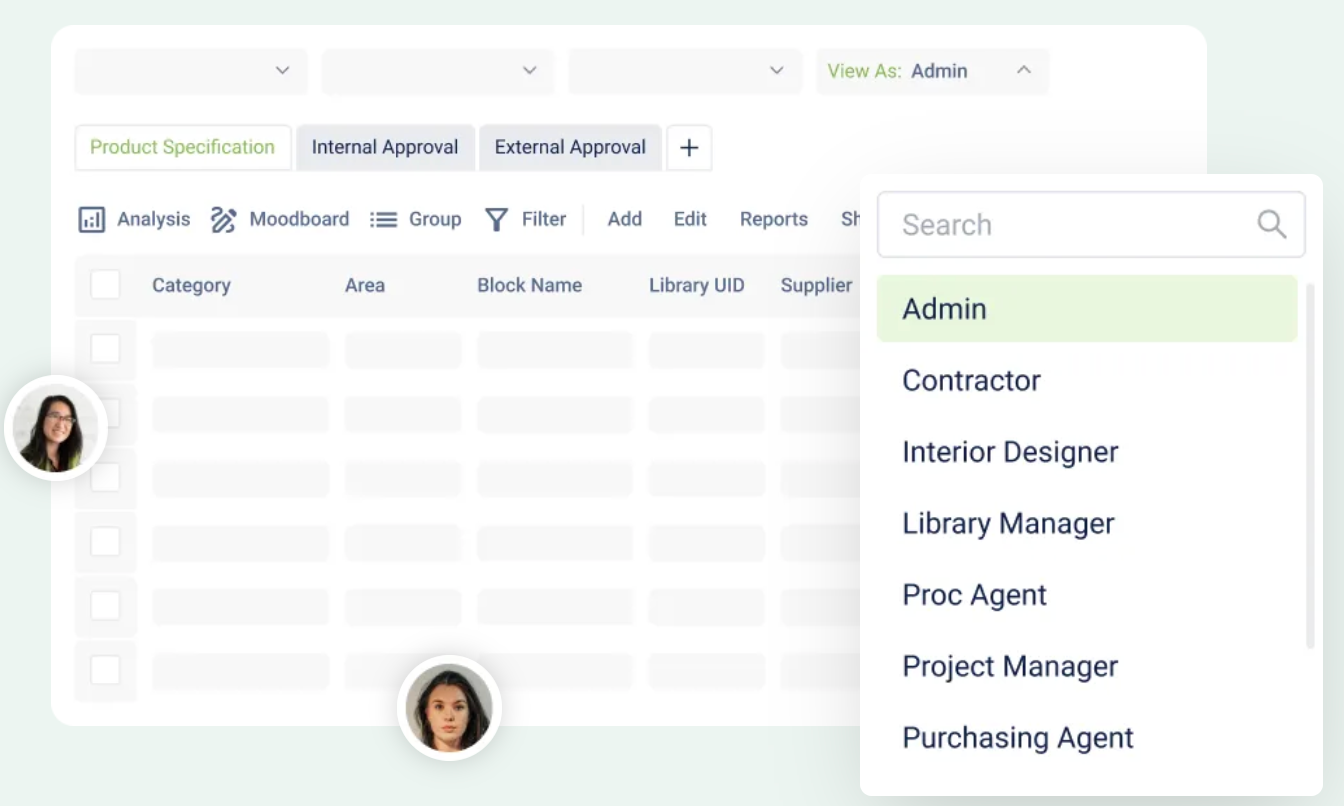 The Shift: From Fragmented Workflows to a Centralized Command Center
| To solve the coordination problem, senior living organizations need to move from:
❌ Disconnected tools
❌ Manual processes
❌ Reactive decision-making
|
To:
✅ Centralized systems
✅ Standardized data
✅ Real-time collaboration
|
This is where platforms like Fohlio come in.
What a Centralized Renovation Workflow Looks Like
A modern renovation workflow brings everything into one environment:
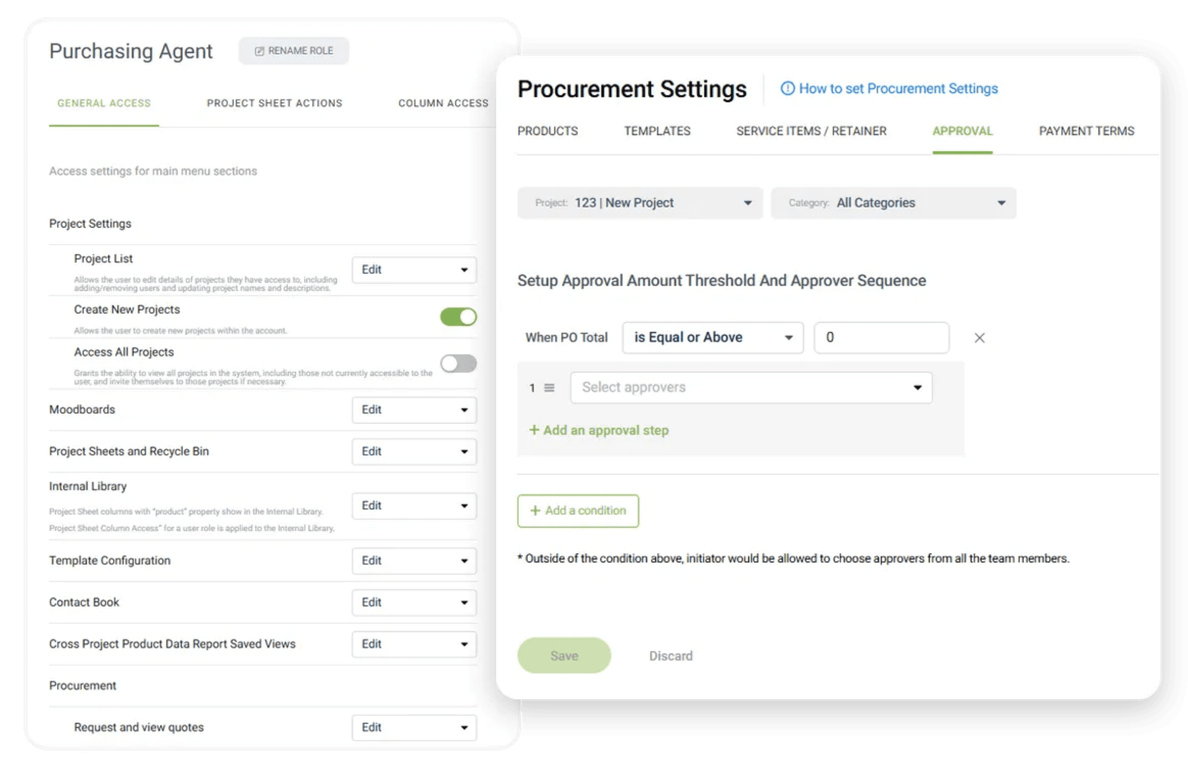
1. Centralized Approvals
- Align design, procurement, and facilities
- Ensure decisions don’t get lost in email
- Maintain design intent through execution
|
2. Standardized FF&E Libraries
- Pre-approved materials across communities
- Flexibility for site-specific customization
- Built-in compliance tracking
|
3. Process-Driven Delivery
- Move from concept to installation in one system
- Eliminate duplicate work
- Reduce errors and delays
|
This creates a single source of truth for every project.
Key Capabilities That Eliminate Operational Friction
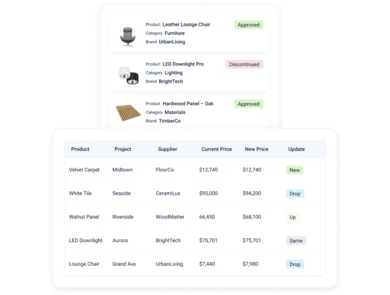
Brand-Compliant Product & Materials Library
- Categorize by brand, location, compliance
- Track approved and discontinued items
- Reuse product packages across communities
Learn more about the product & materials library
|
|
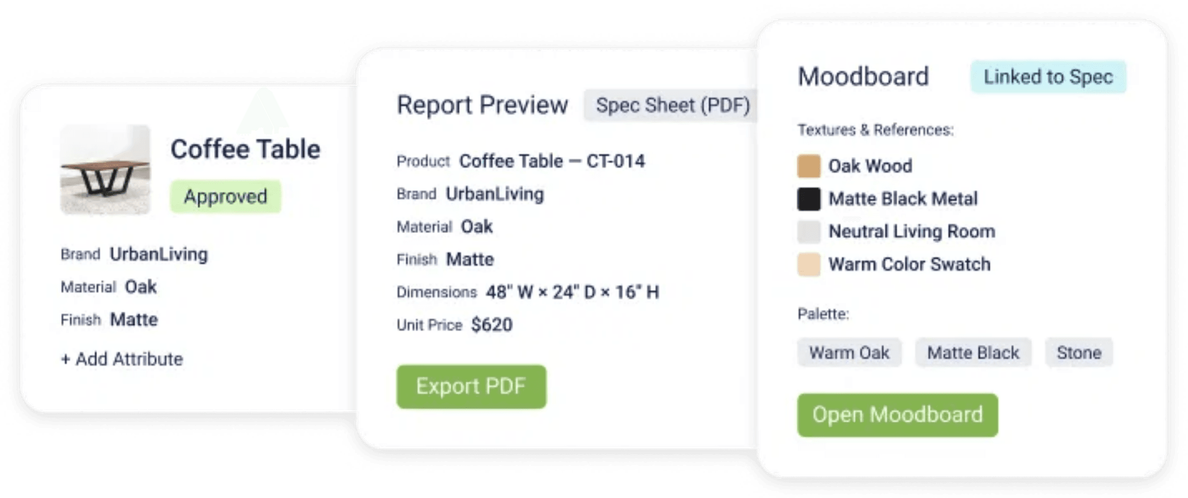
Streamlined Specification Process
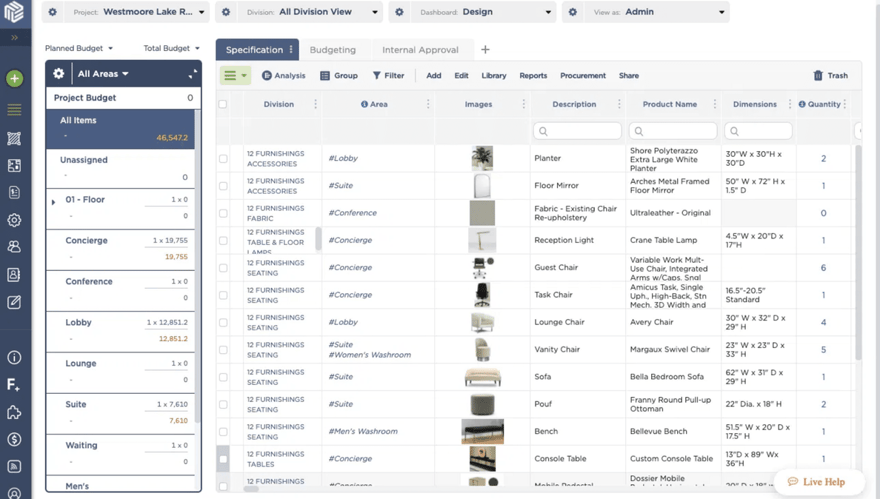
- Replace spreadsheets with structured spec tools
- Generate reports instantly
- Connect mood boards directly to live specs
Learn more about specification
|
 |
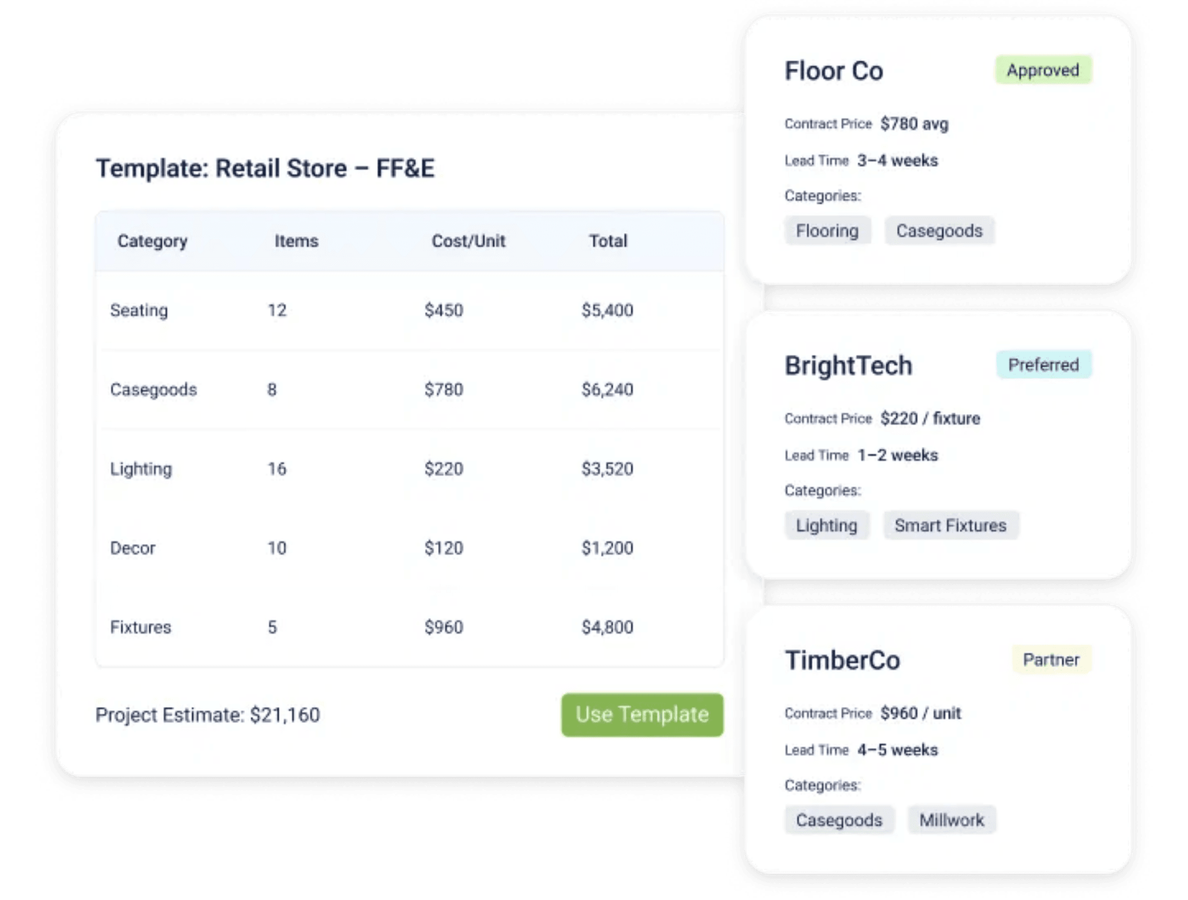
Smarter Cost Planning
- Track cost by category (FF&E, OS&E, case goods)
- Use historical data for better estimates
- Improve budget accuracy
Learn more about cost planning
|
 |
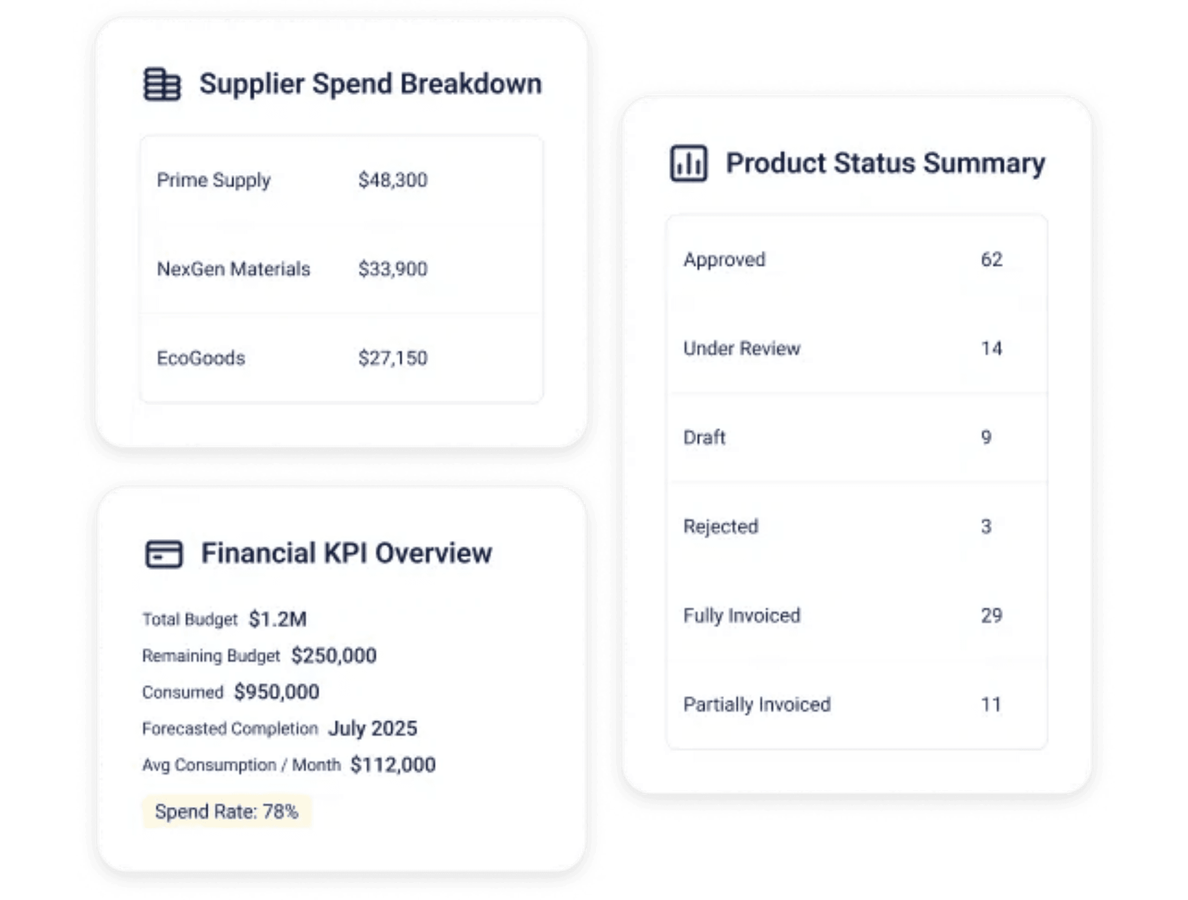
Procurement Visibility & Control
- Compare vendor quotes easily
- Track order status in real time
- Identify bulk purchasing opportunities
Learn more about procurement
|
|
Revit + FF&E Data Sync
- Keep design and specifications aligned
- Eliminate duplicate data entry
- Reduce errors across teams
Learn more about Revit sync
|

|
Why Compliance Must Be Built In—Not Bolted On
In senior living, compliance isn’t optional.
It’s critical for:
- Resident safety
- Regulatory adherence
- Operational risk management
A modern system enables teams to:
- Maintain libraries of compliant materials (e.g., anti-slip flooring, antimicrobial finishes)
- Tag products with certifications (CAL 117, slip resistance)
- Ensure all teams follow the same standards
This turns compliance from a bottleneck into a built-in safeguard.
Scaling Standards Without Losing Flexibility
|
One of the biggest challenges in senior living is balancing:
- Consistency across communities
- Customization for local needs
A centralized system allows you to:
- Deploy standardized FF&E across properties
- Customize at the community level
- Track warranties and installation data
- Plan maintenance more effectively
This is how operators maintain brand quality while adapting to real-world conditions.
|
The Future: From Workflow Tool to Intelligence Engine
The next evolution isn’t just digitization—it’s intelligence.
Phase 1:
Efficiency Engine
- Auto-spec extraction from documents and images
- Automated document processing
- Faster, more accurate specification
|
Phase 2:
Decision Co-Pilot
- Predictive budget forecasting
- Automated compliance checks
- Smart product recommendations
|
Phase 3:
Predictive Ecosystem
- Anticipate supply chain issues
- Automate RFQs
- Build a living asset database
|
The goal is not just faster execution—but smarter decision-making at scale.
Why Digital Workflows Are No Longer Optional
Several forces are converging:
- Growing renovation pipelines
- Labor shortages
- Rising resident expectations
This means operational technology is no longer a luxury—it’s a baseline requirement.
Organizations that invest now will:
- Scale more efficiently
- Deliver better resident experiences
- Gain a competitive advantage
Those that don’t will continue to struggle with delays, errors, and rising costs.