Software
Building an AI-Ready Design Practice
Discover how structured data, connected workflows, and AI help design firms reduce manual work, improve project delivery, and scale smarter.
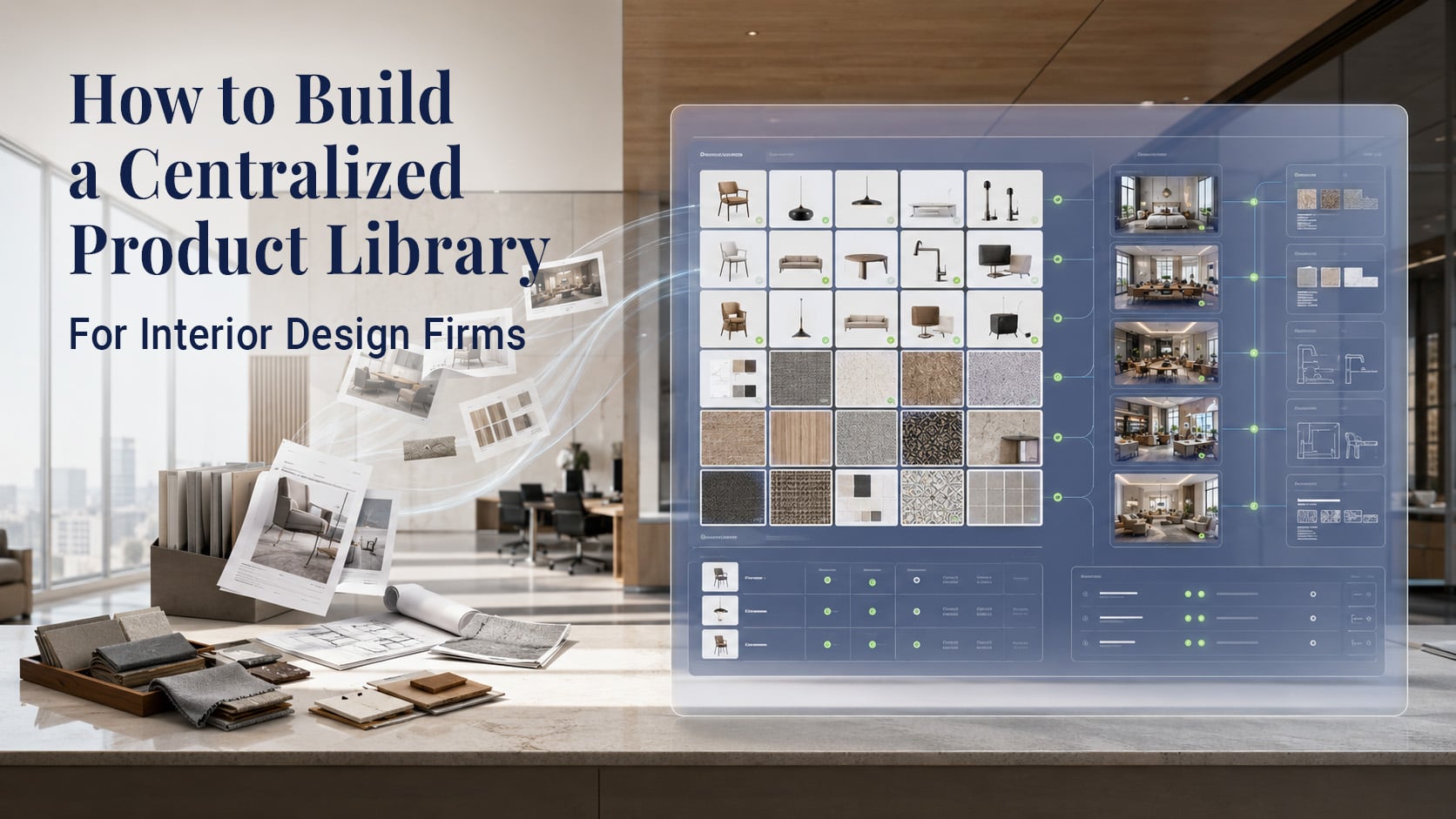
Specify, procure, prototype, collaborate, and analyze at scale. Take on bigger projects with confidence and grow your firm with Fohlio. Schedule a demo or book a consultation with one of our account managers to explore these features today.
The Foundation for Smarter Specifications, Procurement, and AI
Every commercial interior design firm has a product library. The real question is whether it functions as a competitive advantage or simply as a collection of files.
For many firms, product information is scattered across manufacturer websites, spreadsheets, PDFs, email threads, shared drives, specification books, and individual desktops. Designers spend valuable time searching for products they have specified before. Procurement teams request the same information repeatedly. Specifications are recreated instead of reused, and important knowledge often exists only in the memories of experienced employees.
As projects become larger and teams work across more offices, locations, and disciplines, that fragmentation creates unnecessary administrative work. It also makes it harder to maintain consistent specifications, budgets, approvals, and brand standards.
A centralized product library solves this problem by turning product information into structured, searchable, and reusable records. Instead of treating products as isolated line items within individual projects, firms can build a shared body of product intelligence that supports design, specification, budgeting, procurement, reporting, and AI.
In our cornerstone guide, Building an AI-Ready Design Practice, we explained that AI does not create organizational knowledge—it depends on it. A centralized product library is one of the most important parts of that foundation because it gives both people and AI reliable information to search, compare, and reuse.
Related reading: The Ultimate Guide to Setting Up Your Online Materials Library
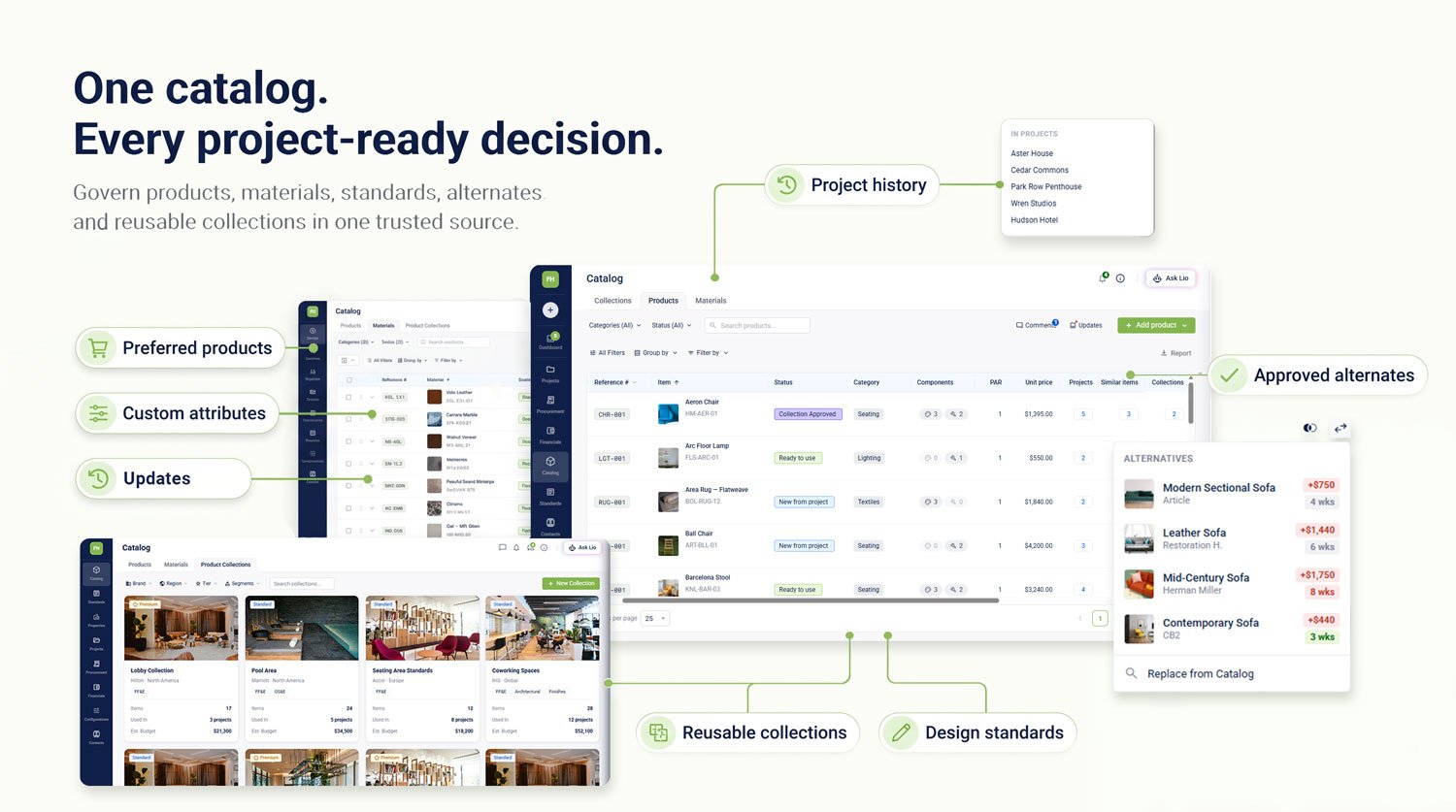
A centralized product library is a shared, structured repository containing the product and material information an interior design firm needs throughout the project lifecycle.
It is more than a digital catalog of furniture, fixtures, finishes, and materials. A well-designed library combines manufacturer data with everything the firm learns about a product through research, specification, procurement, installation, and ongoing use.
A product record may include:
Unlike a PDF or spreadsheet row, a structured product record can evolve. Every quote, specification, substitution, installation, and completed project adds context that makes the record more useful in the future.

Product libraries were once used primarily to browse samples and manufacturer catalogs. Today, product data influences nearly every stage of commercial interior design and FF&E delivery.
A single product selection can affect:
When product information is incomplete, outdated, or difficult to locate, every downstream workflow becomes harder.
A designer may unknowingly specify a discontinued finish. Procurement may request pricing using an outdated quantity or model number. Finance may prepare an estimate using an obsolete price. Leadership may struggle to understand which products, vendors, or categories drive spending across projects.
These problems are often blamed on individual mistakes, but the underlying cause is usually fragmented information.
A centralized product library creates a shared source of truth. Rather than maintaining multiple versions of the same product across projects and departments, teams can reference one trusted record and use it in different workflows.

Most firms underestimate the amount of time employees spend trying to find information the organization already possesses.
Imagine a designer searching for a guest-room chair used on a successful hospitality project three years earlier. The product might be buried in a specification book, spreadsheet, email attachment, procurement folder, presentation deck, manufacturer website, or former employee’s files.
Finding the product is only the beginning. The designer still needs to determine:
Without a centralized library, each project starts by reconstructing knowledge the firm has already developed. Across hundreds of products and multiple projects, those searches consume substantial time that could be spent on design, coordination, quality control, and client service.
Centralization changes the nature of search. Instead of looking for a file that might contain the answer, teams search the underlying product data and project history directly.
Manufacturer information is the starting point—not the full value of a product record.
The manufacturer can provide dimensions, finish options, certifications, warranty terms, and technical documentation. Only the firm can capture what happened when the product was evaluated, purchased, installed, and used.
For example:
These insights do not exist in a manufacturer catalog. They are created through project experience.
A centralized product library can preserve that knowledge by connecting products with approved applications, brand standards, project history, vendor performance, budget outcomes, substitutions, client feedback, maintenance recommendations, installation observations, and lessons learned.
Instead of relying on individual memory, firms build an organizational knowledge base that becomes more valuable with every completed project.
Fohlio’s Product & Materials Library supports this approach by allowing firms to manage preferred products, custom attributes, project history, approved alternates, reusable collections, and standards alongside core manufacturer information.
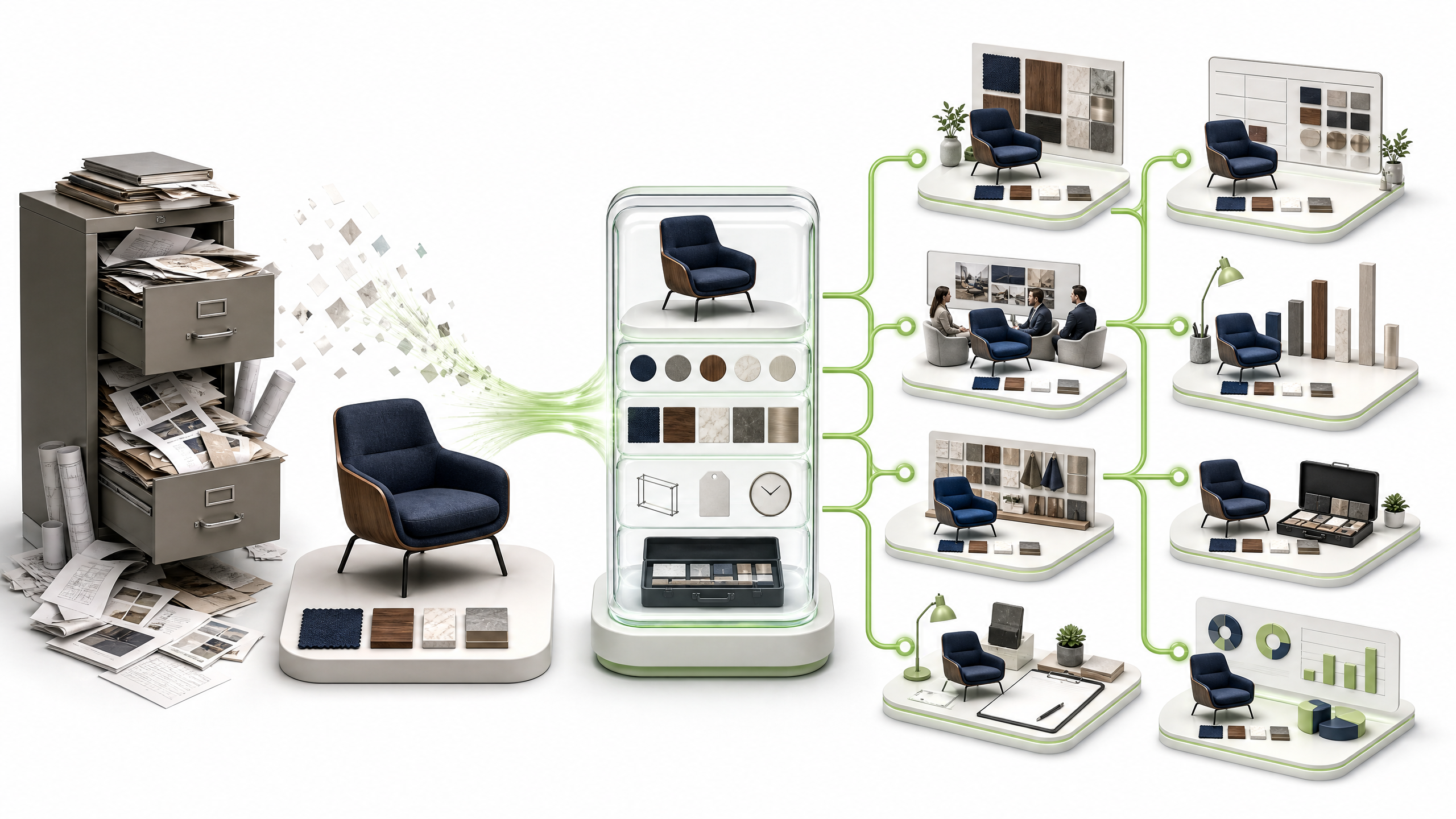
One of the most common mistakes firms make is organizing a digital product library like a traditional file server: folders, subfolders, PDFs, brochures, images, and spreadsheets.
That structure may feel familiar, but it does not scale well. It also limits reporting, automation, and AI-assisted search because important attributes remain trapped inside documents.
In a modern product library, each product should exist as a structured record. Supporting files such as cut sheets, warranties, drawings, and installation guides can be attached to that record, but the document should not be the only place where the information lives.
The product record can then be referenced in:
This reduces duplicate entry while helping every stakeholder work from consistent information.
Fohlio is designed around this principle: product data is managed as reusable information that can flow across projects, specifications, procurement, and reporting rather than remaining locked in static files. See how the Product & Materials Library creates a central foundation for specifications and project delivery.

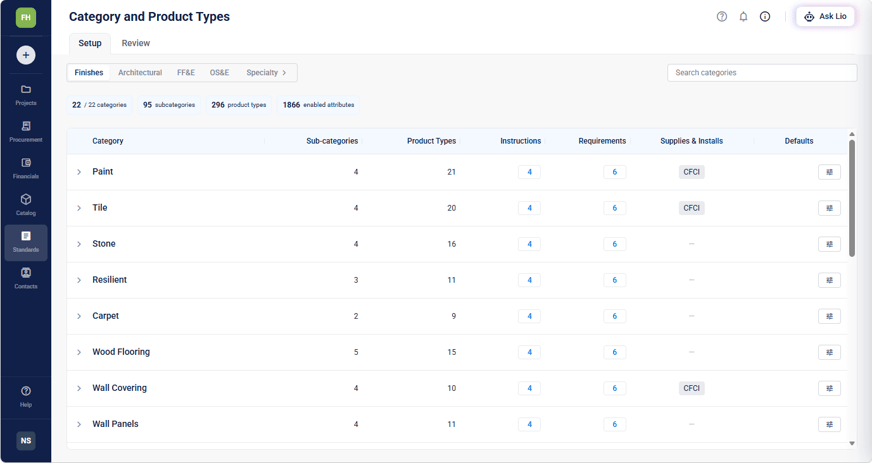
A product library is only valuable if people can find what they need quickly. That begins with a clear taxonomy.
Instead of relying entirely on manufacturer categories, organize products around the way your firm designs and delivers projects.
Primary categories might include:
Products can then be classified by attributes such as product type, manufacturer, collection, client, brand, project type, room or area, geographic region, asset class, sustainability standard, budget tier, design style, or approval status.
A hospitality firm might organize products by guest room, lobby, restaurant, spa, meeting rooms, and public areas. A workplace firm might use open office, conference room, reception, collaboration area, and focus room. A retail organization might classify products by store entry, display zone, cash wrap, fitting room, and back of house.
This structure allows a designer to search for “approved luxury hospitality lounge chairs” using multiple meaningful attributes instead of relying on a keyword that may or may not appear in a product name.
Not every product requires the same information. A chair, carpet tile, decorative light, plumbing fixture, and custom millwork item each need different attributes.
Rather than forcing every product into one generic template, define the information required for each category.
For seating, that might include:
Lighting may require wattage, voltage, color temperature, mounting type, controls, beam spread, driver requirements, finish, and certifications.
Flooring may require wear rating, slip resistance, thickness, VOC information, acoustic properties, maintenance requirements, installation method, and warranty.
The goal is not to collect the greatest possible volume of data. It is to capture the information teams actually need to compare, approve, specify, purchase, install, and maintain each category consistently.
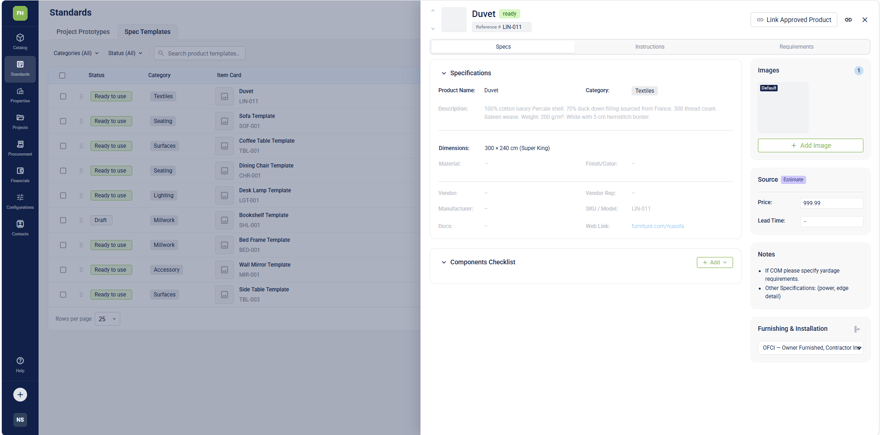
Inconsistent naming quickly undermines search and reporting.
The same item might be described as a lounge chair, guest chair, accent chair, club chair, or hospitality chair. Humans can often recognize the overlap, but inconsistent terminology still creates ambiguity for filtering, analytics, integrations, and AI.
Establish controlled values for fields such as:
Use separate fields for category, manufacturer, collection, model, and finish rather than placing all of that information in one free-form product name.
Naming standards improve search accuracy, prevent duplicate records, and make cross-project reports far more reliable.
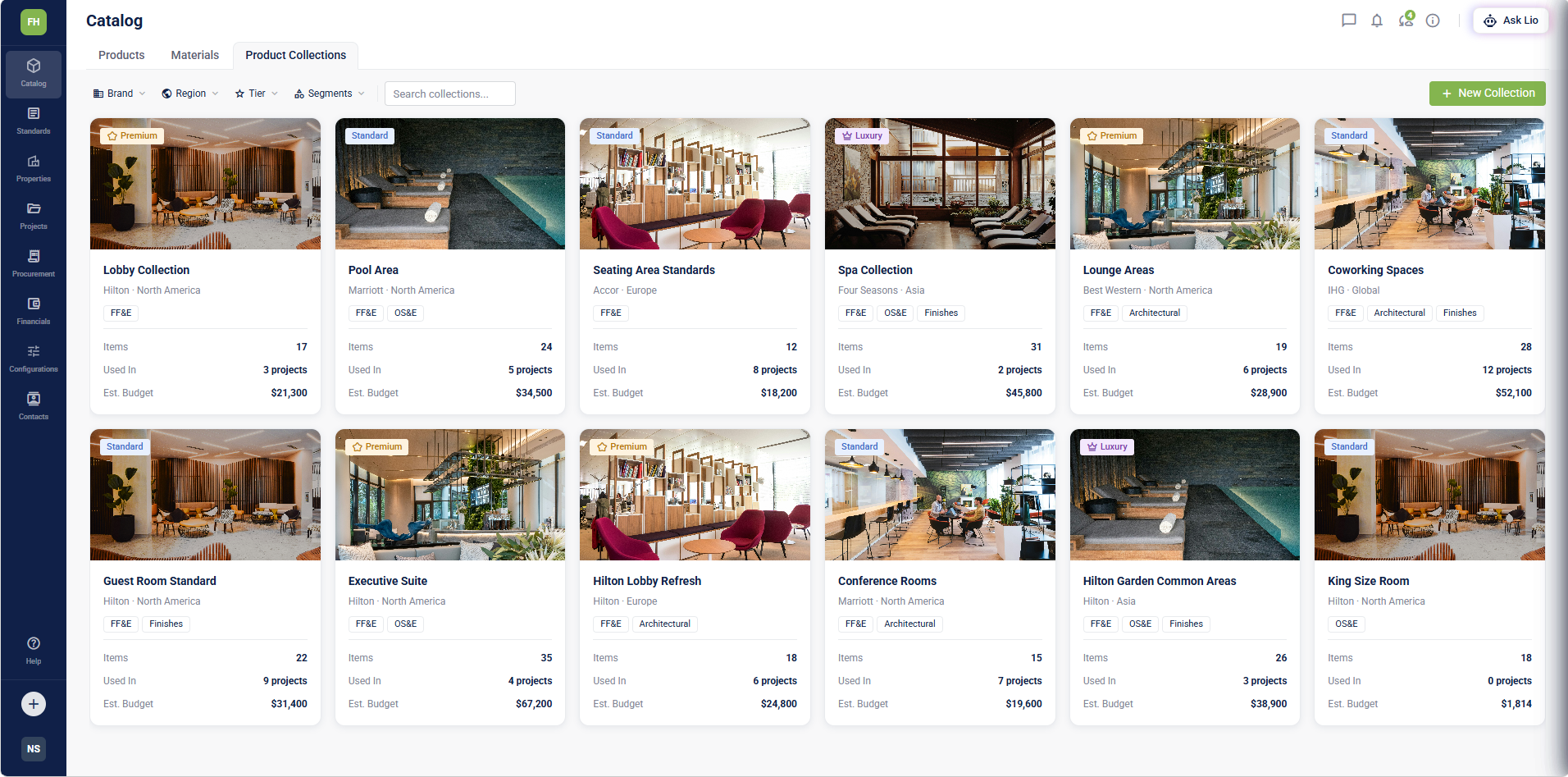
Design teams rarely work with products in isolation. A guest room may include a bed, nightstands, lamps, desk, seating, artwork, drapery, flooring, and hardware. A retail display may combine millwork, lighting, power, signage, fixtures, and installation components.
A centralized library allows firms to group these items into reusable collections, packages, prototypes, or Product Blocks.
Instead of researching and specifying every item from the beginning, teams can start with an approved guest-room collection, restaurant seating package, patient-room standard, workplace kit, or retail prototype.
Reusable assemblies help firms:
Fohlio’s Collections and Product Blocks allow firms to organize products around recurring room types, design standards, and prototype environments while maintaining the individual product data behind each assembly. For additional guidance, read 5 Ways to Create Design Standards That Work.
A centralized product library should serve more than the design team.
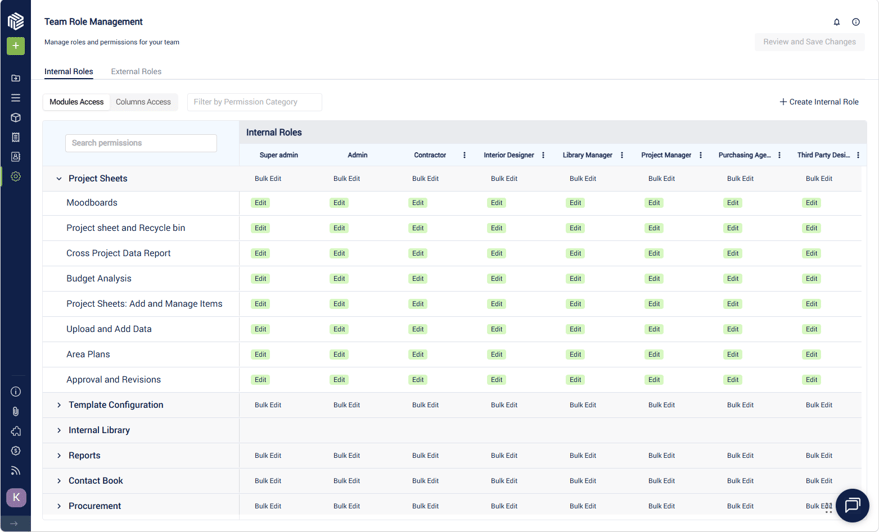
Designers may focus on images, finishes, dimensions, materials, specifications, and design intent. Procurement needs vendors, pricing, lead times, alternates, RFQs, and purchase history. Finance needs estimated, quoted, and actual costs. Project managers need approvals, specification status, installation requirements, and delivery information. Leadership needs product usage, supplier performance, brand compliance, and cross-project trends.
The product record remains the same, but each role sees the information relevant to its work.
This is one of the key advantages of a connected platform. Different teams can work from the same underlying product intelligence without maintaining separate versions of the product in departmental spreadsheets.
Price, lead time, freight, tariffs, and availability change. A single price field with no context can quickly become misleading.
A useful product record should distinguish among information such as:

Historical information allows procurement teams to compare vendors and cost escalation over time. It also helps finance and leadership understand how product, freight, and supplier changes affect project budgets.
For AI, the date and source of a price are as important as the number itself. Without that context, a system may present an obsolete value as though it were current.
Technology alone will not keep a product library accurate. Someone must own its standards and maintenance.
Depending on the firm, ownership may sit with a product librarian, specification manager, design operations team, knowledge manager, or designated administrator. The title matters less than the clarity of responsibility.
Governance should define:
Without governance, duplicate products and outdated information gradually erode trust. Once teams stop trusting the library, they return to personal spreadsheets, internet searches, and disconnected files.
Governance creates confidence, and confidence drives adoption.
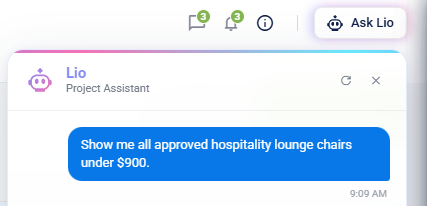
As AI becomes more integrated into commercial interior design, teams want to ask natural-language questions such as:
Show me all approved hospitality lounge chairs under $900.
Find healthcare flooring with a lead time under eight weeks and the required sustainability certification.
Recommend alternates to this lighting fixture that meet the project requirements and reduce budget exposure.
For AI to answer reliably, it must understand product categories, naming conventions, prices, lead times, approval status, finishes, certifications, vendors, and project history in consistent formats.
When that information is scattered across spreadsheets, PDFs, email, and disconnected applications, AI may find relevant words without understanding which data is current, approved, or appropriate.
A centralized product library provides the structured relationships needed for AI-assisted search, comparison, recommendations, reporting, and automation.
The difference is significant: without structured information, AI searches documents; with structured information, it can reason across product and project context.
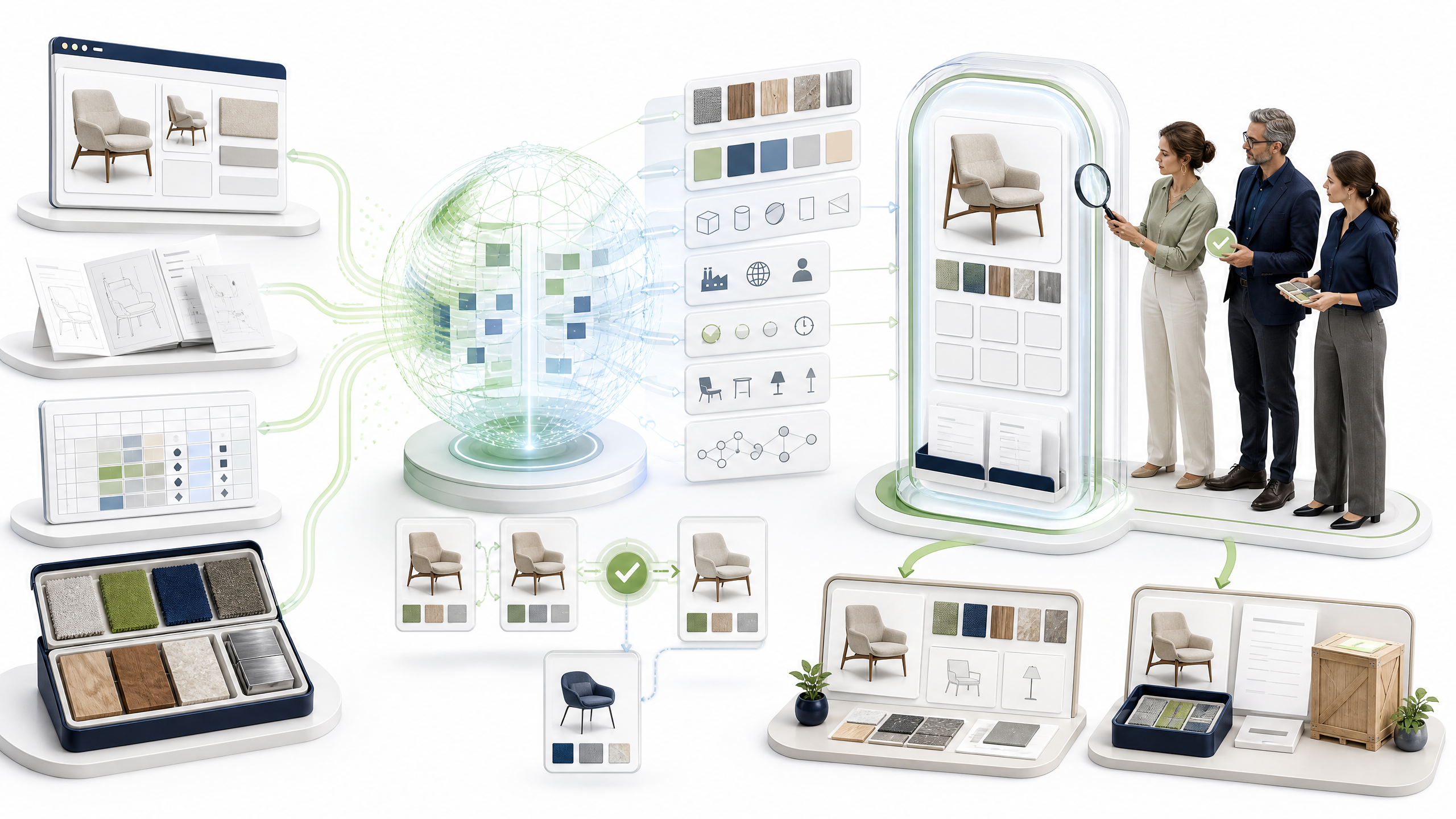
Building a centralized library once required extensive manual data entry. AI can now reduce that workload by helping teams:
AI should accelerate data collection, not replace professional review. Designers, specification managers, and procurement professionals still need to verify accuracy, approvals, performance requirements, pricing, and vendor relationships.
Fohlio’s AI-assisted product tools help teams capture and structure product information more efficiently while keeping records reviewable and connected to specification and procurement workflows. Those records can then move into Fohlio’s Spec Builder without requiring teams to recreate the product information.
Moving PDFs from one shared drive into another folder does not create structured product intelligence. Cut sheets should support the product record, not replace it.
Firms often delay implementation because they believe every product must be fully documented before anyone can use the library. Start with the information teams use most—such as manufacturer, model, category, dimensions, finish, image, vendor, price, lead time, and status—then enrich records as they are reused.
More fields do not automatically produce a better library. Capture information that supports selection, comparison, approval, specification, purchasing, installation, maintenance, or reporting.
If responsibility is shared vaguely across the organization, naming standards, duplicate management, pricing reviews, and product retirement are unlikely to happen consistently.
A structure that works for one project may fail when the firm manages thousands of products, multiple offices, international vendors, different brands, or AI-assisted search. Design the taxonomy and governance model for growth.
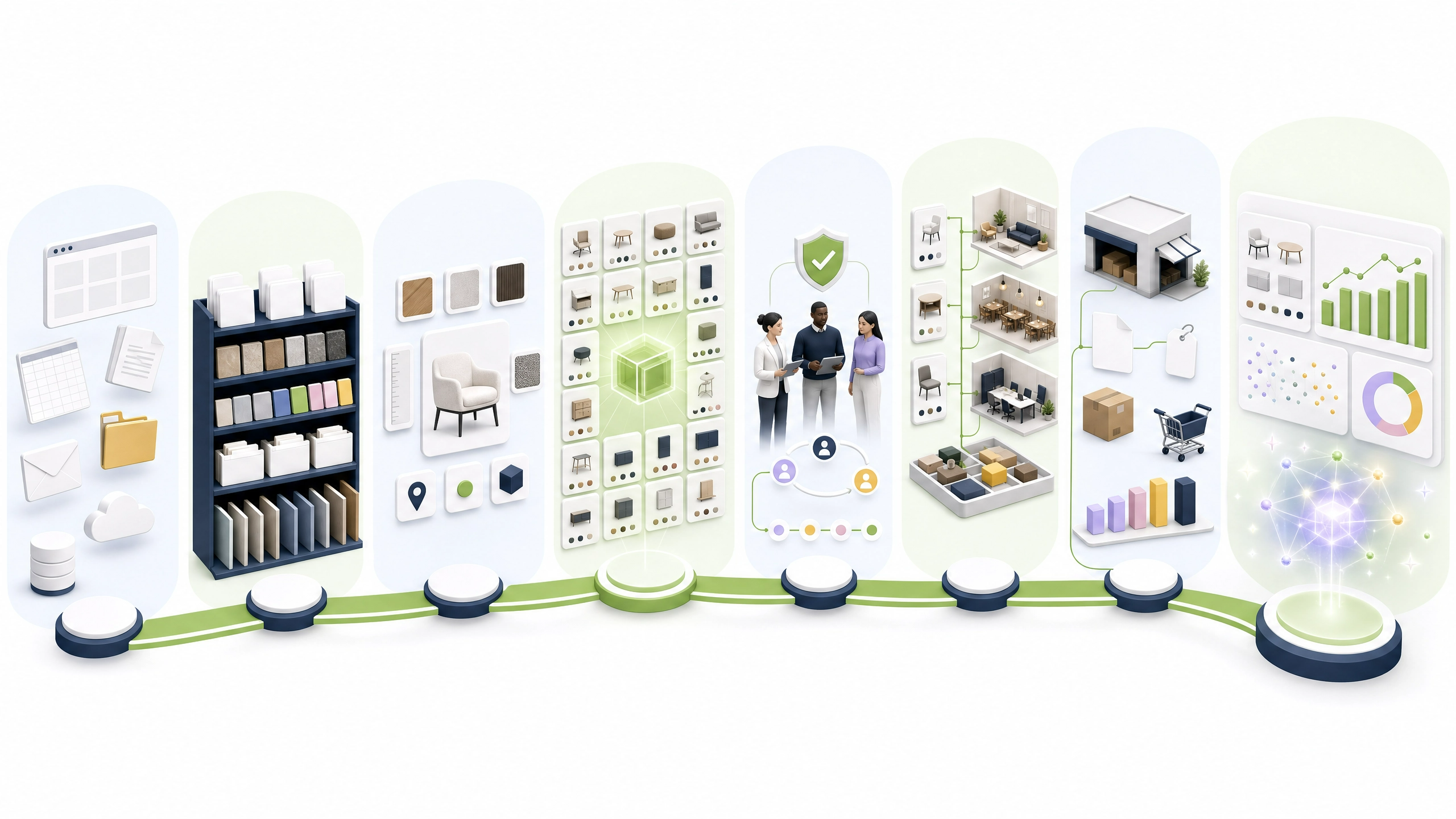
Firms do not need to migrate every historical file or replace every system at once. A phased approach creates value sooner and makes adoption easier.
Identify where product data currently lives, including websites, spreadsheets, PDFs, shared drives, email folders, specification software, procurement systems, and personal files. Note where information is duplicated, frequently searched, or manually transferred.
Create a taxonomy that reflects how the firm works. Establish controlled terminology for categories, manufacturers, finishes, project types, regions, approval statuses, and other important fields.
Determine which information is necessary to evaluate, specify, purchase, and install each product type. Avoid both generic templates and unnecessary data collection.
Begin with products the firm uses repeatedly: brand standards, preferred manufacturers, recurring hospitality packages, workplace standards, healthcare products, retail fixtures, or active prototypes. These records will create the fastest operational return.
Define who can create, approve, update, merge, and retire records. Establish a realistic review schedule for high-use products, vendors, pricing, and availability.
Allow designers to reference approved product records rather than recreate information for every project. Build reusable collections or Product Blocks for recurring rooms, packages, and prototypes. Learn more about creating connected specifications with Fohlio’s Spec Builder.
Link specifications to quotes, vendors, alternates, budgets, RFQs, and purchase activity. This reduces manual handoffs and gives teams better visibility into current and historical costs. Explore how Fohlio connects this information through its procurement platform.
Once product information is consistent, firms can analyze product usage, vendor performance, pricing trends, lead times, brand compliance, sustainability data, and portfolio activity. The same foundation supports AI-assisted search, recommendations, data extraction, and automation. Fohlio’s Analytics and Cross-Project Reports help leadership evaluate those patterns across the portfolio.

The value of a product library can be measured across several areas:
These benefits compound. Every completed project can contribute new pricing, vendor performance, substitutions, installation feedback, and project outcomes to the library.
A centralized product library should not operate as an isolated system. Its greatest value appears when the same product records support specifications, presentations, estimates, approvals, procurement, purchase orders, reporting, analytics, and AI.
Instead of copying information from one document or application into another, teams reference the same structured records throughout the project lifecycle. This reduces administrative work while improving consistency and visibility.
That is the difference between managing product files and building product intelligence.
The next article in this series, From Specifications to Procurement: Creating One Source of Truth, explores how structured product records can connect design decisions with budgeting and purchasing.
A centralized product library is a shared repository of structured product and material data. It can include manufacturer information, specifications, dimensions, finishes, prices, lead times, vendors, approvals, documents, project history, and lessons learned. It serves as a reusable source of truth across design, procurement, finance, and project management.
A product library reduces repeated research and data entry, improves specification consistency, preserves institutional knowledge, supports procurement and budgeting, and helps teams reuse approved products and standards across projects.
The exact fields depend on the product category. Common attributes include manufacturer, model number, category, dimensions, materials, finishes, price, lead time, vendor, warranty, certifications, approval status, installation requirements, project history, and related documents.
Procurement teams can access approved specifications, vendors, prices, lead times, alternates, quotes, and purchase history without recreating product information. This reduces manual entry, improves vendor comparisons, and lowers the risk of purchasing from outdated specifications.
AI needs consistent, structured data to search and compare products accurately. A centralized library gives AI context about categories, finishes, pricing, availability, approvals, vendors, and project history, enabling more relevant recommendations and more reliable analysis.
Ownership may belong to a product librarian, specification manager, design operations team, knowledge manager, or designated administrator. The owner should oversee data standards, approvals, duplicates, updates, and record retirement.
Yes. Firms can import spreadsheets and extract product information from PDFs, cut sheets, and manufacturer webpages. AI-assisted extraction can accelerate the process, but people should review the resulting records for accuracy, completeness, and approval status.
Start by inventorying existing information, defining categories and required attributes, and building a core library from frequently specified or approved products. Then establish ownership, connect the records to specifications and procurement, and expand the library through active project work.
A centralized product library is far more than a collection of manufacturer information. It is one of the most valuable knowledge assets an interior design firm can build.
By organizing products as structured, reusable records, firms can reduce duplicate work, improve specifications, support more accurate budgeting, simplify procurement, preserve institutional knowledge, and create a reliable data foundation for AI.
The technology matters, but the lasting advantage comes from what the organization builds with it: a body of product intelligence that becomes more useful with every completed project.
That is the difference between storing products and building organizational knowledge.




Discover how structured data, connected workflows, and AI help design firms reduce manual work, improve project delivery, and scale smarter.
Discover why AI alone isn't enough for interior design. Learn how structured data, connected workflows, and standardized specifications unlock real...
A guide to build Bill of Quantities for FF&E projects — from room matrices to vendor comparisons to what happens when finishes change after budget...