Software
Building an AI-Ready Design Practice
Discover how structured data, connected workflows, and AI help design firms reduce manual work, improve project delivery, and scale smarter.

Specify, procure, prototype, collaborate, and analyze at scale. Take on bigger projects with confidence and grow your firm with Fohlio. Schedule a demo or book a consultation with one of our account managers to explore these features today.
A specification can be perfectly accurate when a designer completes it—and still result in the wrong product being purchased.
Why?
Because one of the greatest risks in commercial interior design doesn't necessarily occur while the specification is being written. It happens when information moves from design to procurement.
A designer specifies a product. The specification is exported to PDF or Excel. Procurement receives the document and begins requesting quotes. Vendor pricing arrives through email. Quantities are copied into another spreadsheet. Approved costs are transferred into a budget. Purchase orders are generated in yet another system.
At every handoff, information is copied, interpreted, reformatted, or re-entered.
And every handoff creates another opportunity for design intent and purchasing reality to drift apart.
The solution isn't simply better communication between designers and procurement teams.
It's creating one source of truth that connects specifications, quantities, approvals, vendors, pricing, budgets, purchase orders, and revisions throughout the project lifecycle.
That's the difference between handing a specification to procurement and building a connected specification-to-procurement workflow.
As discussed in Building an AI-Ready Design Practice, connected data is increasingly becoming the foundation for smarter design operations. The same principle applies to procurement: information becomes significantly more valuable when teams continue working from the same underlying records instead of recreating them at every stage.

A single source of truth means that the critical information used to specify, approve, price, purchase, and track a product comes from a shared, connected record rather than multiple independent copies.
That record might include:
Designers, procurement teams, finance, project managers, vendors, and clients may need different views of that information.
But they shouldn't need different versions of it.
That's the fundamental idea behind a connected design and procurement workflow: the specification becomes part of a continuous information flow from initial product selection through purchasing and delivery.

Traditional workflows tend to be linear. Design completes the specification. Then procurement takes over. That sounds efficient because responsibilities appear clearly separated.
In practice, projects aren't linear.
Products change. Clients request alternates. Budgets tighten. Lead times increase. Manufacturers discontinue finishes. Quantities change. Vendors recommend substitutions. Design decisions continue after procurement begins.
When design and procurement operate through separate documents and systems, every change creates a synchronization problem.
Imagine a designer specifies 50 guestroom lounge chairs with a particular fabric.
The client approves the selection.
Procurement requests pricing.
Then the manufacturer announces that the selected fabric has a 20-week lead time.
An alternate finish is approved.
If the information exists across separate systems, someone may need to update:
Miss one update, and someone may act on outdated information.
Fohlio has explored this problem previously in Close the Gap: Why & How to Streamline Design & Procurement Workflows, where the separation between design and purchasing is identified as a source of disconnected information, human error, and repetitive work.
The goal isn't merely to move information between departments faster.
It's to reduce how often information needs to be recreated in the first place.
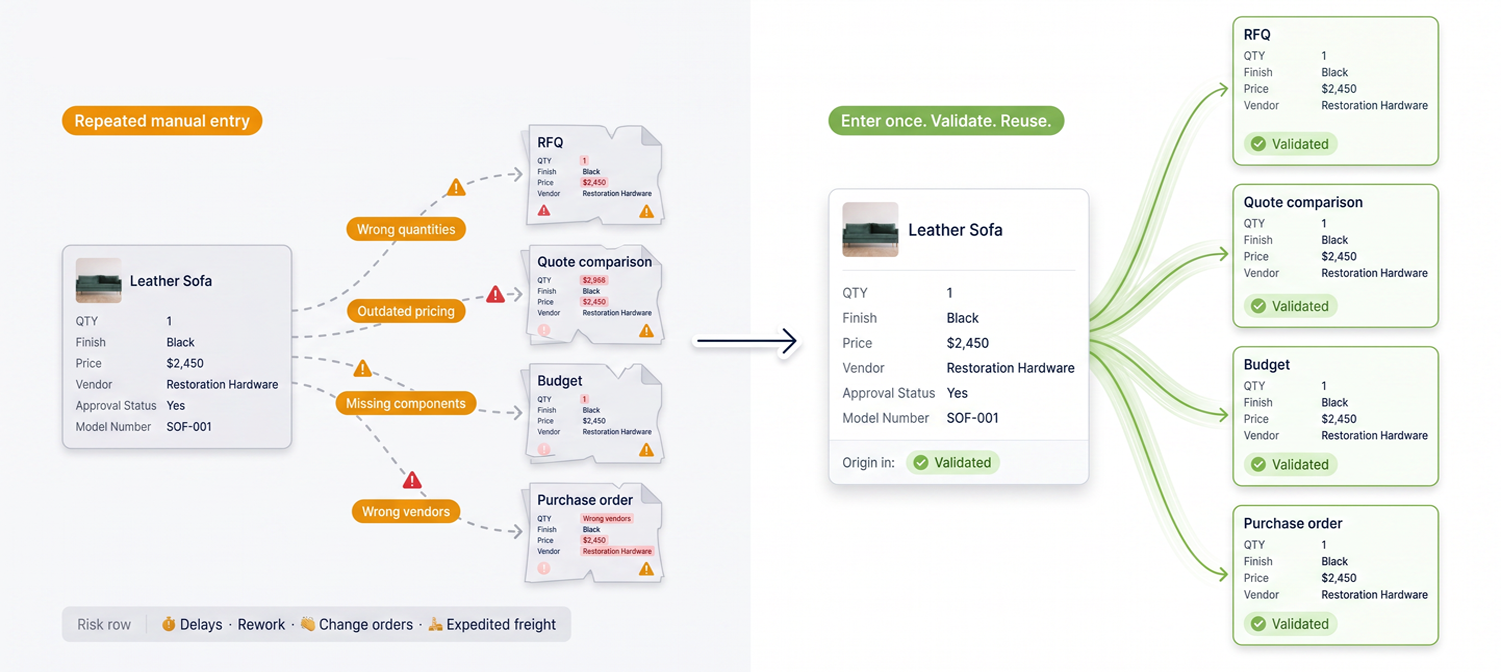
Copying product information from one document into another may seem like a small administrative task.
Across an entire commercial project, it becomes a significant operational burden.
Consider a project containing hundreds—or thousands—of FF&E, OS&E, finish, and architectural material records.
If procurement has to manually transfer information from specifications into RFQs, quote comparisons, budgets, and purchase orders, teams spend substantial time performing work that has technically already been completed.
Manual re-entry can also introduce errors such as:
These errors don't remain confined to a spreadsheet.
They can become incorrect purchase orders, expedited freight, schedule delays, change orders, rework, or products arriving on site that don't match the approved design.
The more times information is recreated, the more opportunities there are for it to change.
That's why the objective should be simple:
Enter critical information once, validate it, and reuse it throughout the workflow whenever possible.
Fohlio's Spec-to-Procure platform is built around this concept, allowing specifications, pricing, quantities, vendors, approvals, and purchasing information to remain connected instead of requiring teams to rebuild the project in separate systems.
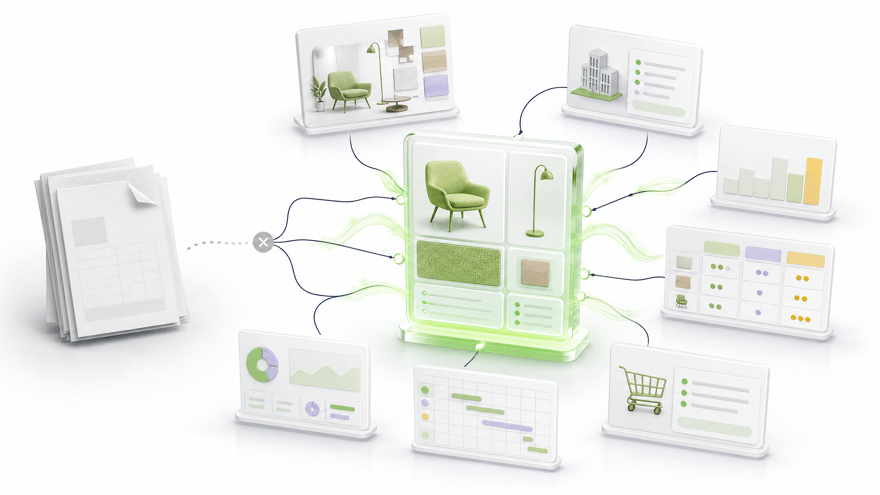
Specification books, schedules, and PDFs remain important project deliverables.
But they shouldn't be the only place product information lives.
A PDF represents a snapshot of the project at a particular moment.
The project continues changing after that snapshot is created.
A price changes.
A finish is substituted.
A quantity increases.
A vendor changes.
A product is discontinued.
A lead time becomes unacceptable.
If the specification exists primarily as a static document, every downstream change creates another version.
A more scalable approach is to treat the structured product record as the source of truth and the specification document as one output from that data.
The same underlying record can then support:
Fohlio's FF&E Spec Builder takes this approach by allowing teams to capture detailed FF&E, OS&E, and finish information as structured data, reuse preferred specifications, maintain linked product information, and generate different reports from those records.
This creates a fundamentally different workflow.
Instead of asking:
"Did someone update the procurement spreadsheet after the specification changed?"
Teams can work from information that remains connected as the project evolves.
At minimum, a strong specification-to-procurement workflow should maintain connections among four major information groups.
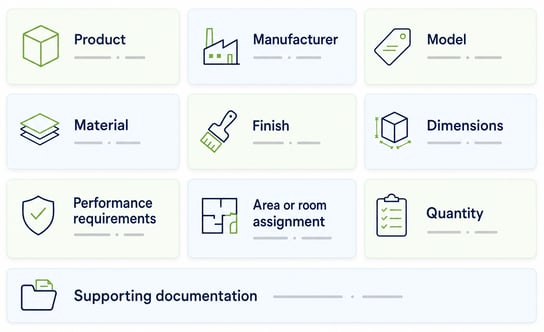
This includes:
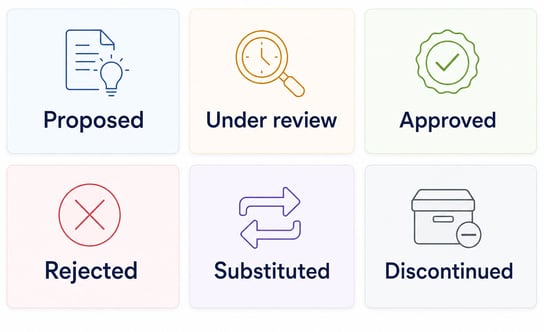
Teams should know whether an item is:
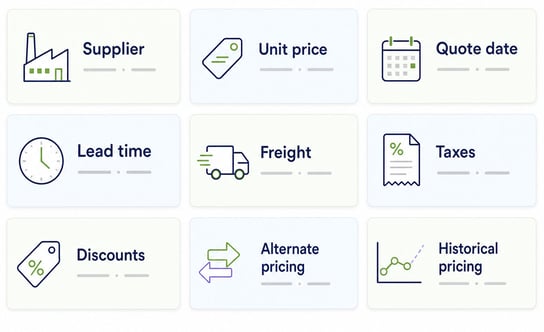
This includes:
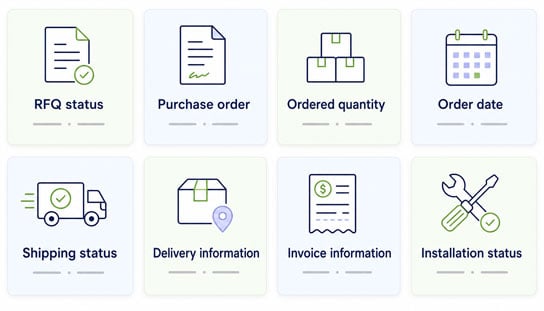
Once purchasing begins, teams also need:
When these groups exist independently, teams spend time reconciling them.
When they're connected, the organization gains visibility into the complete lifecycle of the product.
A connected workflow allows information to evolve from design intent into purchasing information without breaking the relationship between the two.
Here's what that process can look like.
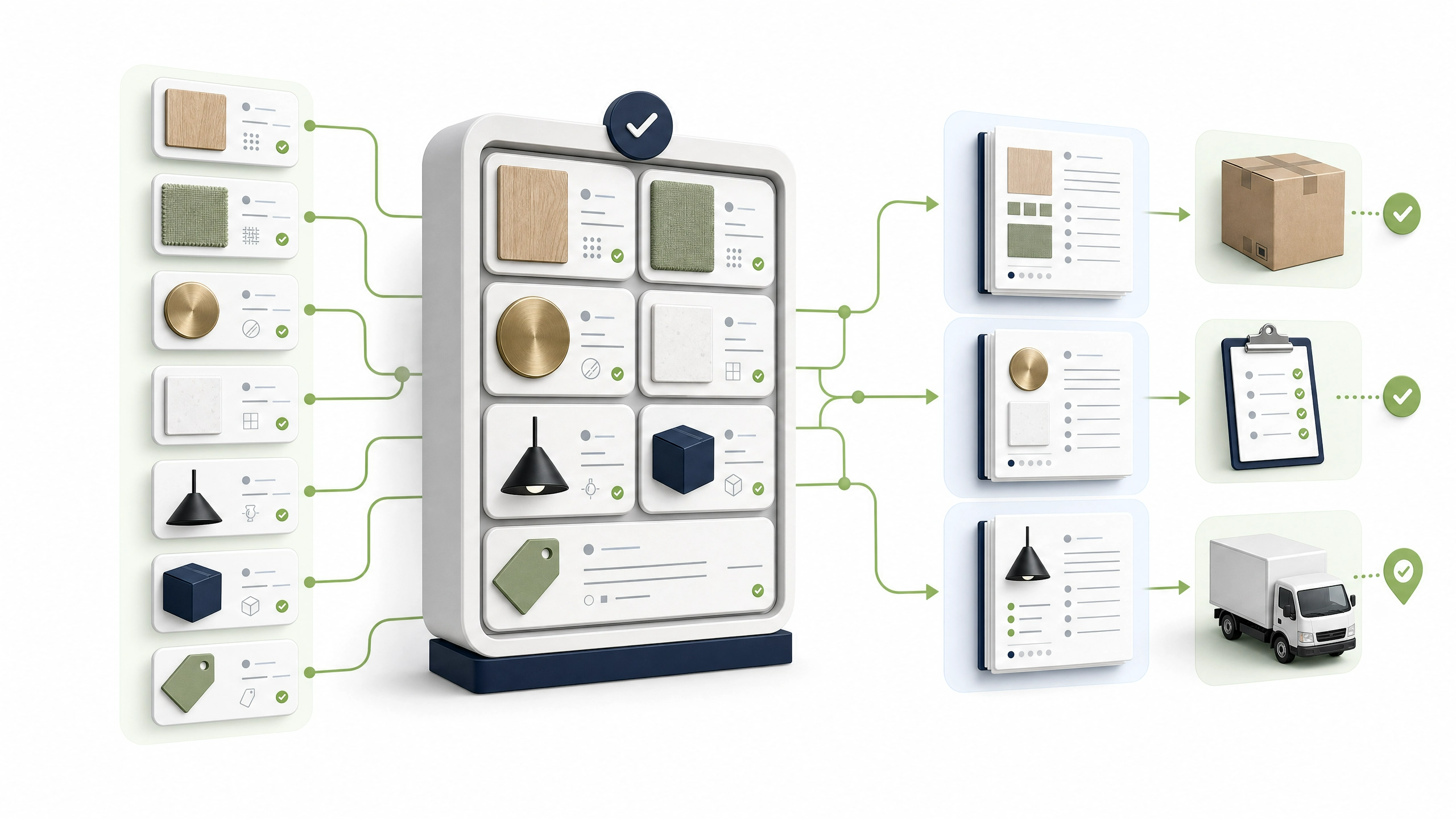
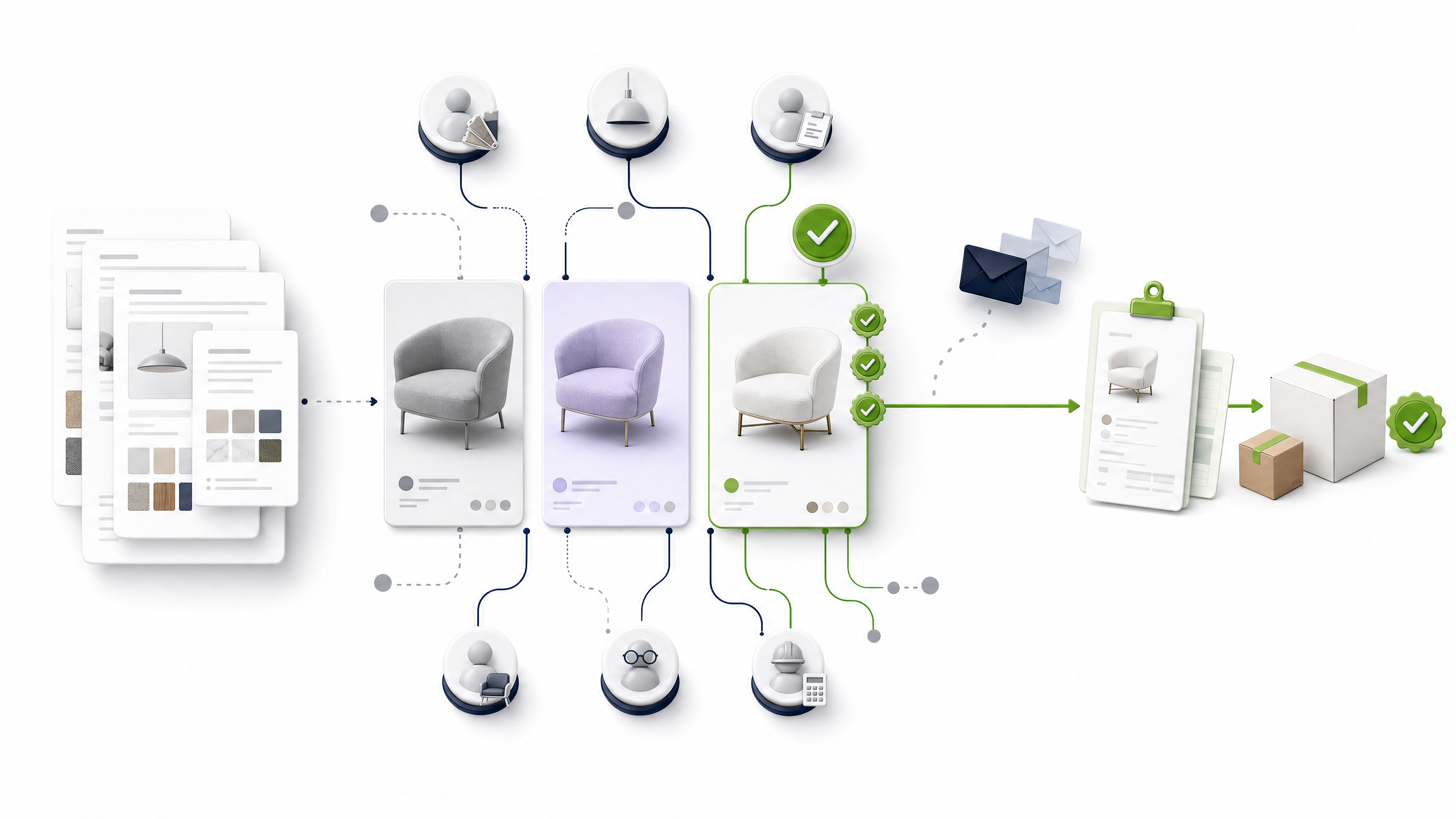
The workflow begins before procurement.
Products should already exist as structured records containing the information designers and purchasing teams will eventually need.
This is where a centralized product library becomes important.
Rather than repeatedly collecting manufacturer, finish, vendor, pricing, and technical information, teams can reuse approved records from previous projects.
Our guide to How to Build a Centralized Product Library for Interior Design Firms explores this foundation in greater detail.
Fohlio's Product & Materials Library can serve as a centralized environment for reusable product information that feeds specifications and downstream workflows.
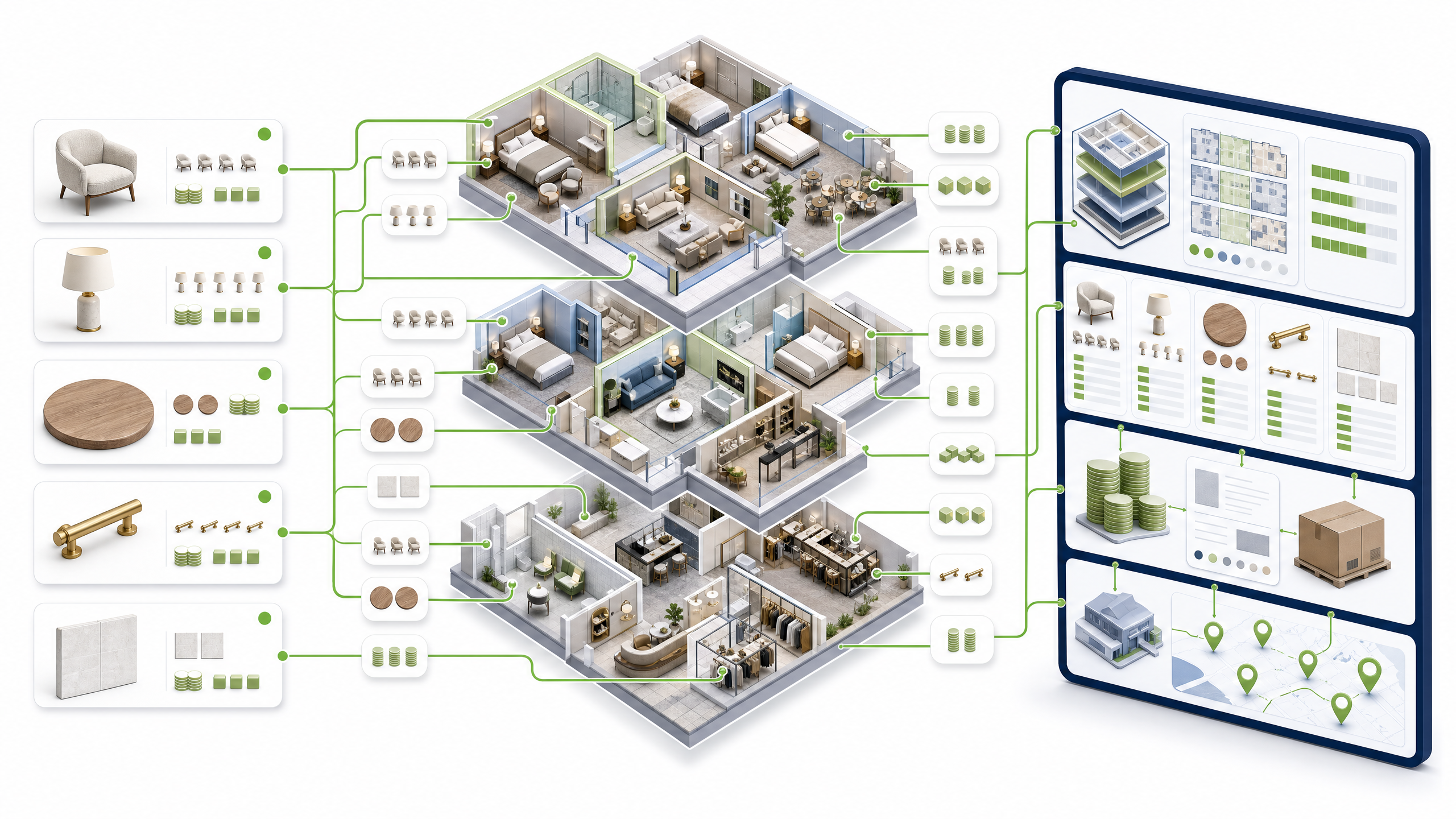
A product isn't ready for procurement until the team knows how much is required and where it belongs.
Quantities should connect directly to:
This becomes particularly important for hospitality, retail, senior living, multifamily, and other repeatable environments.
Fohlio's Design & Procurement platform allows teams to organize projects by area, unit, or room and allocate products and quantities accordingly.
That connection helps reduce missed items while giving teams visibility into budgets, specifications, and orders at both the area and project levels.
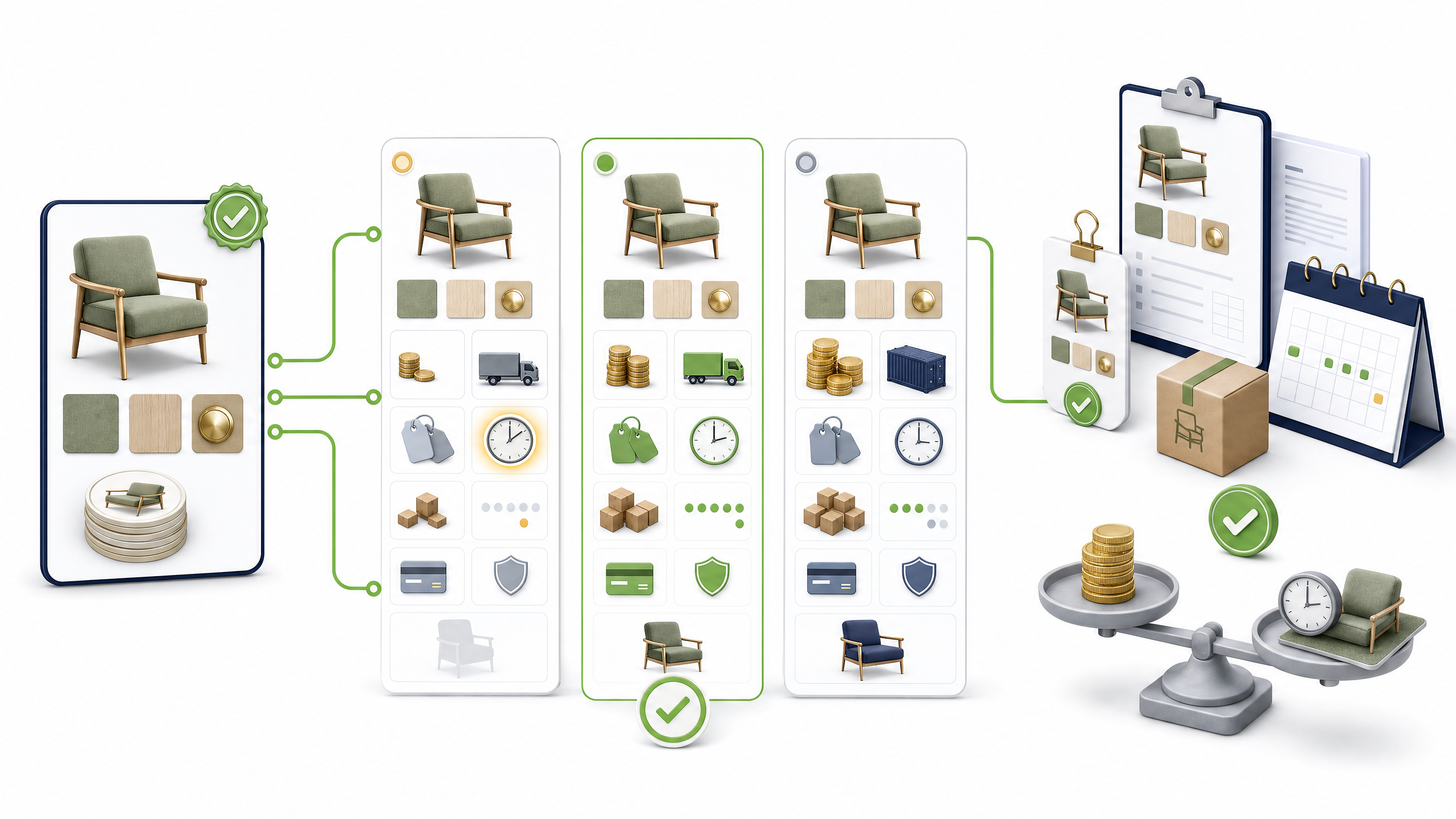
A product appearing in a specification doesn't necessarily mean it's ready to order.
The team needs to know whether it has been approved—and by whom.
Approval workflows may involve:
A connected workflow makes approval status visible before purchasing begins.
This is particularly important when multiple alternates are being evaluated.
Procurement should be able to identify the approved product without searching through email chains or comparing several versions of a specification.
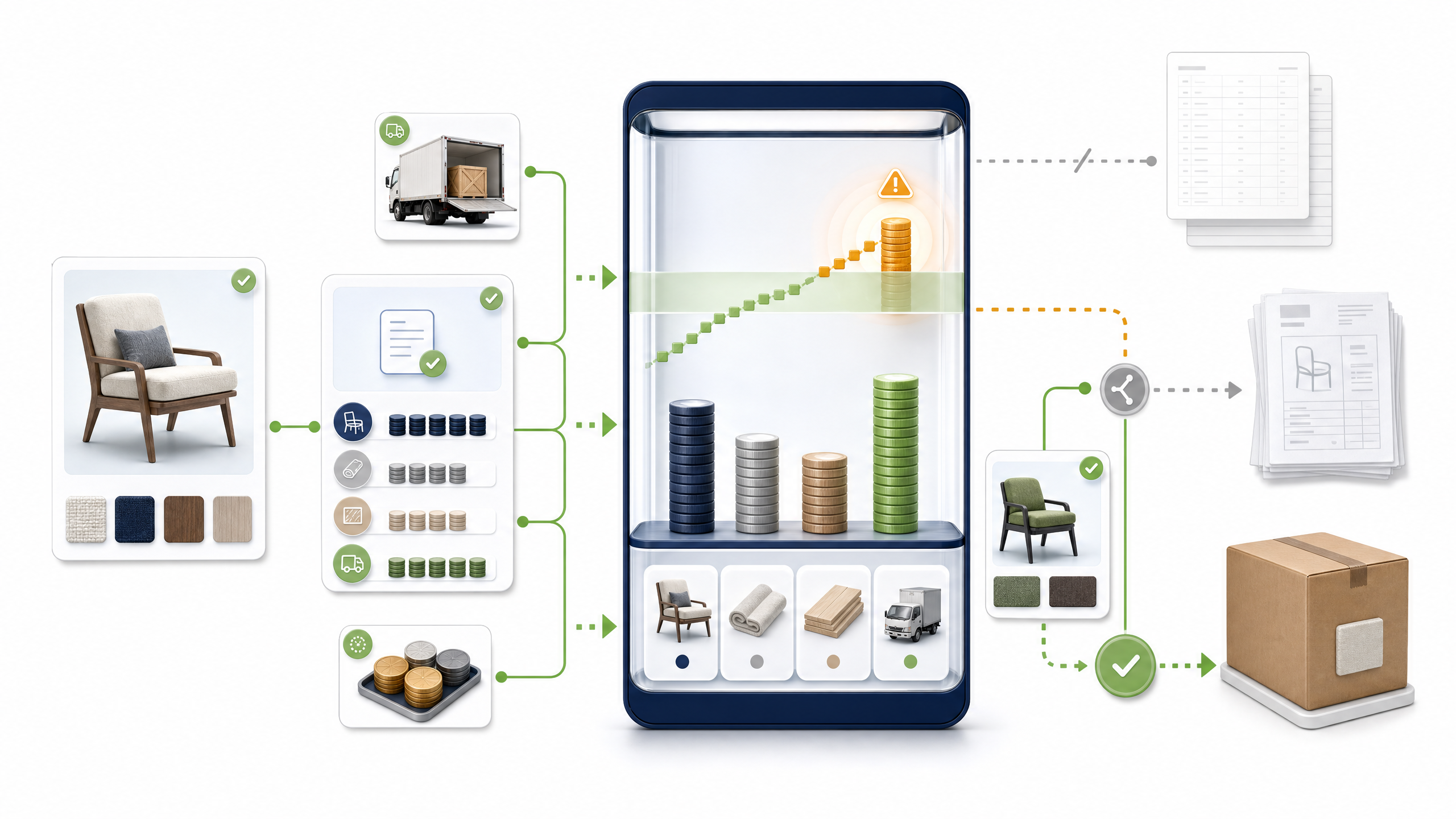
Once specifications and quantities are established, procurement can begin collecting supplier pricing.
But price shouldn't be evaluated in isolation.
A quote may differ based on:
A cheaper product isn't necessarily the better procurement decision if it creates a schedule risk or requires an expensive substitution elsewhere.
Connected information allows procurement teams to evaluate commercial factors while preserving the design requirements behind the specification.
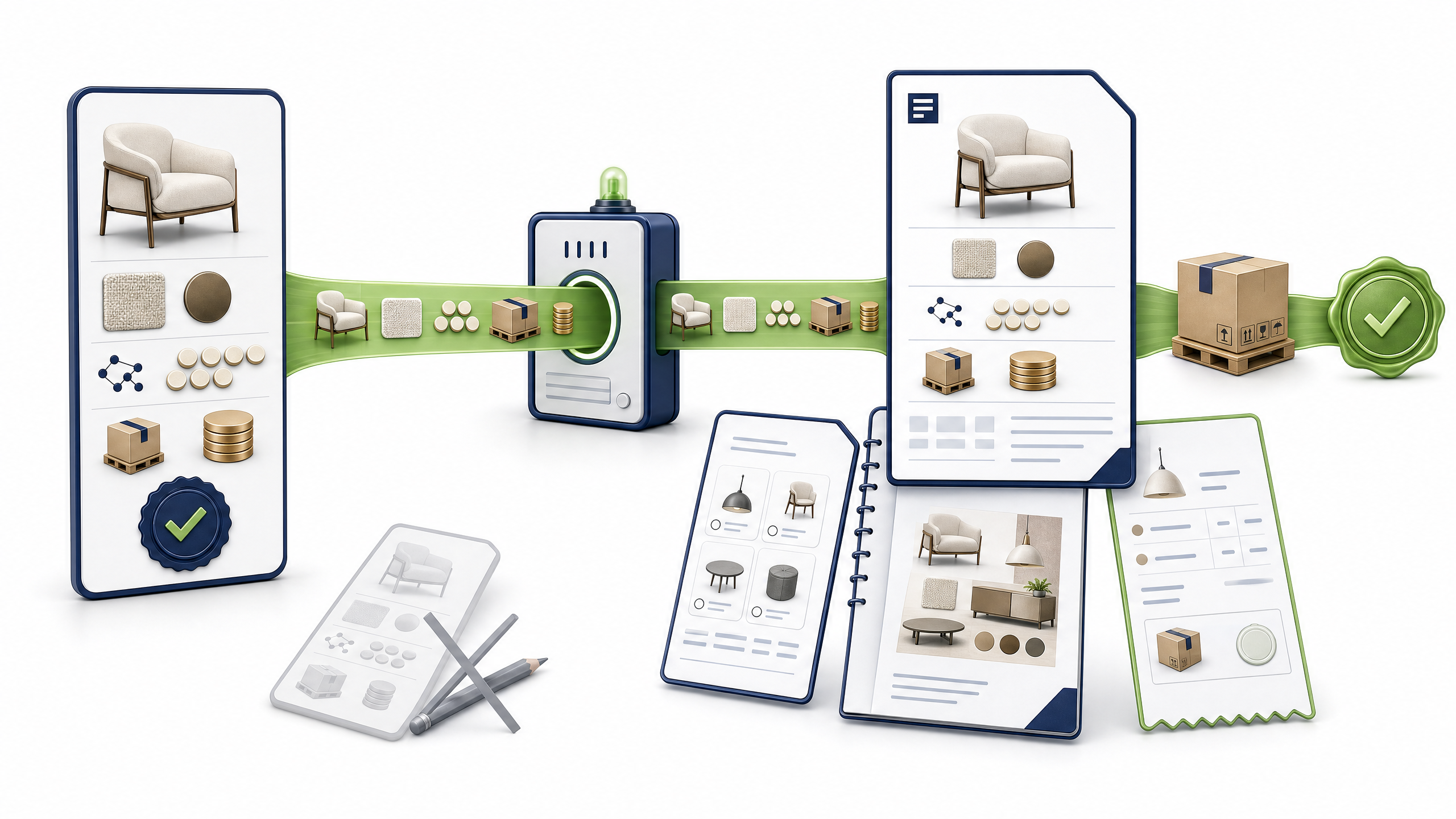
One of the most common sources of project uncertainty is the gap between estimated cost and actual procurement cost.
A specification may originally include a budget allowance.
Then vendor quotes arrive.
Freight changes.
Quantities change.
A product is substituted.
If the project budget lives in an independent spreadsheet, someone has to continuously reconcile those changes manually.
Connecting product and procurement information to the budget gives teams earlier visibility into cost impacts.
Instead of discovering a budget problem after purchase orders have been issued, teams can identify potential overruns while alternatives still exist.
This relationship between product data and financial visibility is so important that we'll explore it separately in Connected Budgeting: Why Financial Visibility Starts With Product Data later in this series.
The purchase order shouldn't require procurement to recreate the specification.
It should be generated from the information the team has already reviewed and approved.
Fohlio allows teams to use project information to create procurement documents including purchase orders, supplier quote requests, proposals, and invoices.
This removes an unnecessary translation step between specification and purchasing.
The benefit isn't simply speed.
It's continuity.
The model number, finish, quantity, vendor, and price on the purchase order remain connected to the information that led to the purchasing decision.
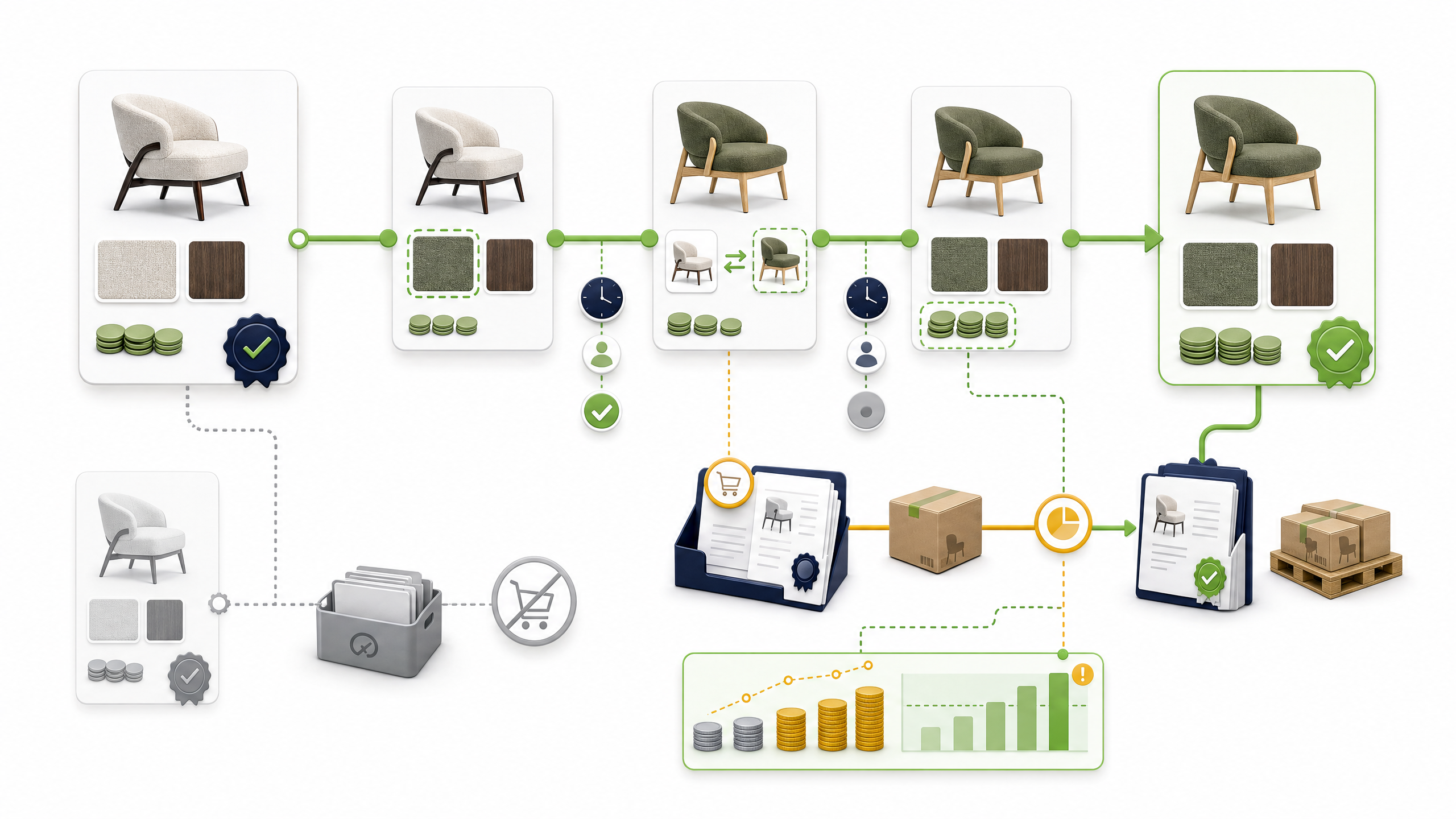
Projects change after procurement begins.
That's unavoidable.
What matters is whether teams can see those changes.
A connected workflow should preserve visibility into:
Fohlio's design and procurement workflow maintains change history and connects specification updates to related project information, helping teams avoid purchasing from obsolete records.
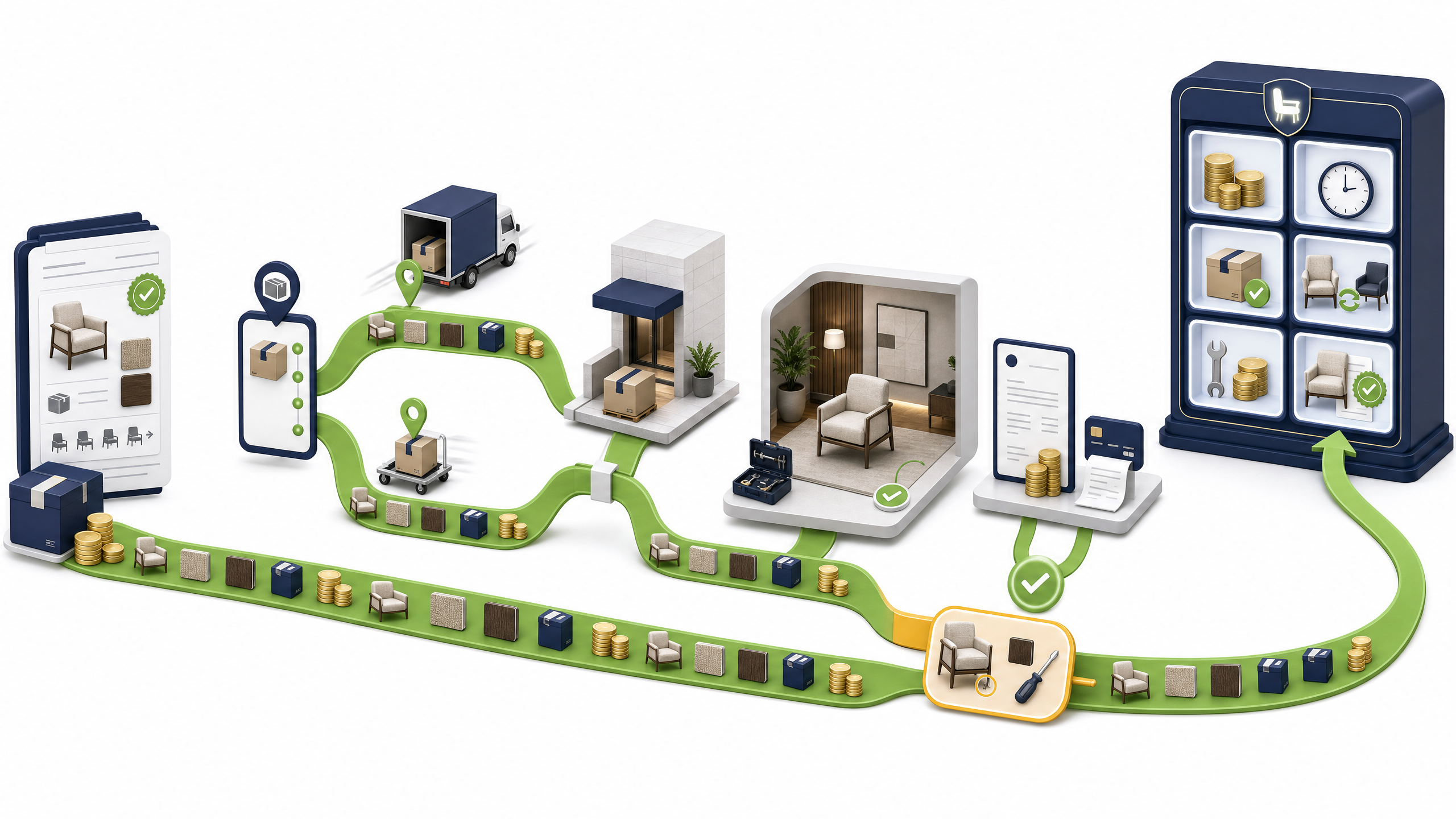
Procurement doesn't end when the purchase order is issued.
Teams still need visibility into:
Maintaining continuity through these stages creates something valuable for future projects: historical procurement intelligence.
The firm can eventually answer questions such as:
That information becomes part of the organization's knowledge base.

Procurement isn't simply the administrative process of buying what designers select.
Purchasing decisions frequently affect design outcomes.
A specified product may:
Procurement then needs alternatives.
This is where design intent can become vulnerable.
If purchasing teams see only model numbers and prices, they may not understand which attributes are essential to the design.
A substitute may technically belong to the same category while failing to preserve:
The solution isn't preventing procurement from suggesting alternatives.
It's giving procurement enough design context to make better recommendations.
Connected specifications allow teams to evaluate substitutions against both commercial and design criteria.
Fohlio's article Design for Procurement: How To Elevate Project Output explores this relationship between the two disciplines and why treating them as independent stages creates unnecessary risk.

The best time to discover that a product puts the project over budget is before the purchase order is issued.
That sounds obvious.
Yet disconnected systems often make real-time cost visibility difficult.
A product's financial impact may include more than its unit price.
Teams may also need to consider:
This is particularly important for FF&E and OS&E packages where hundreds of small cost changes can create significant portfolio-level impacts.
When specifications and financial data remain connected, teams can evaluate design decisions against budget consequences earlier.
Designers can see when a selection creates financial pressure.
Procurement can compare alternatives.
Finance can monitor committed spending.
Leadership gains clearer visibility into project exposure.
A source of truth isn't complete if design data and financial data remain separate.

Vendor selection is another area where connected historical data creates value.
Without structured information, teams often evaluate suppliers primarily on the current quote.
With connected project history, they can consider broader factors.
For example:
The lowest quote doesn't always represent the lowest project risk.
Connected procurement data allows organizations to make decisions based on both current pricing and historical performance.
Over time, the procurement system becomes more than an order tracker.
It becomes a source of supplier intelligence.

This is one of the most important questions in any specification-to-procurement workflow.
A specification can change after client approval but before purchasing.
Or after an RFQ.
Or even after a purchase order has been drafted.
The process needs to make the change visible to everyone affected.
A strong workflow should help teams determine:
Without this visibility, the procurement team may unknowingly order an obsolete product.
Connected revision history reduces this risk by keeping the change associated with the original record rather than creating an entirely separate information trail.

A common misconception is that centralizing information forces everyone to work from the same interface.
It doesn't.
Different stakeholders need different perspectives.
The views change.
The underlying records don't.
Fohlio's Design & Procurement solution supports role-based views and collaboration so internal and external stakeholders can access the information relevant to them while teams continue working from connected project data.

Once specification and procurement data are structured and connected, AI becomes significantly more useful.
AI can help teams:
For example, instead of manually filtering spreadsheets, a procurement professional could eventually ask:
"Which approved products on this project have lead times longer than 12 weeks?"
Or:
"Show me items where the latest vendor quote exceeds our specification budget by more than 10%."
Or:
"Which products have approved alternates from vendors we've previously used?"
But AI can't reliably answer those questions if specifications, quotes, approvals, and purchasing data live in unrelated files.
This is why the foundation matters.
Our supporting article Why AI Fails in Interior Design Without Structured Data explores this issue in depth, while the pillar guide Building an AI-Ready Design Practice explains how structured specifications, product libraries, procurement, budgeting, and reporting come together to create AI-ready operations.
AI can accelerate the workflow.
Connected data makes the workflow trustworthy.

Connecting specification and procurement workflows creates benefits across the organization.
Information doesn't need to be repeatedly copied into new spreadsheets and documents.
Approved product details remain connected to purchasing information.
Teams spend less time searching for specifications, reconciling versions, and rebuilding product records.
Updated vendor pricing can be evaluated against project budgets earlier.
Procurement teams gain the context needed to evaluate substitutions intelligently.
Approvals, revisions, and purchasing decisions become easier to track.
Every completed project contributes supplier, pricing, lead-time, and purchasing intelligence that can improve future decisions.
For firms managing large or repeatable projects, these improvements compound.
Fohlio's procurement tools are designed to connect purchasing with product and project information while supporting pricing, historical data, approvals, order tracking, and collaboration.
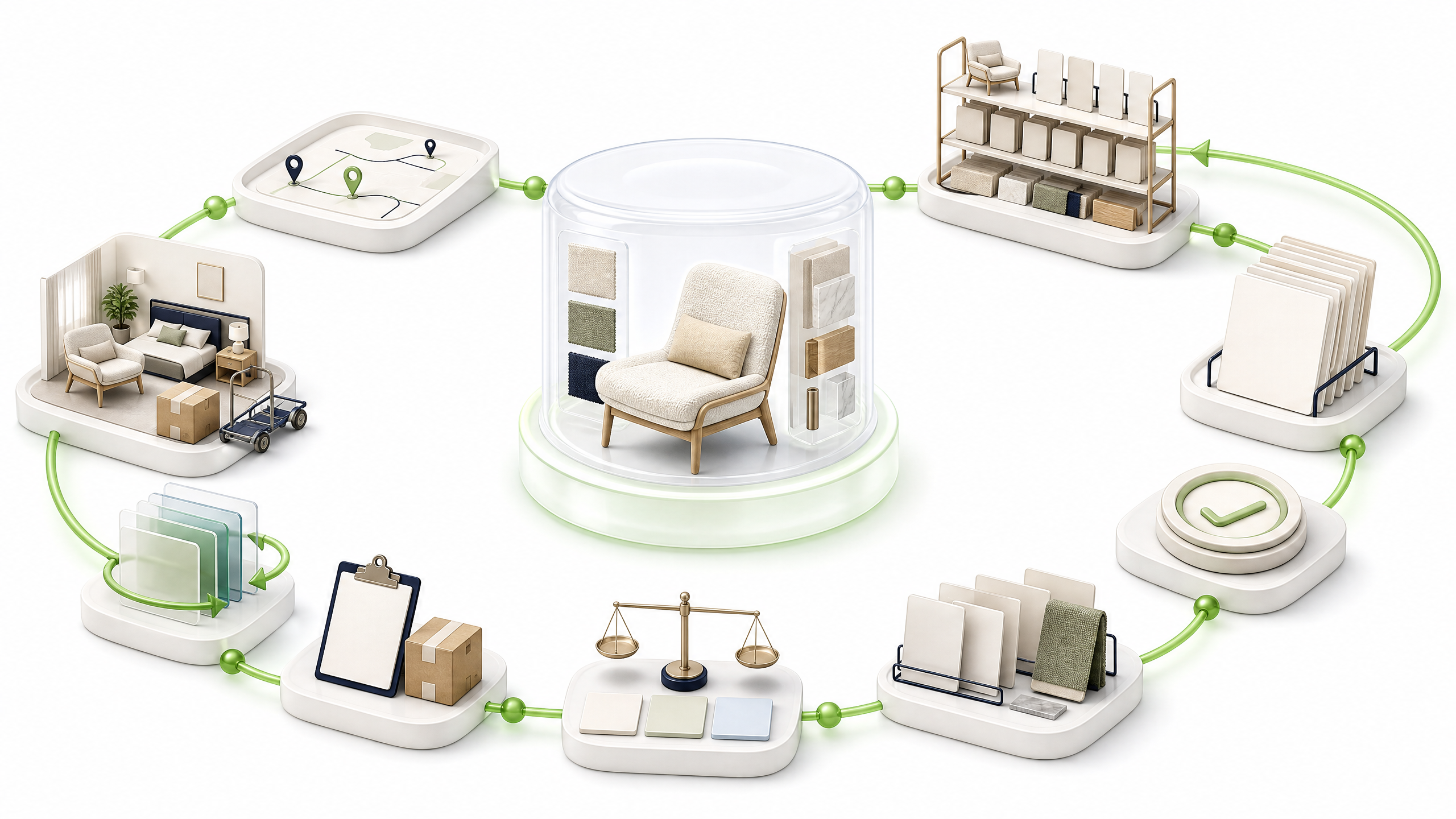
Creating one source of truth doesn't require redesigning your entire technology stack overnight.
Start with the handoffs creating the most duplicate work.
Document how information moves from initial specification through purchasing.
Identify every place where someone manually copies information.
Determine which information should remain consistent throughout the project.
At minimum, this usually includes the product, model, finish, quantity, vendor, price, and approval status.
Build a structured product library instead of recreating product records for every project.
Create templates and required attributes so similar products are documented consistently.
Make approval status visible before products move into purchasing.
Keep quotes and supplier information associated with the specification rather than in isolated email threads.
Ensure changes to quantities, products, and pricing can be evaluated against the project budget.
Reduce re-entry by creating RFQs and purchase orders from trusted project data.
Maintain visibility into what changed and whether the change affects procurement.
Preserve actual cost, supplier performance, delivery information, substitutions, and lessons learned so the next project starts with better information.
The specification shouldn't be the document design hands to procurement at the end of its work.
It should be the beginning of a connected data chain that continues through pricing, approval, budgeting, purchasing, delivery, and installation.
That shift changes the relationship between design and procurement.
Instead of operating as separate stages, the two disciplines work from shared project intelligence. Designers maintain visibility into how purchasing decisions affect design intent. Procurement understands the requirements behind the specification. Finance sees the cost impact of project decisions. Leadership gains clearer insight into project performance. And every completed project leaves behind better data for the next one. Creating one source of truth isn't simply about organizing information.
It's about ensuring the product that was designed, approved, budgeted, purchased, delivered, and installed remains connected throughout its entire lifecycle.
For organizations ready to close that gap, explore how Fohlio connects design intent, specifications, budgets, and procurement within one continuous workflow.
Specification management software helps design teams create, organize, update, share, and reuse structured product specifications. More advanced platforms can connect those specifications with product libraries, approvals, budgets, vendors, procurement, and reporting so teams don't need to maintain separate versions of the same information.
A single source of truth is a shared system where critical project information is maintained as connected records rather than duplicated across independent spreadsheets, PDFs, emails, and applications. Different stakeholders can access different views while relying on the same underlying information.
Specifications provide the product, finish, quantity, performance, and approval information procurement needs to request pricing and place orders. In a connected workflow, that data flows directly into RFQs, vendor comparisons, budgets, and purchase orders rather than being manually re-entered.
Firms can reduce procurement errors by standardizing specifications, centralizing product information, connecting approvals and vendor pricing, generating purchasing documents from approved data, and maintaining clear revision histories throughout the project.
Yes. When specifications are stored as structured data, approved product information, quantities, vendors, and pricing can be used to generate purchase orders without manually recreating the product record. Fohlio supports generating procurement documents directly from project information.
A specification change can affect pricing, quantities, vendor selection, lead times, budgets, and purchase orders. Connected workflows help teams identify those downstream impacts and prevent procurement from acting on obsolete specifications.
AI can assist with product-data extraction, quote comparison, alternate identification, missing-information detection, historical search, lead-time analysis, and budget-risk identification. Its effectiveness improves when specification, vendor, approval, pricing, and purchasing data are structured and connected.
An FF&E specification typically includes manufacturer, product name, model number, dimensions, material, finish, quantity, project area, performance requirements, vendor information, pricing, lead time, attachments, alternates, and approval status. Required attributes vary by product category and project requirements.
The most effective approach is to give both teams access to connected product and project information. Designers provide design intent and specification requirements, while procurement contributes pricing, availability, vendor, and lead-time intelligence. A shared source of truth allows both teams to make decisions without maintaining conflicting versions of project information.




Discover how structured data, connected workflows, and AI help design firms reduce manual work, improve project delivery, and scale smarter.
A guide to build Bill of Quantities for FF&E projects — from room matrices to vendor comparisons to what happens when finishes change after budget...
Discover why AI alone isn't enough for interior design. Learn how structured data, connected workflows, and standardized specifications unlock real...