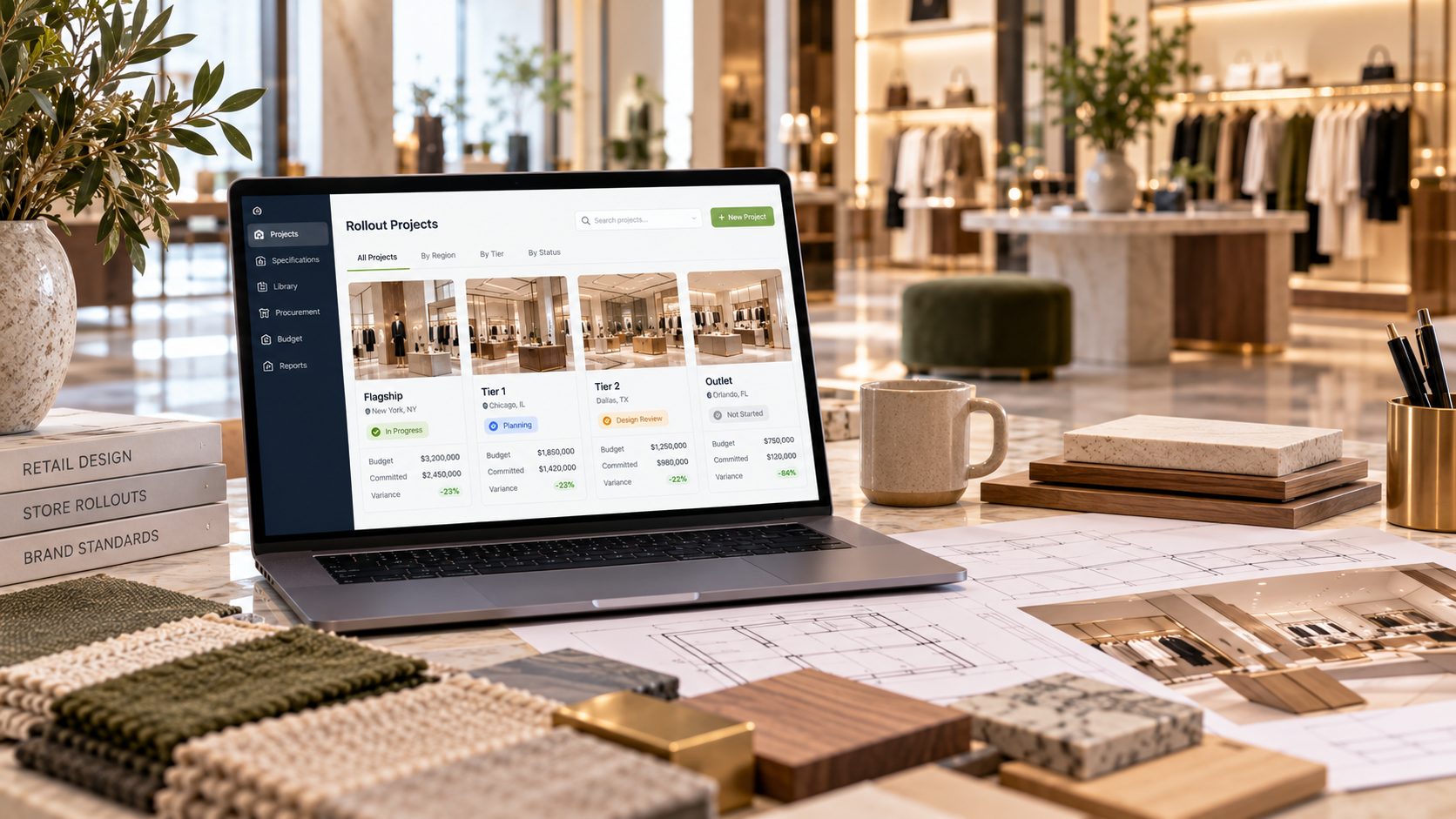
Most retail organizations budget a rollout the same way. They take what an average store cost last year and multiply it by the number of openings planned. Opening 25 stores? Last year's per-store cost times 25.
That number does its job. It gets capital approved, and for organizations with large CapEx budgets, interiors are rarely the line that gets challenged. The problem comes after approval. A historical average can't tell procurement how many fitting-room chairs to order, how much fabric to reserve, which suppliers to brief, or when each shipment has to leave.
A top-down budget is a brushstroke. Planning needs line items.
The prototype is a playbook, not a budget
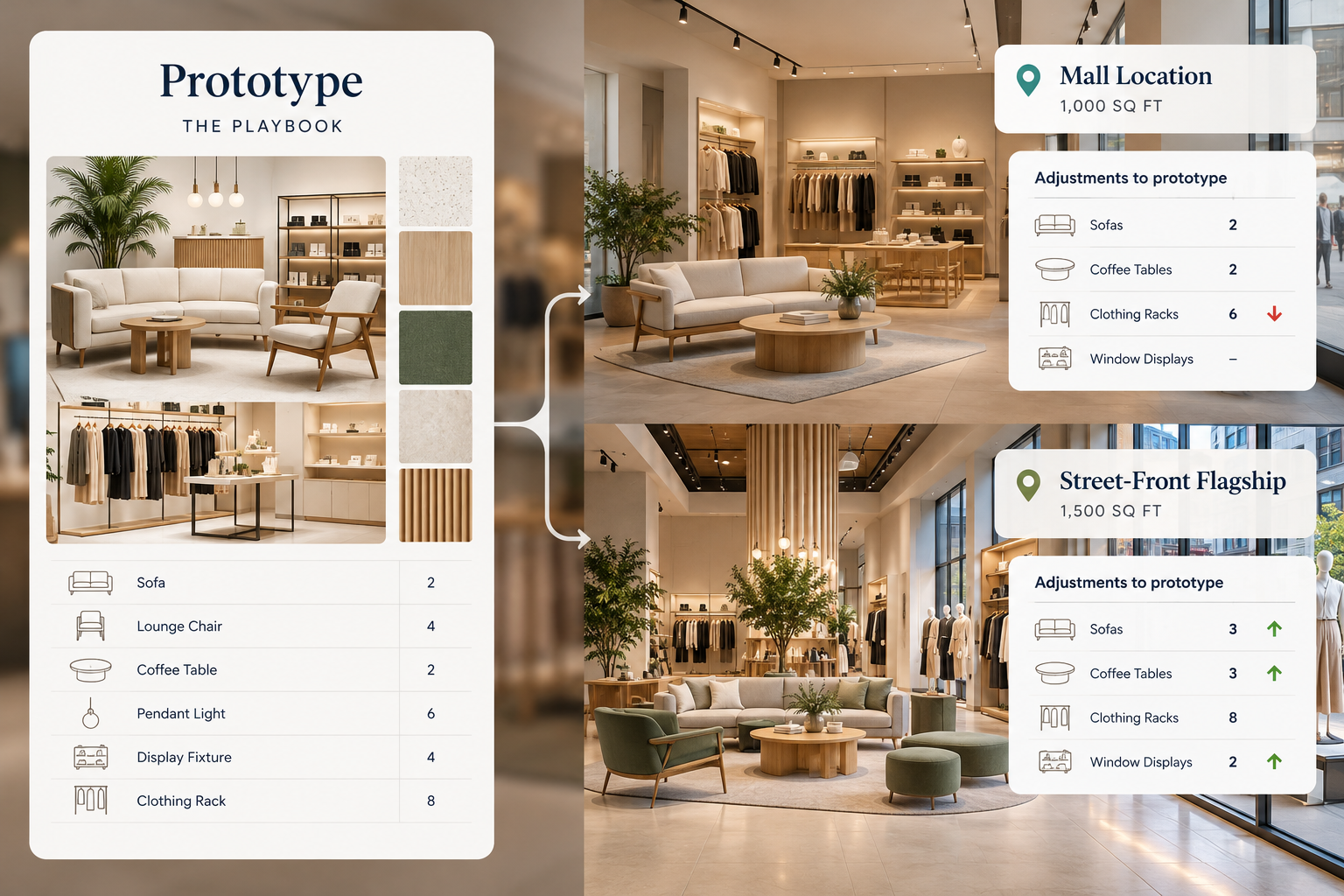
Most rollout brands maintain a store prototype: the standard set of furniture, millwork, fixtures, and finishes that defines the brand in a physical space. The prototype answers "what goes in a store?" It can't answer "what goes in this store?"
That second question belongs to the location estimate. An estimate starts as a copy of the prototype, then adjusts to the real space:
- A fitting room is 1,000 sq ft in one mall and 1,500 sq ft in the next.
- One lounge area holds two sofas; a larger footprint holds three.
- A street-front flagship needs window displays an in-mall store doesn't.
Even brands with tight standards rarely find two identical spaces. A good estimate keeps the prototype's identity and changes only the quantities and the pieces the footprint demands.
Tiers set the baseline
Not every store is built to the same level. Many organizations classify locations by tier before any design work begins, for example:
| Tier |
Typical role |
| Flagship |
Brand statement in a top market; highest custom content |
| T1 |
Major-market store at full brand standard |
| T2 |
Secondary market; standard prototype with fewer custom pieces |
| T3 / Outlet |
Value format; simplified fit-out |
Each tier gets its own baseline estimate. A new T2 location starts from the T2 baseline, not from an average of every store the brand has ever built.
Regional modifiers belong in the rules
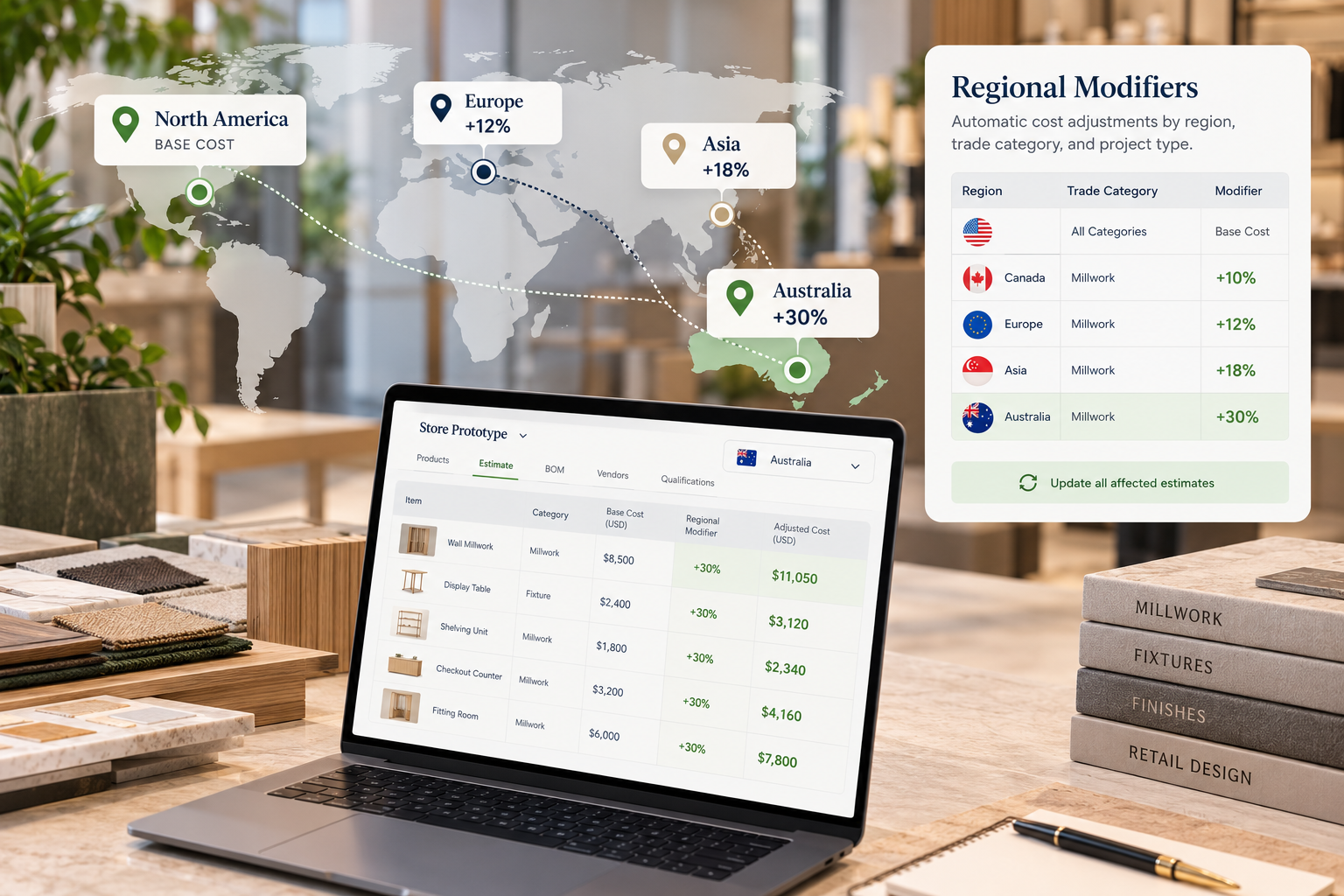
The same millwork package doesn't cost the same everywhere. Duties, freight, currency, local labor, and insurance all move the number. One apparel brand budgets millwork in Australia at 30% above its North American cost, mostly because of insurance.
Adjustments like this should live in the budget as rules, not as manual edits on individual lines. If the region is Australia and the trade category is millwork, the cost carries the premium automatically. When the premium changes, every affected estimate updates at once.
Totals become supplier forecasts
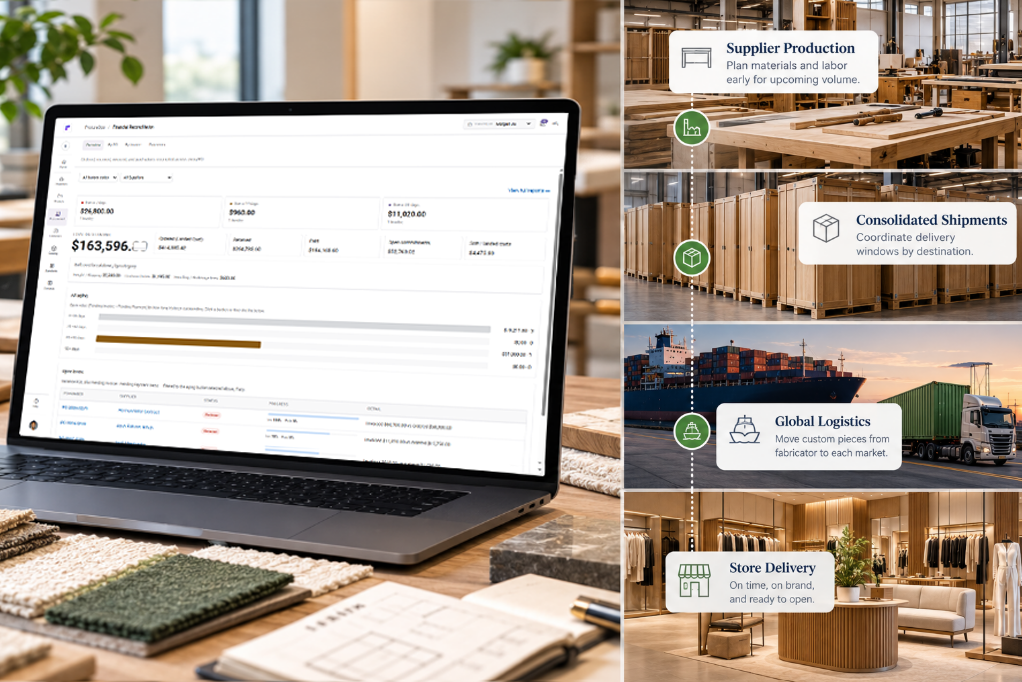
The real value of a bottom-up budget isn't a more accurate total. It's what the detail lets procurement do with suppliers.
Roll the location estimates up across the pipeline and procurement can see purchasing volume by category, by supplier, by quarter, and by destination country. That's the forecast artisan suppliers need. Millworkers and upholsterers working to custom drawings have finite production capacity. The earlier they know a 25-store order is coming, the better they can plan materials and labor, and the more room the organization has to negotiate volume pricing and delivery windows.
A procurement team working from "last year × 25" can't give suppliers that forecast. It can only place orders as each store's specs are finished.
Those delivery windows then become the logistics plan. Retail Rollout Logistics: Fabric Mill to Fitting Room covers how custom pieces move from fabricator to store.
A budget that moves with the design
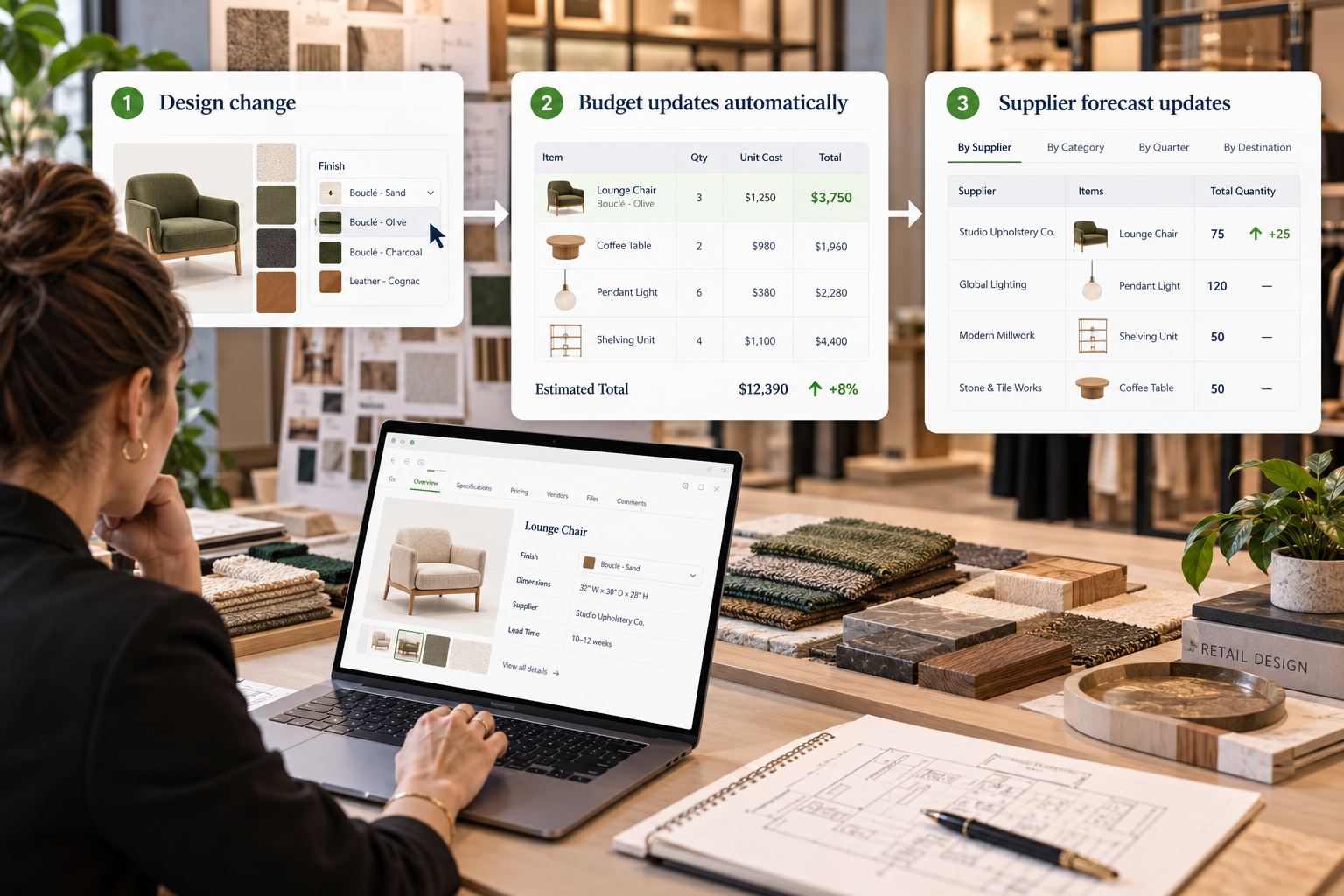
Retail specs change after budgets are set. A finish is swapped, a piece is added, a fabricator raises prices. If the budget lives in a separate spreadsheet, each change has to be re-keyed, and the budget drifts from reality.
The budget should read from the same specification record design works in. When a spec changes, the estimate and the supplier forecast change with it.
It's the same handoff problem design and procurement face on specs, covered in Where Store Rollouts Break: Design to Procurement.
What to look for
An organization planning a multi-year rollout should be able to:
- Create location estimates from a tier-specific prototype and adjust quantities per footprint.
- Apply regional and trade-category modifiers as rules.
- Roll estimates up into purchasing volume by supplier, category, and timeframe.
- Compare budget to committed spend by location and across the portfolio.
- Plan two to three years out, since that's how far many retail organizations budget.
Where Fohlio fits
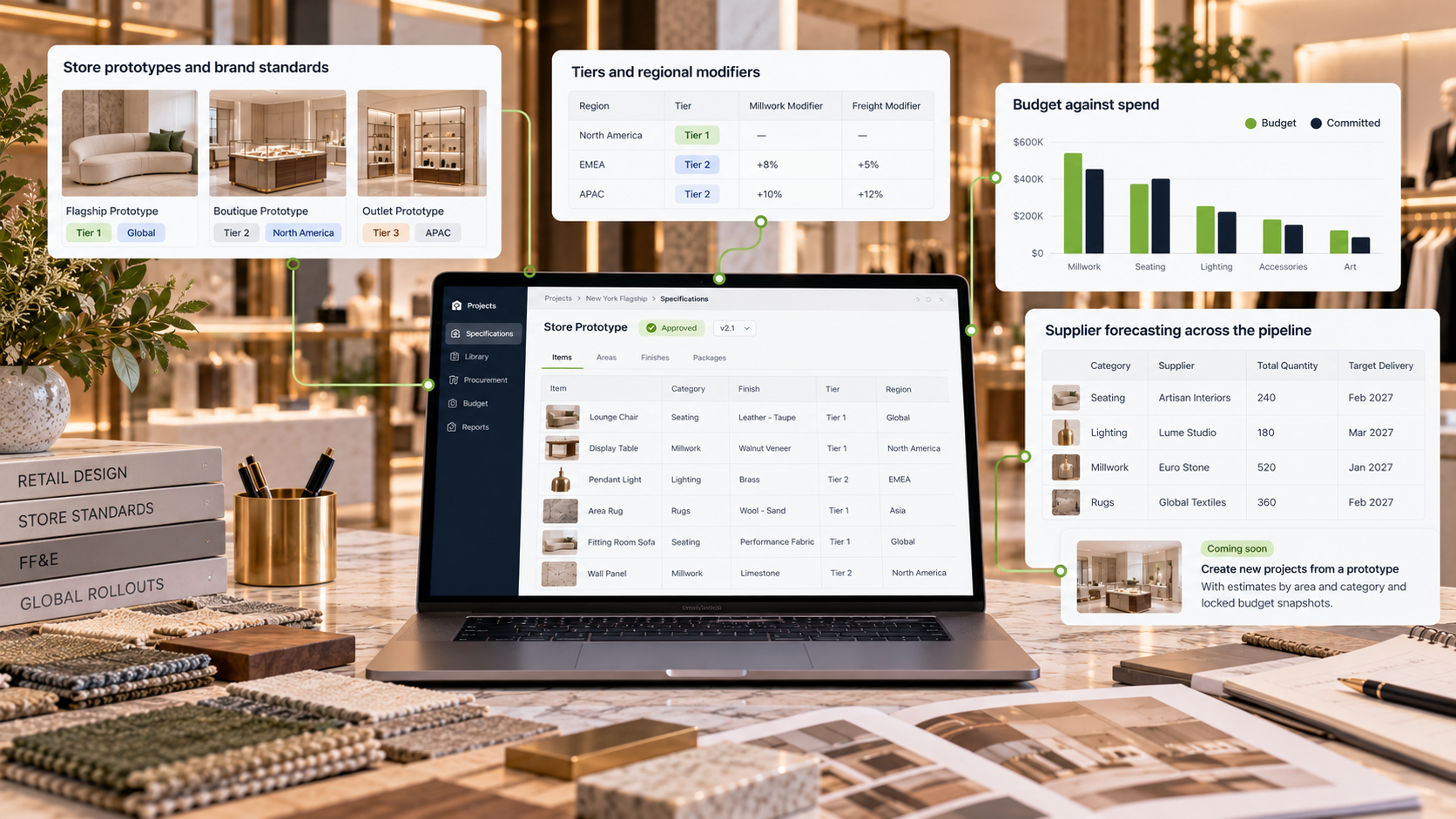
Fohlio holds store prototypes and brand standards as structured specifications, so every location starts from the same approved baseline. From there:
- Tiers and regional modifiers as rules. Single-select columns classify each project by tier and region, and formula columns apply modifiers, such as a millwork premium for one market, across every affected line.
- Budget against spend. Budget Analysis compares each project's budget to committed costs, so variances surface while there's still time to act.
- Forecasts suppliers can use. Cross Project Reports and Report Builder roll purchasing up by category and supplier across the pipeline. In quote requests, suppliers enter the quantity and delivery date they can commit to alongside price.
- Coming soon in SpeCurate: new projects created directly from a prototype, with estimates by area and category and locked budget snapshots for baseline comparison. SpeCurate is Fohlio's next-generation specification and procurement platform.
To see how retail organizations plan rollouts from those standards, book a demo.