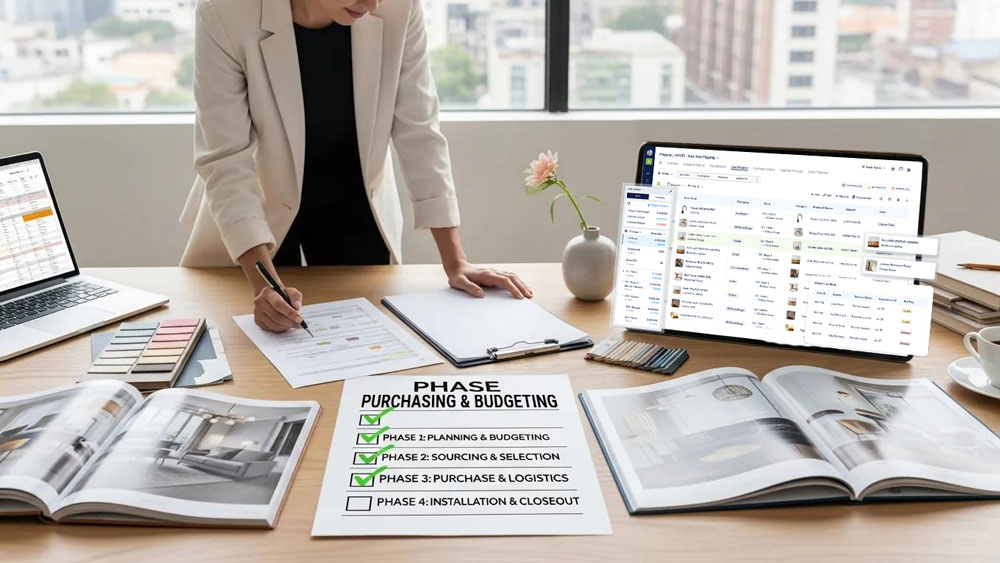
What is FF&E Procurement? The Process and Best Practices
FF&E
Procurement
FF&E procurement, or Furniture, Fixtures, and Equipment procurement, is a critical process in the design and construction industry that involves sourcing and acquiring essential items for projects. This guide will provide a comprehensive understanding of FF&E procurement, including its processes, best practices, and relevant software solutions. Many design professionals face challenges in managing procurement efficiently, which can lead to delays and increased costs. By understanding the FF&E procurement process, stakeholders can streamline their operations and enhance project outcomes. This article will cover the definition of FF&E procurement, the procurement process, best practices, and the software solutions that can optimize these workflows.
FF&E procurement is a vital aspect of project management in the design and construction sectors. It encompasses the acquisition of furniture, fixtures, and equipment necessary for creating functional and aesthetically pleasing spaces. The significance of FF&E procurement lies in its ability to influence project timelines, budgets, and overall quality. Understanding the procurement process is essential for design professionals to ensure that projects are completed on time and within budget.
FF&E procurement refers to the process of sourcing and acquiring furniture, fixtures, and equipment for various projects, particularly in the hospitality, healthcare, and commercial sectors. This process is crucial as it ensures that the right items are selected, purchased, and delivered to meet the specific needs of a project. Effective FF&E procurement involves coordinating with vendors, managing budgets, and adhering to project timelines, ultimately contributing to the successful completion of design projects.
Procurement Process
The FF&E procurement process consists of several key stages that ensure the efficient acquisition of necessary items. These stages include:
Needs Assessment: Identifying the specific requirements for furniture, fixtures, and equipment based on project specifications.
Vendor Selection: Researching and selecting suppliers that can provide the required items within budget and timeline constraints.
Order Placement: Finalizing orders with selected vendors, ensuring that all specifications are met.
Logistics Management: Coordinating the delivery and installation of items to the project site, ensuring timely arrival and proper setup.
Understanding these stages is essential for stakeholders to manage the procurement process effectively and avoid potential pitfalls.
Best Practices
Implementing best practices in FF&E procurement can significantly enhance project efficiency and cost-effectiveness. Key best practices include:
Developing a Procurement Plan: Establishing a clear plan that outlines the procurement process, timelines, and budget constraints.
Centralized Data Management: Utilizing a centralized system to manage procurement data, ensuring all stakeholders have access to up-to-date information.
Quality Control Procedures: Implementing quality control measures to ensure that all procured items meet the required standards and specifications.
By adhering to these best practices, design professionals can maximize the effectiveness of their FF&E procurement efforts.
Indeed, centralizing procurement activities is a recognized strategy to overcome common inefficiencies and mitigate financial risks associated with fragmented purchasing.
In many organizations, different departments or business units purchase goods and services independently—each negotiating prices, managing vendors, and signing contracts without coordination. This fragmented procurement approach leads to inefficiencies such ashigher costs,inconsistent supplier terms,duplicated work, anduncontrolled risks. When the same product or service is bought separately by multiple teams, companies lose their bargaining power and miss opportunities to consolidate demand for better pricing and quality.Centralizing procurementbrings all purchasing activities under a unified structure, allowing companies to leverage their total buying power, standardize processes, and maintain a single source of truth for supplier and contract data. A centralized model ensures that decisions are based on reliable information, reduces administrative workload, and strengthens compliance across the organization. It turns procurement from a transactional function into astrategic
From Fragmentation to Focus: The Benefits of Centralizing Procurement, P Waditwar, 2023
Relevant Software Solutions
In today's digital age, leveraging software solutions for FF&E procurement can streamline processes and improve efficiency. Various software options are available that cater specifically to the needs of design and construction professionals. These solutions often include features such as:
Inventory Management: Tools to track and manage inventory levels, ensuring that items are available when needed.
Budget Tracking: Real-time budget tracking capabilities to monitor spending and prevent cost overruns.
Vendor Management: Systems to manage vendor relationships and streamline communication.
Fohlio Inc. is a software company specializing in comprehensive FF&E specification, procurement, and project management solutions tailored for design and construction professionals. Their platform can help streamline the procurement process, ensuring that projects run smoothly and efficiently.
What Constitutes the FF&E Procurement Process?
The FF&E procurement process is characterized by several essential components, including:
Specification Development: Creating detailed specifications for each item to be procured, ensuring clarity and alignment with project goals.
Stakeholder Roles: Defining the roles and responsibilities of all stakeholders involved in the procurement process, from designers to project managers.
Documentation: Maintaining thorough documentation throughout the procurement process to ensure transparency and accountability.
These components are crucial for ensuring that the procurement process is efficient and effective.
Which Key Steps Define FF&E Specification and Sourcing?
Design Specification Development: Collaborating with design teams to create detailed specifications for each item.
Approval Process: Establishing a clear approval process for specifications to ensure alignment with project goals.
Quality Control: Implementing quality control measures to verify that all items meet the required standards before procurement.
These steps are essential for ensuring that the right items are sourced and procured for each project.
Further emphasizing the importance of detailed planning and design in FF&E, one study highlights the critical role of product selection and specification development.
Fokus penulis padaprojectini adalah pengembangan keterampilan dalam bidang FF&E (Furniture, Fixtures, and Equipment), utamanya dalam hal pemilihanproductdan material yang mencakup perancangan konsep desain, menciptakan harmoni visual dengan mempertimbangkan tekstur, warna, spesifikasi, serta penataan ruang yang tidak hanya estetis, tetapi juga fungsional dan keberlanjutan, sehingga mendukung pengalaman pengunjung. Selama proses, penulis tidak hanya mempelajari aspek teknis seperti pembuatanmoodboard, penyusunanspecification schedules, dan revisi notasi gambar kerja, tetapi juga mengasah keterampilan desain dan nirmana, serta berkontribusi pada p
DESAIN INTERIOR SHANGRI-LA HOTEL ZHENGZHOU DI PT. ARA DESIGN ASIA, 2025
How Does FF&E Project Management Integrate with Procurement?
FF&E project management is closely integrated with the procurement process, as effective management ensures that all aspects of procurement align with project goals. Key integration points include:
Roles and Responsibilities: Clearly defining the roles of project managers and procurement specialists to ensure effective collaboration.
Coordination Among Teams: Facilitating communication between design, procurement, and project management teams to streamline processes.
Collaboration Techniques: Utilizing collaboration tools to enhance communication and information sharing among stakeholders.
This integration is vital for ensuring that procurement efforts support overall project success.
What Are the Best Practices for FF&E Procurement to Maximize ROI?
To maximize return on investment (ROI) in FF&E procurement, consider the following best practices:
Strategic Sourcing: Implementing strategic sourcing techniques to identify the best suppliers and negotiate favorable terms.
Cost Control Measures: Establishing cost control measures to monitor spending and prevent budget overruns.
Vendor Management: Building strong relationships with vendors to ensure reliable service and quality products.
By focusing on these practices, design professionals can enhance the financial performance of their projects.
How Can Strategic FF&E Sourcing Mitigate Financial Risk?
Strategic FF&E sourcing can mitigate financial risk through:
Centralized Data Management: Utilizing centralized systems to track procurement data and identify potential risks.
Real-Time Tracking: Implementing real-time tracking of orders and budgets to quickly address any issues that arise.
Cost-Saving Strategies: Identifying opportunities for cost savings through bulk purchasing or long-term vendor contracts.
These strategies are essential for minimizing financial risk in the procurement process.
What Collaboration Techniques Enhance FF&E Specification Accuracy?
Effective collaboration techniques can enhance the accuracy of FF&E specifications, including:
Effective Communication: Establishing clear communication channels among all stakeholders to ensure alignment on specifications.
Regular Check-Ins: Scheduling regular check-ins to discuss progress and address any issues that arise.
Utilization of Project Management Tools: Leveraging project management tools to facilitate collaboration and information sharing.
These techniques are crucial for ensuring that specifications are accurate and meet project requirements.
How Does FF&E Procurement Software Optimize Workflow and Cost Control?
FF&E procurement software optimizes workflow and cost control through:
Automation of Procurement Processes: Streamlining procurement processes to reduce manual effort and increase efficiency.
Centralized Data Management: Providing a centralized platform for managing procurement data, ensuring all stakeholders have access to the same information.
Real-Time Budget Tracking: Enabling real-time tracking of budgets to prevent overspending and ensure financial accountability.
These features contribute to a more efficient and cost-effective procurement process.
Which Features Define Effective FF&E Procurement Software?
Effective FF&E procurement software should include the following features:
User-Friendly Interface: An intuitive interface that makes it easy for users to navigate and utilize the software.
Integration Capabilities: The ability to integrate with other project management tools and systems for seamless data sharing.
Robust Reporting Tools: Comprehensive reporting tools that provide insights into procurement performance and spending.
These features are essential for ensuring that procurement software meets the needs of design professionals.
How Does Real-Time Budget Tracking Improve Project Outcomes?
Immediate Adjustments to Spending: Allowing project managers to make immediate adjustments to spending based on real-time data.
Preventing Overspending: Providing alerts when spending approaches budget limits to prevent cost overruns.
Data-Driven Decision Making: Enabling informed decision-making based on accurate financial data.
These benefits contribute to more successful project outcomes and enhanced financial performance.
The power of real-time data in procurement is further amplified by the use of data-driven dashboards, which offer comprehensive insights for strategic decision-making.
Data-Driven Dashboards for Enhanced Procurement Efficiency
In the evolving landscape of procurement, data-driven dashboards have emerged as transformative tools that enhance efficiency, transparency, and strategic decision-making. These dashboards leverage big data analytics, artificial intelligence (AI), and business intelligence (BI) to provide real-time insights into procurement activities, including spend analysis, supplier performance, and contract management. This paper explores the functionality and impact of procurement dashboards in modern supply chain management. We analyze how organizations can use visual analytics and predictive modeling to optimize procurement processes, identify cost-saving opportunities, and mitigate risks. Key dashboard features such as spend segmentation, supplier categorization, and contract compliance monitoring are examined in detail, demonstrating their role in streamlining procurement workflows. Furthermore, this study highlights the strategic benefits of procurement dashboards, including e
Enhancing Procurement Efficiency through Data-Driven Dashboards: Functionality, Insights, and Strategic Impact, 2021
Why Is FF&E Procurement a Strategic Asset for Enterprise-Level Projects?
FF&E procurement is a strategic asset for enterprise-level projects due to its impact on:
Project Success: Effective procurement contributes to the overall success of projects by ensuring timely delivery of essential items.
Cost Efficiency: Streamlined procurement processes can lead to significant cost savings and improved financial performance.
Resource Management: Efficient procurement helps manage resources effectively, ensuring that projects are completed on time and within budget.
Recognizing the strategic importance of FF&E procurement is essential for enterprise-level project success.
What Industry Trends Drive Demand for Integrated FF&E Solutions?
Current industry trends driving demand for integrated FF&E solutions include:
Digital Transformation in Construction: The increasing adoption of digital tools and technologies to streamline procurement processes.
Focus on Cost Reduction: A growing emphasis on cost reduction and efficiency in procurement practices.
Sustainability in Procurement: An increasing focus on sustainable sourcing practices and environmentally friendly products.
These trends highlight the evolving landscape of FF&E procurement and the need for integrated solutions.
How Do Case Studies Demonstrate Tangible Business Growth from FF&E Procurement?
Case studies illustrate the tangible business growth that can result from effective FF&E procurement by showcasing:
Real-World Examples of Success: Documenting successful projects that have benefited from streamlined procurement processes.
Statistics on Cost Savings: Providing data on cost savings achieved through effective procurement strategies.
Impact on Project Delivery: Highlighting how efficient procurement has led to improved project delivery times and overall success.
These case studies serve as valuable examples for design professionals looking to enhance their procurement practices.
Learn expert strategies for efficient FF&E delivery and storage management. Optimize your operations and ensure a seamless process for your projects...