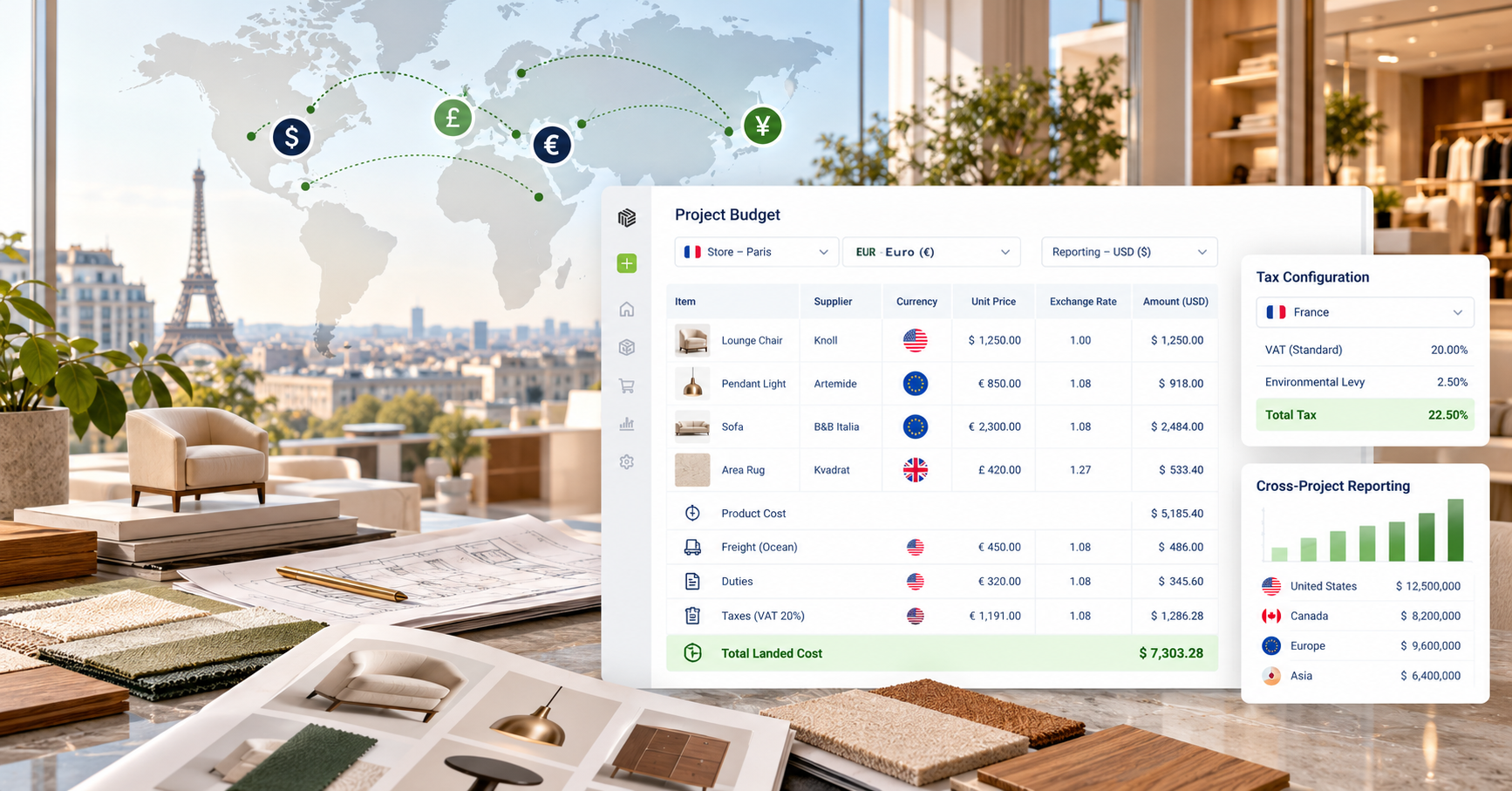
A store rollout that crosses a border adds a problem most spec spreadsheets were never built for: one project now runs in several currencies.
Take a typical North American brand expanding into Europe. Corporate reports in one currency. U.S. stores settle in dollars. A European maker quotes a custom fixture in euros. Each of those numbers has to land in the right place: the vendor's quote, the store's budget, and finance's books. Then every market adds its own taxes.
The direct answer: international FF&E procurement works when currency is set per project and per vendor, conversions happen inside the project record instead of a side spreadsheet, and tax rules are configured by location.
Where does currency show up in a store project?
A single store can touch four currency layers:
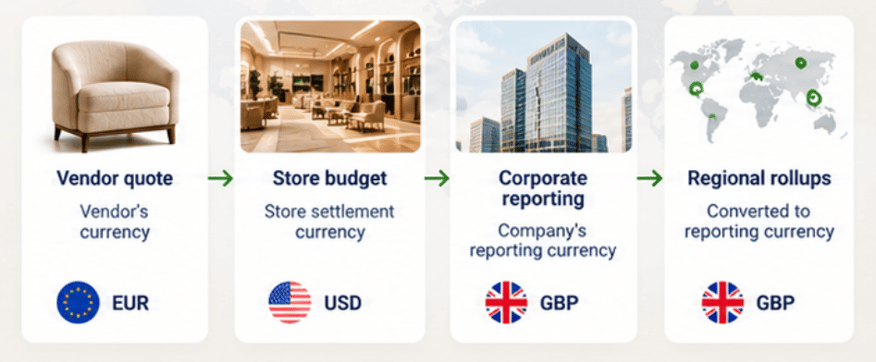
| Vendor quote |
Store budget |
Corporate reporting |
Regional rollups |
| The vendor's currency |
The currency the store settles in |
The company's reporting currency |
Usually converted to the reporting currency to compare markets |
When these live in separate files, someone converts by hand, and the rate they used is rarely written down. Months later, nobody can explain why a store's actuals don't match its budget.
Why exchange rates matter more on long lead times
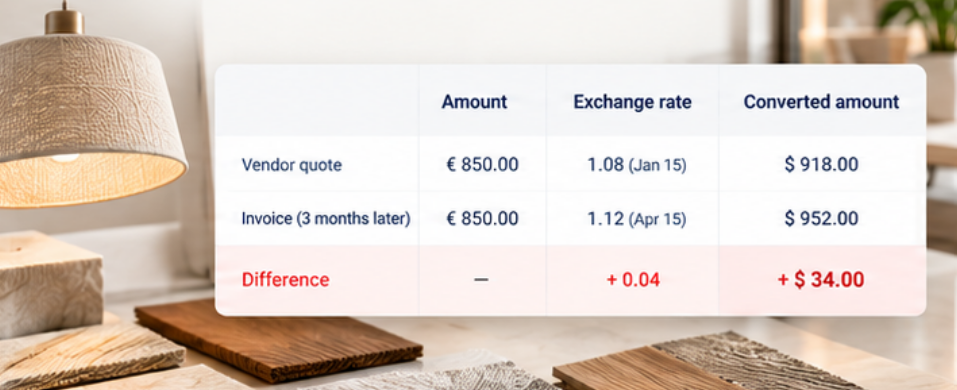
Custom store fixtures can take months between quote and invoice. Rates move over that window. A quote converted at one rate during budgeting may cost more, or less, by the time it's paid.
Teams need three figures side by side: the amount in the vendor's currency, the rate used, and the converted amount. With all three, variance can be explained instead of just noticed. If your rollout budget starts from prototypes and store tiers, as described in Store Rollout Budgets Beyond 'Last Year × 25', currency becomes one more regional modifier in that plan.
Taxes change by market, and they stack
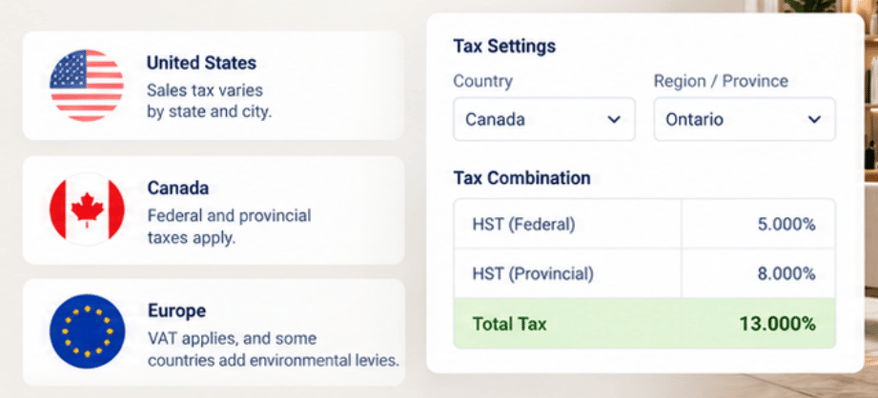
Tax rules for FF&E differ by country and often by region within a country:
- United States. Sales tax varies by state and city.
- Canada. Federal and provincial taxes apply, and the combination differs by province.
- Europe. VAT applies, and some countries add environmental levies.
One tax column can't hold that. Each location needs its own tax combination, applied to the items delivered there. Rules and rates change, so confirm current requirements with your finance or tax team before each new market.
Freight, duties, and the real cost of buying abroad
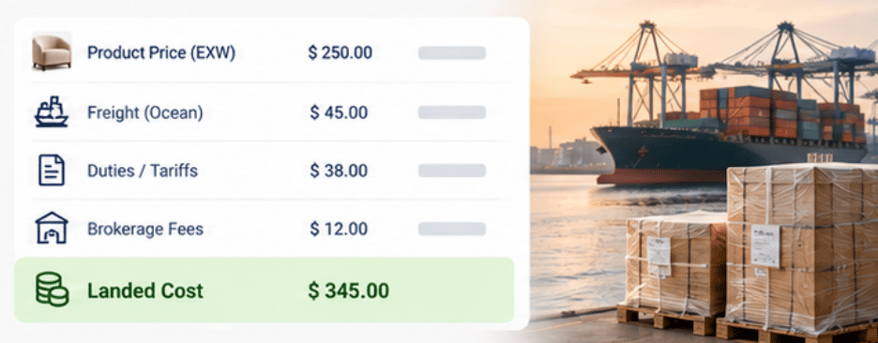
Buying overseas can look cheaper on the quote and cost more on arrival. Freight, duties, and tariffs sit on top of product price, and they shift faster than material costs. When the landed cost of an imported piece approaches the domestic price, the longer lead time stops being worth it.
Compare total cost and delivery date, not product price alone. Tracking freight and duties as their own cost lines, rather than burying them in unit prices, makes that comparison possible. The physical side of the route, from material supplier to maker to distribution center, is covered in Rollout Logistics: Fabric Mill to Fitting Room.
Who needs to see which currency?
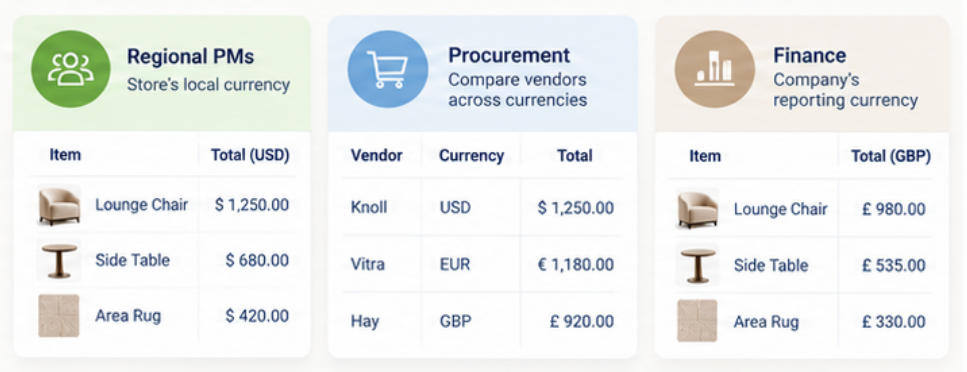
Different teams read the same numbers differently. Regional project managers work in the store's local currency. Central procurement compares vendors across currencies. Finance needs everything in the reporting currency. That split mirrors how most global retailers organize rollouts, which Central Design, Regional PMs: How Global Retailers Run Store Rollouts describes in detail.
The fix isn't more spreadsheets for each team. It's one record with the right currency settings, so each team reads the same numbers in the form it needs. Currency handling is a good example of a process worth standardizing across every store, a theme explored in Standardize the Process, Not the Store.
Checklist for an international store rollout

- Set a currency for each project, based on where the store settles.
- Record each vendor's quoting currency.
- Convert inside the project record, and keep the rate with the figure.
- Configure tax combinations for each location.
- Track freight and duties as separate cost lines.
- Roll regions up in the reporting currency for portfolio views.
- Check that a brand-standard item is available and compliant in the new market before it's ordered. When a Brand Standard Changes, Does Every Store Know? covers what happens when it isn't.
Where Fohlio fits

- Currency per project and per vendor. Quotes stay in the vendor's currency, budgets stay in the store's, and Fohlio calculates the exchange between them.
- Configurable tax combinations. Set city and state, provincial, or environmental taxes for each location instead of forcing one rate across the portfolio.
- Soft costs alongside product cost. Freight and other soft costs sit next to product pricing in budget analysis, so landed cost is visible.
- Cross-project reporting. Central teams compare stores and regions from the same data regional teams use.
To see how international rollouts run on one record, book a demo.
Frequently asked questions
What is multi-currency FF&E procurement?
It's managing quotes, budgets, and orders for furniture, fixtures, and equipment when vendors, stores, and corporate reporting use different currencies. It requires setting currency by project and vendor and recording the exchange rate used for each conversion.
How should retailers handle exchange-rate changes on long-lead FF&E orders?
Keep the original currency amount, the rate applied, and the converted amount together on each item. That makes it possible to explain the gap between budget and invoice when rates move between quote and payment.
What taxes apply to FF&E in international store openings?
It depends on the market. The U.S. uses state and local sales tax, Canada combines federal and provincial taxes, and European countries apply VAT, sometimes with environmental levies. Confirm current rules with your tax team for each new country.
Is it cheaper to buy store fixtures overseas?
Sometimes. Compare landed cost, including freight, duties, and tariffs, and the delivery date against the opening schedule. A lower product price can disappear once those costs and the longer lead time are counted.