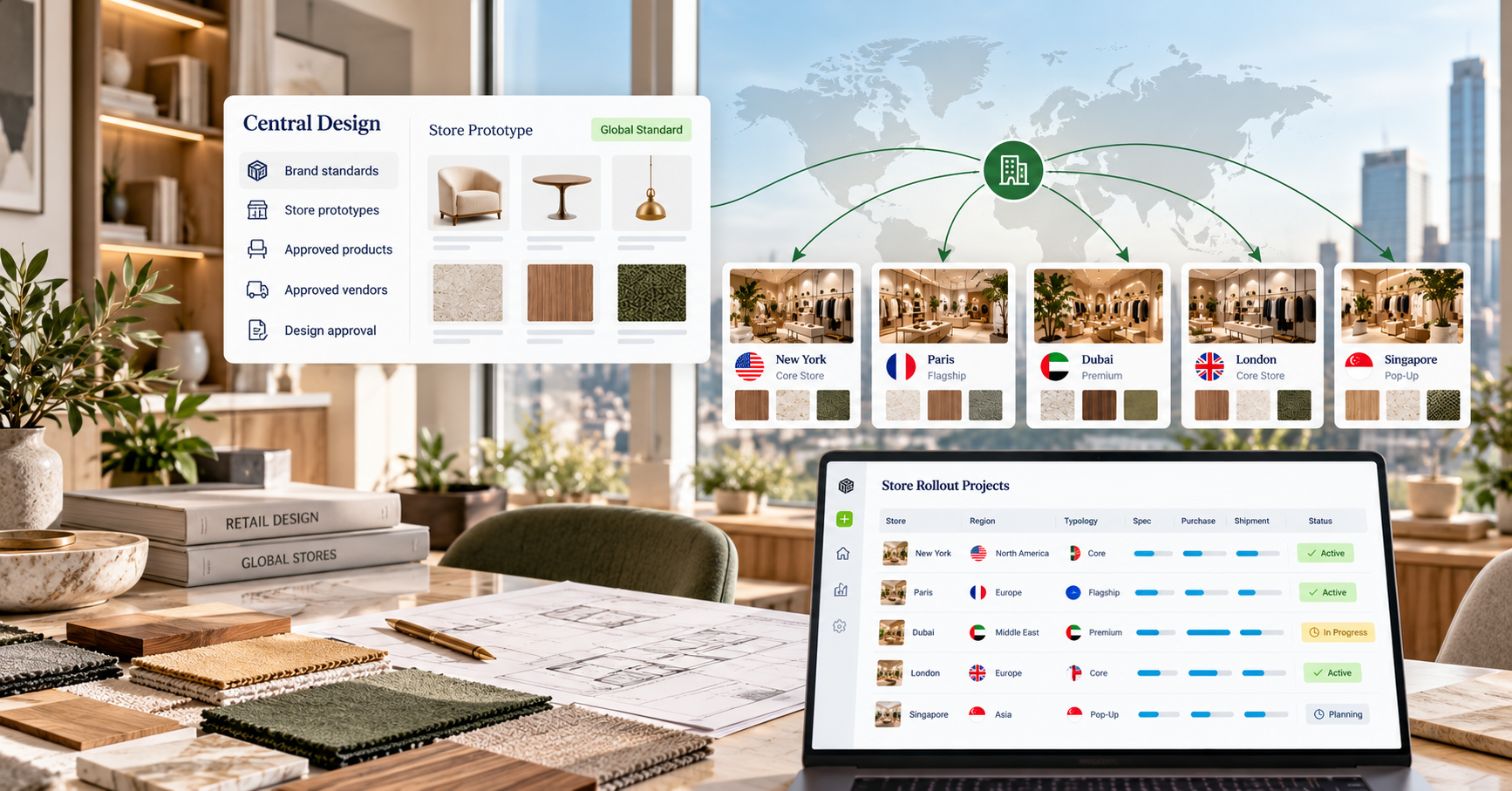
Most global retailers run store rollouts the same way: a central team sets the standard, and regional teams deliver the stores.
It's a sensible split. Central design and central procurement protect the brand and the buying power. Regional project managers know local landlords, contractors, codes, and suppliers. The hard part is the handoff between them, repeated for every store in every region.
Who does what in a global store rollout?
| Role |
What they own |
| Central design team |
Brand standards, store prototypes by typology, design approval |
| Brand standards owner |
The catalog: requirements, preferred products and vendors, discontinued items |
| Central procurement |
Vendor approval, volume agreements, contracts, quantities across regions |
| Regional project managers |
Local adaptation, pricing and lead times, orders, contractors, schedule |
| Local architects and consultants |
Code compliance and larger openings in their market |
Central teams act as the middle layer. They translate the brand into standards for each store typology, then pass those standards to the people building stores on the ground.
How a store moves from central to regional
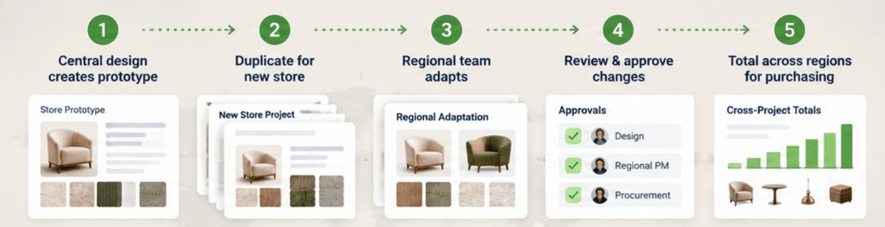
- Central design builds a prototype for each store typology, such as core stores, flagships, and temporary stores. Each has its own standard items and budget logic, as covered in Store Rollout Budgets Beyond 'Last Year × 25'.
- For each new store, the central team duplicates the prototype and invites the regional project manager into the project.
- The regional team adapts it to the site's footprint, landlord requirements, local code, and market. Some teams call this "tropicalizing" the prototype.
- Changes go back through review. Regional and central approvals sit on each item. Approval Trails for Multi-Team Store Rollouts covers how to keep that chain on record.
- Central procurement totals quantities across regions to negotiate volume, while regional teams place or track orders and manage delivery. The route from maker to store is covered in Rollout Logistics: Fabric Mill to Fitting Room.
Starting from a prototype means no regional team begins from scratch, and every store begins from the current standard.
Where the central-regional model breaks
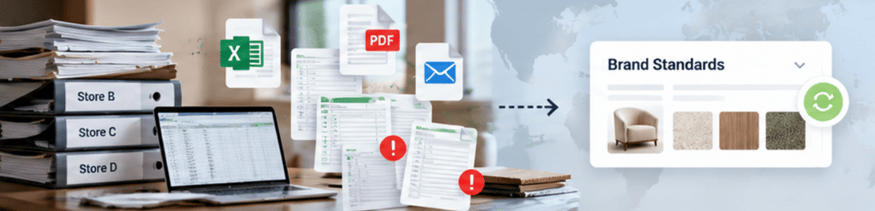
- Copies drift. Once a prototype is copied into a separate spreadsheet, it stops hearing about changes to the standard. When a Brand Standard Changes, Does Every Store Know? explains how to close that gap.
- Central can't see regional reality. Procurement can't negotiate volume if it can't total what each region has specified and ordered.
- Regions work around the center. When the official process is slow, regional teams track things in their own files, and the central record falls behind.
- Knowledge leaves with people. Regional teams and consultants change often. If decisions live in inboxes, each new project manager starts over. After Opening Day: The FF&E Record That Pays Back shows why that record matters long after opening.
Why vendor approval stays central
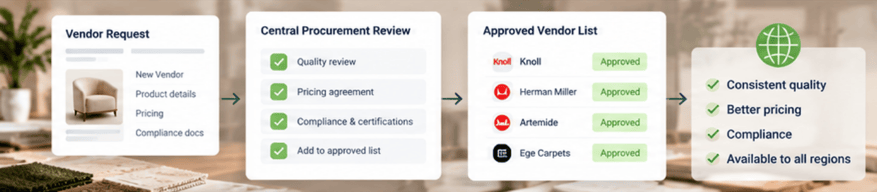
Large retailers work from a short list of pre-approved vendors. If a regional project manager wants to use a new one, central procurement runs a full review before that vendor can enter the ERP and the approved vendor list. It slows local sourcing on purpose. The review protects quality, pricing agreements, and compliance.
The system should make the approved list easy to use and the exception path visible, so regional teams aren't tempted to go around it.
Speed beats a bigger vendor list
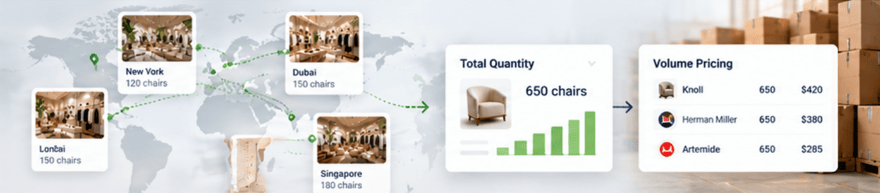
For a retailer, procurement's job is less about discovering new makers and more about executing with trusted ones, fast. Many retailers negotiate volume a year or more ahead, telling vendors how many pieces will ship to which regions in which months. That only works when central procurement can see live quantities from every regional project, not last month's spreadsheet export.
Regional differences belong in the record

Regional adaptation is expected. Codes differ. Some brand-standard items aren't available in every market. Currencies and taxes change at every border, as covered in Multi-Currency FF&E Procurement for International Store Rollouts. The point isn't to remove those differences. It's to keep them inside the shared record, so central teams can see them. That's the core idea behind Standardize the Process, Not the Store.
Where Fohlio fits
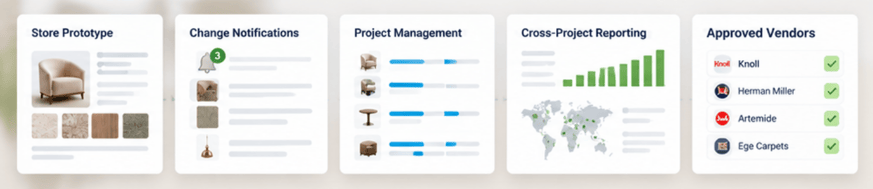
- Prototype projects. Central teams duplicate a prototype for each store and invite regional project managers to adapt it.
- Brand standards library with change notifications. Updates reach every project using an item.
- Design and procurement dashboards on one project sheet. Designers specify; regional project managers update pricing, lead times, and order status.
- Totals across projects. Central procurement sees specified and ordered quantities for each item across every store, which supports volume negotiation.
- Approved vendors in one place. The Contact Book and library collections keep qualified vendors visible to every region.
To see how central and regional teams share one rollout record, book a demo.
Frequently asked questions
What is a store typology in retail?
A store typology is a category of store with its own design and budget rules, such as core stores, flagships, or temporary stores. Each typology usually has its own prototype and standards.
What does a regional project manager do in a retail rollout?
Regional project managers adapt the central prototype to local sites, manage pricing, lead times, and orders, coordinate contractors, and keep each store on schedule in their region.
How do central procurement teams get better pricing on store fixtures?
By totaling quantities across every store and region, then negotiating volume agreements with approved vendors well ahead of need, often a year or more out.
Why do retailers restrict which vendors regional teams can use?
New vendors must pass a central compliance and quality review before they enter the ERP. Pre-approved vendors protect pricing agreements, quality, and consistency across stores.